




What are the most common trekking pole mistakes Brazilian beginners make?
The most common trekking pole mistakes Brazilian beginners make are choosing the wrong material, using unreliable locking systems, gripping too tightly, and neglecting proper technique for Brazil's unique terrain. Here's a detailed breakdown of these pitfalls and how to avoid them.
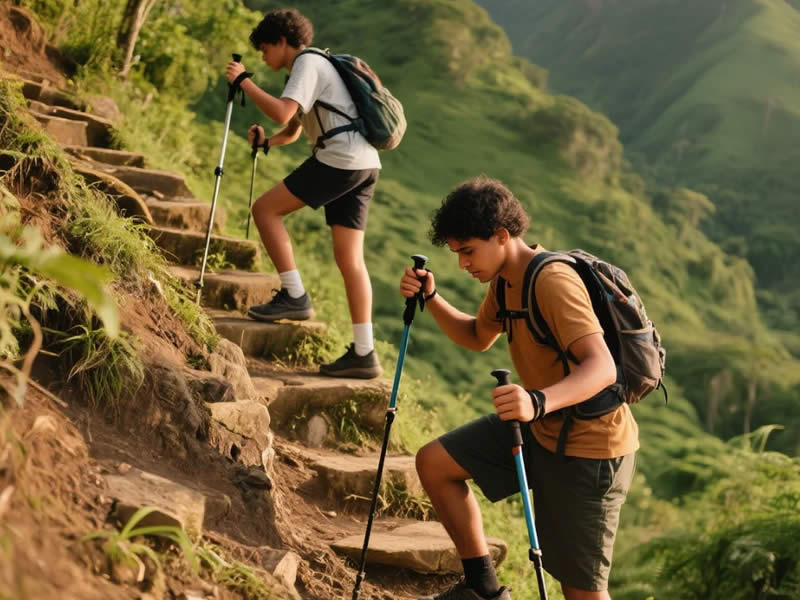
🧐 The Most Frequent Beginner Errors
- Choosing Carbon Over Aluminium: Lured by the promise of light weight, beginners often buy carbon fibre poles. While great for gentle trails, carbon is a liability on Brazil's famously hard quartzite and granite. A single side impact on a sharp rock can cause a carbon shaft to splinter catastrophically. 7075 aluminium, while slightly heavier, is far more durable; it bends rather than breaks and can often be straightened in the field.
- Falling for Twist Locks: Budget-friendly twist-lock poles are a common entry point. However, Brazil's trails are frequently muddy, and the fine grit acts like sandpaper, causing twist locks to seize or, worse, slip under pressure. A slipping pole on a steep descent can be dangerous. Lever locks (cam locks), like those from Leki, Black Diamond, or Decathlon, are mechanical and reliable in mud, dust, and humidity—making them the only sensible choice for Brazil.
- The "Death Grip": Beginners often hold the poles in a tight fist, exhausting their forearms. The correct technique is to let the wrist strap do the work. Your hand should be relaxed, with the strap sitting across the base of your palm to transfer your weight directly.
- Using the Wrong Length: Hiking with poles set for flat ground on ascents or descents is inefficient and tiring. The correct length changes with the slope. Shorten your poles by 5–10 cm for steep climbs to improve leverage, and lengthen them by the same amount on descents to create a braking effect that protects your knees.
- Keeping Rubber Tips On: Rubber tip protectors are for pavements or storage. On trails, they are a hazard, sliding on mud or rock. For grip, you must use the bare tungsten carbide tip.
- Using Only One Pole: A single pole creates an asymmetrical gait and offers far less stability than a pair. For balance, joint protection, and efficiency, two poles are essential.
🎯 Avoiding These Mistakes
The best way to avoid these pitfalls is to start with a reliable, terrain-appropriate pole. For Brazilian beginners, the Decathlon Forclaz MT900 is the standout recommendation. It uses durable 7075 aluminium, features reliable lever locks, has comfortable cork grips, and is widely available for around R$400.
Beyond the right equipment, technique is key. Practice the alternating rhythm—planting the left pole with your right foot—on flat ground first. Focus on a relaxed grip, letting the wrist straps take your weight. As you gain confidence, gradually introduce ascents and descents, adjusting your pole length each time.
💎 The Bottom Line
Avoiding these common mistakes is simple. Choose 7075 aluminium poles with lever locks, learn the correct technique for grip and length, and always hike with a pair. By doing so, you'll not only protect your knees and stay safe on Brazil's demanding trails but also fully enjoy the spectacular landscapes the country has to offer.




