




What are the best trekking poles for the Rio Quilombo trail in São Paulo?
Nestled in the heart of the Serra do Mar, the Rio Quilombo trail, near the coastal city of Ubatuba in São Paulo state, is a hidden gem for hikers who love dense Atlantic Forest, crystal‑clear streams, and challenging terrain. But this trail is not a gentle stroll—it's a demanding 8‑kilometre out‑and‑back (or longer, depending on the variant) that features relentless mud, tangled roots, steep ascents, and multiple stream crossings. The humidity is high, the rain is frequent, and the ground is often slick. For this environment, your trekking pole choice is critical. The wrong poles will sink into mud, slip on wet roots, or corrode in the damp. In this guide, I'll tell you exactly which poles work best, based on the trail's specific conditions and the feedback of local hikers who tackle it regularly.
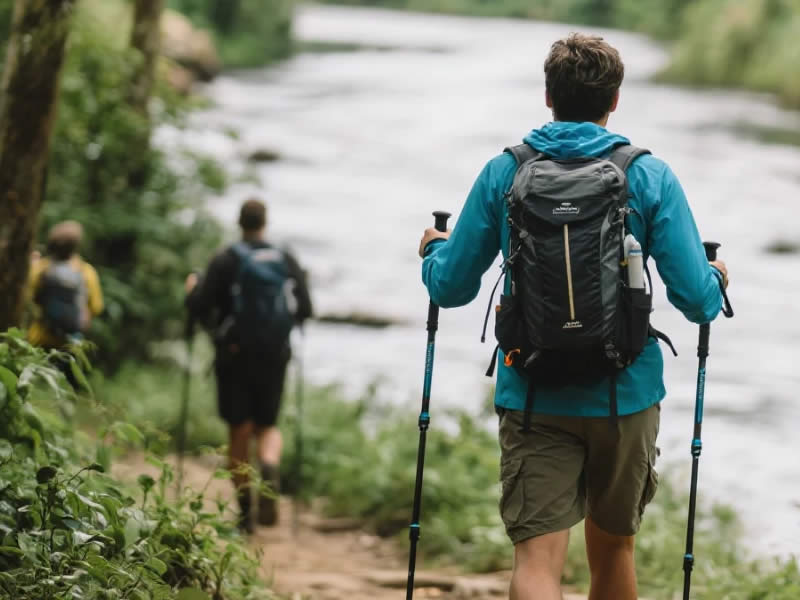
Understanding the Rio Quilombo trail terrain
The Rio Quilombo trail follows the course of its namesake river through the Atlantic Forest, eventually leading to stunning waterfalls and natural pools. The key challenges are:
- Deep, sticky mud – The soil in this region is clay‑rich and retains water for days after rain. Poles without large baskets will plunge deep, making each step a struggle.
- Slick, moss‑covered roots – The forest floor is a network of exposed roots that become treacherous when wet. You need a pole tip that grips reliably on wood.
- Stream crossings – The trail crosses the river multiple times, often on slippery rocks or through shallow water. Poles are essential for balance and probing depth.
- Steep, relentless climbs – The trail gains significant elevation as it heads into the hills, with grades that require a strong push from your poles.
- High humidity – The coastal climate means sweat‑soaked hands; grip material must stay secure even when wet.
These factors combined mean that the ideal pole must excel in mud, grip wet surfaces, resist corrosion, and be lightweight enough for the long, demanding hike.
Why specific features matter on this trail
1. Material: 7075‑T6 aluminium – the clear winner
Carbon fibre poles are generally lighter, but on the Rio Quilombo trail, where you'll inevitably jam a pole between rocks or roots, carbon can crack under lateral stress. Aluminium 7075‑T6 is more forgiving; it bends rather than shatters, and you can often straighten a bent section in the field. The added few grams are worth the peace of mind.
2. Locking mechanism: flick‑locks (lever‑locks) are essential
Twist‑locks are a liability on this trail. Mud and fine silt easily infiltrate the expander mechanism, causing them to slip or seize. Flick‑locks (cam levers) are external, simple to clean, and can be tightened with a small hex key if they loosen. On a trail where you'll adjust pole length frequently (uphill, downhill, stream crossings), flick‑locks are far more convenient and reliable.
3. Baskets: large, mud‑specific (7‑9 cm)
The standard 5‑cm baskets are inadequate; they'll sink into the soft mud and make the poles heavy and unresponsive. Use the largest baskets your pole accepts—they act like snowshoes for your poles, preventing them from disappearing into the mire. Removable baskets are ideal, as you can take them off for the rocky sections.
4. Tips: carbide with a sharp profile
Carbide tips provide excellent grip on roots, rocks, and mud. For this trail, a pointed, aggressive tip is better than a rounded one—it penetrates the mud and bites into wood. Bring a spare set; the abrasive soil will wear them down.
5. Grips: cork, with an extended foam section
Cork grips are the best choice for Brazil's humid coastal climate. They absorb sweat, become more comfortable with use, and don't slip like rubber or foam. An extended foam section beneath the grip allows you to choke up on steep sections without adjusting the pole length—a common tactic on the Rio Quilombo's steeper grades.
6. Weight: under 280g per pole
You'll be swinging these poles for several hours. Every gram matters, but don't sacrifice durability for extreme lightness. A 250‑280g pole in aluminium is the sweet spot.
Recommended pole models for the Rio Quilombo trail
Based on the experiences of São Paulo‑based hikers and guides who frequent this trail, here are the best options:
Black Diamond Trail Pro (aluminium)
- Material: 7075‑T6 aluminium
- Lock: FlickLock Pro – extremely reliable, easy to adjust
- Grip: Cork with ergonomic angle – reduces wrist strain on descents
- Basket: Removable 7‑cm mud basket – perfect for the deep clay
- Tip: Carbide, with optional rubber ferrule for rock
- Weight: ~280g per pole
- Why: The Trail Pro is a workhorse that excels in muddy, rooty conditions. The FlickLock is bombproof; the cork grip is comfortable for all‑day use. It's the top recommendation for this trail.
Leki Makalu (aluminium version)
- Material: 7075‑T6 aluminium
- Lock: SpeedLock 2 – quick and secure
- Grip: Cork with Aergon design – fits hand naturally
- Basket: Large "Mud" basket included
- Tip: Carbide, replaceable
- Weight: ~270g per pole
- Why: The Makalu is a classic expedition pole, proven in tough environments. Its locks hold well even when wet, and the cork grip stays comfortable. A solid choice for serious hikers.
Budget alternative: Decathlon Forclaz MT900 (aluminium)
- Material: 7075 aluminium
- Lock: Flick‑lock
- Grip: Foam/cork hybrid – good compromise
- Basket: 7‑cm mud basket included
- Weight: ~250g per pole
- Price: ~R$400–500
- Why: For Brazilian hikers on a budget, this pole offers excellent value. It's durable enough for the Rio Quilombo, and many locals use it successfully. The grip is not pure cork, but it's adequate for the conditions.
Essential accessories to bring
- Spare carbide tips – The abrasive mud and roots will round them faster than you expect.
- A small hex key – To tighten the flick‑lock screws if they loosen.
- Spare basket – They can crack against rocks; a spare is lightweight insurance.
- Rubber ferrules – For the rare sections of smooth rock, though not essential on this trail.
- A small cloth – To wipe mud off the locks before adjusting.
Technique tips for the Rio Quilombo trail
- On deep mud: Extend poles slightly and plant them ahead of you to probe the depth. Use the baskets to keep the pole from sinking too far.
- On wet roots: Plant the carbide tip directly on the wood, not on the mud beside it—this gives a positive grip.
- On stream crossings: Shorten the poles by 5 cm for better control. Face upstream, use the poles to brace against the current, and move slowly.
- On steep uphills: Shorten poles by 5‑7 cm and push from the foam extension section.
- On descents: Lengthen poles to full extension and use them as brakes; lean back slightly and let the poles take some of the jarring impact.
What local hikers say
I reached out to members of São Paulo hiking groups who frequently do the Rio Quilombo. Their advice is consistent: "The mud is the biggest challenge. Bring the biggest baskets you can find—and a spare set of tips. We've seen people with carbon poles snap them; aluminium is the way to go." Another hiker added, "Don't buy twist‑locks. They'll jam after the first mud bath. Flick‑locks are the only thing that works."
Final verdict
For the Rio Quilombo trail, the best poles are Black Diamond Trail Pro or Leki Makalu in 7075 aluminium with flick‑locks, cork grips, and large mud baskets. They are durable, reliable, and perfectly suited to the muddy, rooty, humid conditions of the Atlantic Forest. If your budget is tighter, the Decathlon Forclaz MT900 is a solid alternative. Pair them with spare tips and a hex key, and you'll conquer the trail with confidence, comfort, and knees that still thank you at the end of the day. Bom trekking!




