




How to prevent trekking pole locks from seizing up after exposure to sandy coastal paths?
There’s nothing quite like a coastal walk—the salt breeze, the crash of waves, and miles of golden sand stretching ahead. But for your trekking poles, that idyllic scene is a battlefield. Fine sand, salt spray, and constant moisture are a deadly combination for locking mechanisms. One day your flick‑lock clicks perfectly; the next, it’s frozen solid, or it slips under load. Seized locks are not just an annoyance—they’re a safety hazard. This guide will give you a complete, step‑by‑step system to keep your pole locks free‑moving and reliable, even after repeated exposure to sandy coastal paths.
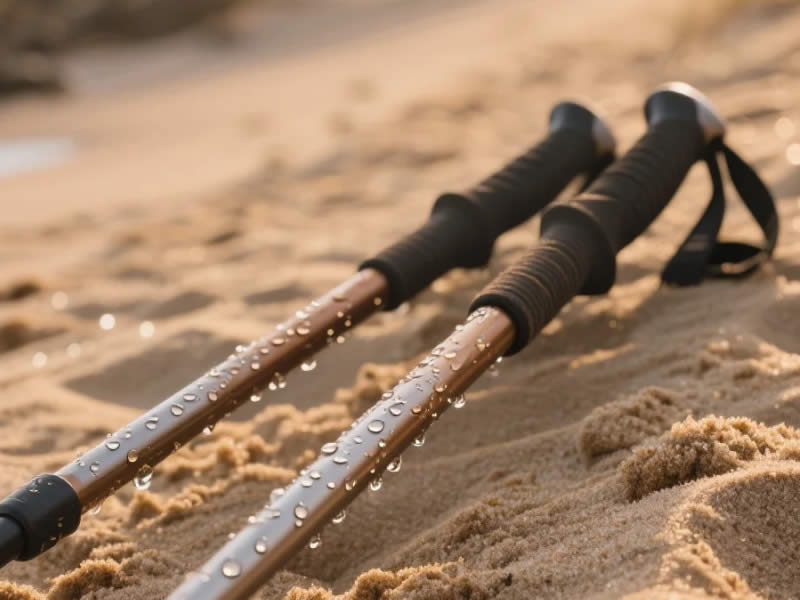
Why coastal sand is so destructive
Sand is abrasive. When it works its way into the moving parts of a lock, it acts like grinding paste. In flick‑locks (lever‑cams), sand gets trapped between the cam and the lever pivot, or between the clamping faces, creating friction that makes the lever hard to open and close. In twist‑locks, sand infiltrates the threads and the expander cone, causing them to jam or, conversely, to slip because the grit prevents the cone from seating properly. Salt from sea spray accelerates corrosion on steel screws and springs, and the moisture can cause aluminium surfaces to oxidise, further increasing friction. Left unchecked, a seized lock can render a pole unusable—or worse, cause it to collapse unexpectedly on a steep descent.
The golden rule: rinse immediately after every coastal walk
The single most effective prevention is to rinse your poles with fresh water as soon as you leave the beach. Salt and sand left to dry on the mechanism form a crystalline crust that is far harder to remove than when it’s still wet. Use a hose, a tap, or even a water bottle to flush the locking area thoroughly. For flick‑locks, open the lever fully and let water run through the cam mechanism. For twist‑locks, unscrew the collar and wash the threads and expander. Do this before you even pack your poles away—a 30‑second rinse saves hours of frustration later.
Drying: the second non‑negotiable step
Rinsing is only half the battle. Moisture left inside the mechanism will promote corrosion and, in some cases, cause the lock to seize through rust. After rinsing:
- Shake off excess water vigorously.
- Dry with a towel – a microfiber cloth works best.
- Leave the locks open (unlocked) and the poles fully extended for at least 30 minutes to allow air to circulate and evaporate any residual water. If you collapse and store poles while they are still damp, you’re sealing moisture inside the joint.
Lubrication: dry is better than wet
The most common mistake is using oil or WD‑40 on locks. These attract sand, creating a grinding paste that will seize the lock faster than no lubricant at all. Instead, use dry lubricants:
- Graphite powder – dust a tiny amount onto the threads of twist‑locks or the cam surfaces of flick‑locks. It reduces friction without leaving a sticky film.
- PTFE (Teflon) dry spray – spray onto a cloth, wipe the lock surfaces, and let it dry before closing. This leaves a microscopic slick layer that repels both moisture and sand.
For flick‑locks, you can also apply a tiny dab of silicone grease to the pivot screw (not the clamping faces). This keeps the lever action smooth without attracting sand. Just be sure to wipe off any excess.
Deep‑cleaning routine for flick‑locks (lever‑locks)
If you walk on sand regularly, you should perform a deeper clean every few weeks:
- Remove the lever screw using the appropriate hex key (usually 3 mm or 4 mm).
- Take out the cam and the lever.
- Clean all parts with warm, soapy water and a stiff brush (an old toothbrush is ideal). Pay special attention to the slots and pivot holes where sand collects.
- Rinse and dry completely.
- Apply a tiny amount of silicone grease to the screw threads and the pivot point.
- Reassemble and tighten the screw to the correct tension (the lever should close with moderate effort—not too loose, not too stiff).
This process takes about 10 minutes per pole and dramatically extends the life of your locks.
Deep‑cleaning for twist‑locks
Twist‑locks are more vulnerable to sand because the mechanism is internal. To clean them:
- Fully unscrew the collar and remove the expander (the plastic cone) from the inner tube.
- Wash the threads on both the collar and the expander with soapy water and a brush.
- Scrub the inside of the outer tube where the expander sits—sand often packs in there.
- Rinse and dry thoroughly.
- Apply graphite powder only to the threads—never to the expander’s gripping surface.
- Reassemble and adjust.
Special precautions for different lock types
- Flick‑locks with plastic cams: Some budget poles use plastic cam parts. Sand can wear these down quickly. Inspect them regularly and replace if you see flat spots or cracks.
- Spring‑loaded lever locks: The spring is a corrosion magnet. After rinsing, work the lever a few times to free any trapped water, and apply a drop of light machine oil to the spring only (avoid the gripping faces).
- Twist‑locks with metal expanders: Metal‑on‑metal threads are particularly prone to seizing. Use an anti‑seize compound (copper‑based) on the threads once a year.
Emergency field fix for a seized lock
If you’re on the trail and a lock seizes:
- For a stuck flick‑lock lever: Pour a little fresh water over the mechanism and work the lever back and forth gently. Sand will often wash out. If that fails, use a small rock to tap the lever open (carefully—don’t crack the plastic).
- For a jammed twist‑lock: Soak the collar in a stream or puddle for a minute, then twist firmly. The water may dissolve the salt crust. Never use force—you can strip the threads.
If the lock is completely frozen, you may need to break the collar to get the pole apart—but that’s a last resort. Prevention is always better.
Long‑term storage after a coastal season
At the end of a beach‑heavy season (or before winter), do a complete overhaul:
- Disassemble all locks.
- Clean and dry every component.
- Apply fresh dry lubricant.
- Store the poles disassembled, with locks open, in a dry place. Do not leave them collapsed in a stuff sack for months—moisture trapped inside will corrode.
The verdict
Preventing trekking pole locks from seizing on coastal paths is not complicated—it just requires discipline. The mantra is: rinse, dry, dry‑lubricate. Make this a non‑negotiable habit after every beach walk. Combine it with periodic deep‑cleaning (especially for flick‑locks, which are the most common type in coastal use), and your locks will remain smooth, secure, and reliable for years. Sand and salt are formidable enemies, but with the right care, you can keep your poles in perfect working order—leaving you free to enjoy the beauty of the coast without worrying about your gear. Happy walking!




