




What is the best trekking pole for waterlogged grassland and floodplains?
Waterlogged grassland and floodplains are among the most challenging environments for any hiker or walker. Whether you're traversing the marshy meadows of the Norfolk Broads, the floodplains of the Somerset Levels, or the waterlogged pastures of the Netherlands, the ground beneath you is a shifting, saturated sponge. Standard trekking poles are often useless here—they sink into the mud, clog with vegetation, and provide little support. To cross this terrain safely and efficiently, you need a pole that is purpose‑built for the mire. In this guide, I'll define the essential features, recommend specific models, and share the techniques that will keep you upright and moving.
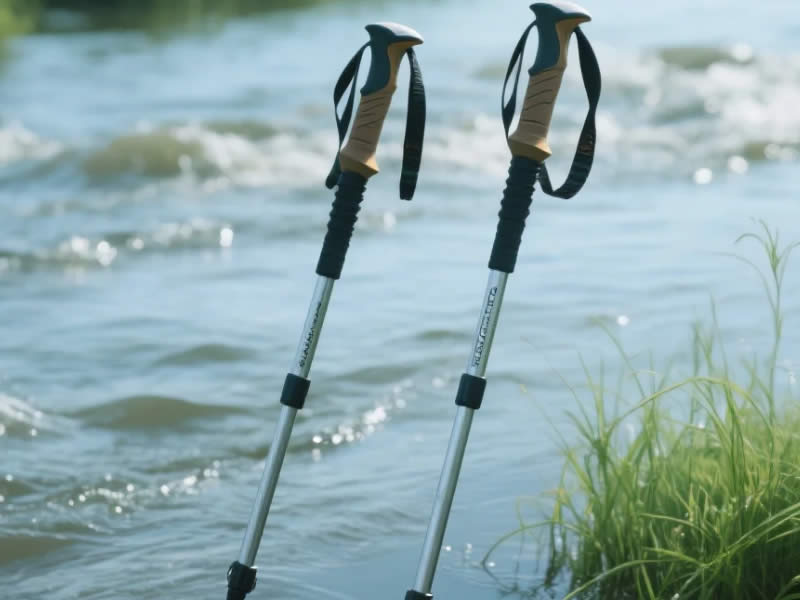
Understanding the challenge: what makes floodplains different?
Floodplains and waterlogged grasslands are not just "muddy"—they are unique in several key ways:
- Deep, saturated soil: The ground is often waterlogged to the point of being semi‑liquid. Standard pole baskets will punch straight through, offering no flotation.
- Hidden obstacles: Beneath the grass and water lie hidden roots, rocks, and even drainage ditches that can trap or bend a pole.
- Slippery vegetation: The grass and reeds are often slick with algae, making footing treacherous and poles prone to sideways slipping.
- Clogging mud: The mud is fine and sticky, quickly clogging standard baskets and locking mechanisms.
- Frequent water crossings: You may need to wade through shallow water, requiring poles that can be quickly cleaned and don't retain water.
A pole for this environment must be durable, adjustable, self‑cleaning, and equipped for maximum flotation.
Essential feature 1: large, open‑weave mud baskets (9cm+)
The single most critical feature for waterlogged grassland is the basket. A standard 5‑cm basket will sink into the mud, making the pole useless. You need a large mud basket of at least 9 cm in diameter, with an open lattice or slotted design that allows mud to pass through. Solid cup‑shaped baskets will trap mud, becoming heavy and clogged. Brands like Leki (their "Mud" basket) and Black Diamond (their "Mud" basket) offer slotted designs that are self‑cleaning to a degree.
Pro tip: Some walkers in extreme floodplains use custom‑made or extra‑large "snow" baskets (10‑12 cm) to maximise flotation. These work exceptionally well, though they can be cumbersome on firmer ground.
Essential feature 2: aluminium over carbon
In floodplains, you're likely to use your pole to probe ahead for firm footing, which means you'll be pushing and twisting it into unknown depths. Carbon fibre poles, while lighter, are brittle and can snap if they become wedged between hidden roots or stones. Aluminium (7075‑T6) is the safer choice—it bends rather than shatters, and a bent pole can often be straightened well enough to finish the walk. The added weight is a minor penalty compared to the reliability.
Essential feature 3: flick‑locks (not twist‑locks)
Mud and water will infiltrate any locking mechanism, but flick‑locks (lever‑locks) are far more tolerant than twist‑locks. Their external, open design means they can be quickly cleaned with a swipe of a cloth or a rinse in a stream. Twist‑locks trap mud and grit in their internal threads, leading to seizing or slipping. In floodplains, flick‑locks are non‑negotiable.
Essential feature 4: cork grips
You'll be gripping your poles with wet, muddy hands. Cork grips absorb moisture, remain non‑slippery, and stay comfortable even in persistent dampness. Rubber or foam grips can become waterlogged, slippery, and uncomfortable. Cork is the material of choice for wet‑weather walking.
Essential feature 5: carbide tips with spare tips
A sharp carbide tip is essential for biting into hidden roots and compacted areas. The floodplain environment is abrasive, and you'll wear down tips faster than usual. Carry a spare set and the replacement tool, and check your tips regularly—a blunt tip will skid on roots, which is dangerous.
Recommended poles for waterlogged grassland
Black Diamond Trail Pro (aluminium)
- Material: 7075‑T6 aluminium
- Lock: FlickLock Pro – secure, easy to clean
- Grip: Cork, ergonomic
- Baskets: Removable 9‑cm "Mud" basket (slotted, self‑cleaning)
- Why: This is the definitive pole for wet, muddy terrain. The FlickLock is bombproof, the mud baskets are excellent, and the cork grip performs well in all conditions.
Leki Makalu (aluminium)
- Material: 7075‑T6 aluminium
- Lock: SpeedLock 2 – reliable and adjustable
- Grip: Cork, Aergon design
- Baskets: Leki's "Mud" basket (cross‑shape, 9 cm) – self‑cleaning
- Why: A classic expedition pole that handles floodplains with ease. The SpeedLock is simple to maintain, and the cork grip is first‑rate.
Budget alternative: Decathlon Forclaz MT900 (aluminium)
- Material: 7075 aluminium
- Lock: Flick‑lock
- Grip: Foam/cork hybrid
- Baskets: Large sand/snow basket (sold separately) – can be used as a mud basket
- Why: For those on a budget, this pole performs surprisingly well. The flick‑lock is reliable, and with the large baskets, it offers good flotation. The grip is not pure cork, but it's adequate.
For extreme flotation: Komperdell Contour Pro with "Snow" baskets
- Material: 7075 aluminium
- Lock: Power Lock (flick‑lock)
- Grip: Cork
- Baskets: Optional 12‑cm snow baskets (use in place of standard baskets)
- Why: In truly deep, waterlogged terrain, the extra‑large snow baskets offer maximum flotation, keeping the poles on the surface of even the softest ground.
Technique for crossing floodplains
Having the right pole is only half the battle. Your technique must adapt:
- Probe before you step: Use your pole to test the depth of the mud ahead. If it sinks more than 30 cm without resistance, find an alternative route (stepping on tussocks, logs, or vegetation).
- Plant vertically: A vertical plant reduces the chance of the tip skidding sideways on hidden roots.
- Lift vertically: Pull the pole straight up—avoid twisting, which can enlarge the hole and destabilise the ground.
- Use a light touch: You don't need to press down hard; the pole is for balance, not propulsion.
- Clean regularly: Every few hundred metres, tap the baskets together to shed accumulated mud.
Maintenance after a floodplain crossing
After a day in waterlogged grassland, your poles will be coated in fine silt and grime. Immediate care is essential:
- Rinse thoroughly with fresh water—especially the locks, basket attachments, and tip threads.
- Dry completely with the locks open to prevent corrosion.
- Inspect the baskets for cracks; floodplains often hide rocks that can damage them.
- Lubricate the locks with dry graphite powder (once completely dry) to keep them moving smoothly.
The verdict
For waterlogged grassland and floodplains, the best trekking pole is an aluminium pole with flick‑locks, cork grips, and large (9cm+), open‑weave mud baskets. The Black Diamond Trail Pro and Leki Makalu are the top choices, offering the durability and reliability this challenging terrain demands. For extreme conditions, consider adding snow‑sized baskets for maximum flotation. With the right poles and proper technique—probing ahead, planting vertically, and cleaning regularly—you'll cross even the wettest floodplains with confidence. Happy walking!




