




Can I try trekking poles in a Cotswold Outdoor store before buying?
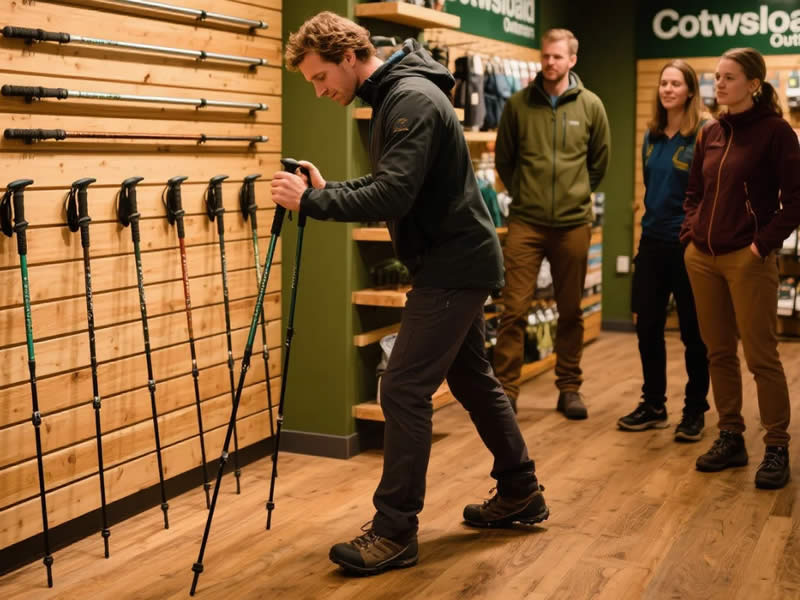
Yes, absolutely—and in fact, Cotswold Outdoor actively encourages it. Trying a pair of trekking poles in‑store is not just allowed; it's a key part of the retailer's service philosophy. With a wide range of brands on display, knowledgeable staff, and even some in‑store terrain simulations, you can get a genuine feel for a pole before you commit to purchase. This article will take you through exactly what to expect, why it matters, and how to make the most of your visit.
Why trying before buying matters
Trekking poles are a highly personal piece of equipment. A pole that feels fantastic in one person's hand may be awkward for another. The grip shape, the weight distribution, the action of the lock—these are all tactile factors that you simply cannot assess from a product page. Buying poles online without trying them is a gamble: you might end up with a lock that's stiff and hard to adjust, a grip that chafes, or a pole that feels heavy and clumsy on the trail.
Cotswold Outdoor understands this. Unlike purely online retailers, they have built a business around enabling customers to interact with gear before buying. The stores are set up to encourage you to pick up poles, extend them, lock them, and even walk around with them.
What you can expect in a Cotswold Outdoor store
1. A wide selection of brands and models
Cotswold Outdoor stocks a comprehensive range of trekking poles, from the premium likes of Leki, Black Diamond, and Komperdell to more budget‑friendly options. You'll typically find multiple models from each brand, allowing you to compare directly. For example, you might try Leki's SpeedLock system against Black Diamond's FlickLock, or compare the feel of a cork grip against a foam grip.
2. Expert staff guidance
The staff at Cotswold Outdoor are, in my experience, genuinely knowledgeable about the gear they sell. Many of them are walkers, climbers, or trail runners themselves. They can help you:
- Understand the differences between locking mechanisms.
- Explain the pros and cons of aluminium vs. carbon fibre.
- Show you how to adjust the wrist straps correctly.
- Advise on which pole length is right for your height and walking style.
3. In‑store testing areas
Some larger branches (like the flagship stores in London or the outdoor‑focused stores in the Lake District) feature small "trail" areas with artificial rock, gravel, or even a slight slope. This allows you to plant the poles and get a sense of how they grip and perform on realistic surfaces. Even without a dedicated test zone, you are encouraged to extend the poles, walk around the store, and adjust them to your preferred length.
4. A pressure‑free environment
The sales approach is generally consultative rather than pushy. You can take your time, try several pairs, and ask questions without feeling rushed. The staff understand that choosing a pole is an investment, and they're there to help you make the right decision.
How to make the most of your store visit
To get the best in‑store experience, a little preparation goes a long way:
1. Know your height and arm length
Pole length is generally calculated as 0.68 × your height in centimetres (for Nordic walking) or 0.70 × height (for general hiking). Having a rough idea of your ideal length means you can test poles that are in the right range, saving time.
2. Wear your hiking boots
Your footwear affects the correct pole length. If you plan to walk in a particular pair of boots, wear them to the store. The raised heel and sole of a boot will mean you need a slightly different length than if you were wearing trainers.
3. Call ahead
If you have a specific model or brand in mind, call the store beforehand to check if they have it in stock and on display. Not every branch carries every model, and it would be disappointing to arrive and find they don't have what you're looking for.
4. Try multiple pairs
Don't settle for the first pair that seems adequate. Try at least two or three different models. Pay attention to:
- The grip: Does the cork feel comfortable? Is the foam too soft? Is there a shape that fits your hand better?
- The lock: Is it smooth to open and close? Does the cam feel secure?
- The weight: Do the poles feel light enough for the long walks you have in mind?
- The wrist strap: Is it padded? Is it easy to adjust?
5. Ask about the return policy
Even after trying in‑store, you might find that a pole feels different on a real trail than in the shop. Cotswold Outdoor has a generally generous return policy (check the current terms), so you can buy with confidence, knowing you can exchange if the pole doesn't work out on the trail.
The in‑store vs. online decision
Trying in‑store doesn't mean you have to buy there and then. Some walkers use the store visit to narrow down their choices, then go home and compare online prices. This is a perfectly reasonable approach. However, Cotswold Outdoor often has in‑store promotions and their staff can sometimes offer advice on price‑matching or upcoming sales. If you want to support a physical retailer and get the personalised service, buying in‑store is a great option.
What about the Cotswold Outdoor "Try Before You Buy" loan scheme?
While Cotswold Outdoor doesn't have a formal, nationwide "rental" programme for trekking poles, some larger stores or store groups may allow you to take a pole out for a brief test walk in the immediate vicinity. This is often at the discretion of the store manager. It's always worth asking—especially if you're considering a more expensive pole like a carbon fibre model.
Final verdict
Yes, you can definitely try trekking poles in a Cotswold Outdoor store before buying. The retailer is specifically designed to support this, with knowledgeable staff, a wide product range, and an open, welcoming atmosphere. The benefits are substantial: you'll get a better feel for the pole, you'll avoid the risk of an ill‑fitting online purchase, and you'll have the confidence that you're making the right choice for your walking style and budget. So next time you're near a Cotswold Outdoor branch, pop in, pick up a few poles, and give them a proper test. Your hands—and your knees—will thank you.




