




Do UK outdoor stores let you walk around the shop floor with trekking poles?
Yes—and they actively encourage it. The major UK outdoor retailers understand that a trekking pole is not a product you can buy purely by reading a specification sheet. You need to feel the weight, assess the grip, and experience how the pole handles when you plant it and lean on it. Cotswold Outdoor, Go Outdoors, Ellis Brigham, and most independent outdoor shops all allow—and even invite—customers to walk around the shop floor with trekking poles. This article explains why this policy exists, how to make the most of it, and what to look out for during your in‑store trial.
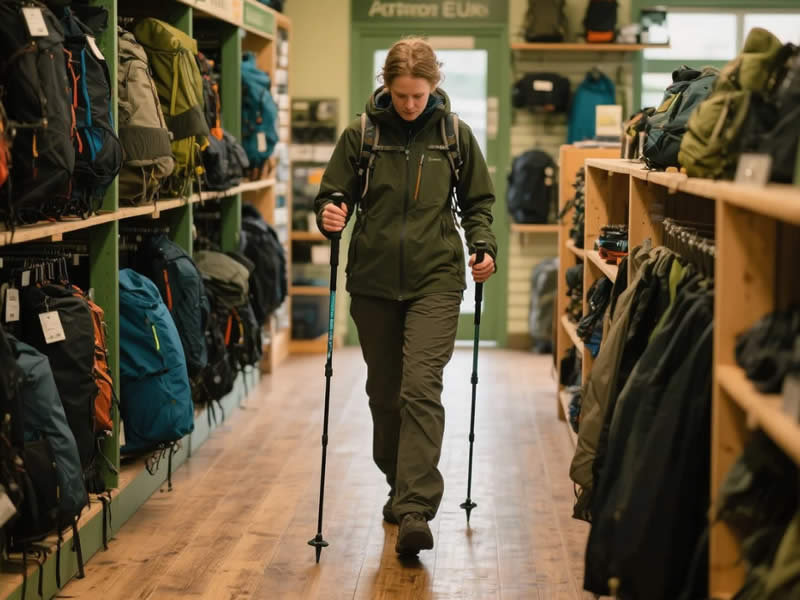
Why walking with the poles matters
Trekking poles are a highly personal piece of equipment. A pole that feels perfectly balanced for one walker may feel cumbersome for another. The grip shape, the action of the lock, the weight distribution, and the length all combine to create a subjective experience that cannot be captured in a photo or a review. You need to feel the pole in motion.
When you walk around the shop floor, you are simulating—albeit in a limited way—the actual movement of hiking. You can:
- Test whether the wrist strap allows you to relax your grip and transfer weight effectively.
- Check if the pole's length feels right for your stride.
- Assess how the lock mechanism feels when you adjust it mid‑walk.
- Compare the feel of a cork grip versus a foam grip while actually putting pressure on it.
A 5‑minute stroll around the store can prevent a costly mistake.
Which stores allow this practice?
Cotswold Outdoor
Cotswold Outdoor is one of the most accommodating. Their stores are designed with open floor space to allow you to walk around. Many branches even have a small "terrain" area with artificial rock or gravel where you can plant the poles and feel the grip. The staff are trained to encourage this.
Go Outdoors
Go Outdoors also encourages in‑store testing. Their larger branches have ample space and knowledgeable staff who will happily adjust the poles for you and explain the features while you try them.
Ellis Brigham
Ellis Brigham, particularly its flagship store in Covent Garden, has a curated selection of premium poles and a consultative approach. You are expected to handle the poles and walk around the shop floor.
Independent and specialist shops
Smaller independent shops in walking hotspots like the Lake District, Peak District, or Snowdonia are often the most accommodating—they understand that their customers are serious walkers who need to try before buying.
How to make the most of your floor test
To get a realistic trial, follow these steps:
1. Wear your hiking boots
Your footwear affects the correct pole length. A hiking boot has a thicker sole and raised heel compared to a trainer. If you wear your actual boots, the pole length you settle on will be accurate for your real‑world walking.
2. Adjust the poles to your height
Ask the staff to help you set the length. The general rule is your elbow should be at approximately 90° when the tip is on the floor and you're standing upright. This is your "neutral" length—you'll later adjust it for uphills and downhills.
3. Walk naturally
Don't just stand still. Take a few paces, plant the poles as you would on a trail, and push down. Notice if the pole feels heavy, if the grip is comfortable, and if the wrist strap holds securely.
4. Try different locking mechanisms
Open and close the locks while walking. See if you can adjust the length easily with one hand. This is a common action on the trail, and it should be smooth and intuitive.
5. Compare multiple models
Don't settle for the first pole you try. Test at least two or three models from different brands. Compare Leki's SpeedLock with Black Diamond's FlickLock. Compare a cork grip with a foam grip. The differences will become obvious once you walk with them.
What you can't simulate in-store
It's worth acknowledging that walking on a shop floor is not the same as walking on a muddy, uneven trail. You won't get the same feedback from the tip, and you won't feel the pole sinking into soft ground. However, you will get a very good sense of the pole's weight, balance, and the comfort of the grip. For the aspects you can't test, use the staff's expertise: ask them about tip durability, basket performance, and real‑world feedback from other customers.
Is there a limit to the walking test?
While stores are accommodating, there is a practical limit. You should not walk around the entire store for 20 minutes—that would be unreasonable. A few minutes of walking, some time planting the poles on the floor or a test surface, and a careful comparison of a few models is perfectly acceptable. If you need more time, ask the staff if you can step outside the store (some branches allow this for a brief test on the pavement). Always respect the store's environment and other customers.
Staff assistance during the test
The staff are there to help. Don't hesitate to ask:
- "Can you adjust the length for me?"
- "What's the difference in grip between these two models?"
- "How does the lock work on this one compared to that one?"
- "Which pole would you recommend for the terrain I walk on?"
They can also demonstrate proper wrist strap usage and lock maintenance.
The verdict
Yes, UK outdoor stores let you walk around the shop floor with trekking poles—and they expect you to. This hands‑on trial is an essential part of the buying process, and the major retailers have designed their spaces to facilitate it. Wear your boots, take your time, try multiple models, and use the staff's knowledge. A 10‑minute walk around the shop floor is a small investment that saves you from a poor purchase and ensures you leave with poles that feel like an extension of your arms. Happy testing!




