




Is it better to buy online or in-store for a first pair of trekking poles?
If you're about to buy your first pair of trekking poles, you're facing a classic dilemma: tap your screen and wait for the parcel, or head to a physical shop and handle the poles yourself. For beginners, the answer is almost always in‑store. The tactile experience—feeling the grip, testing the lock, and getting the length right—is simply irreplaceable. However, that doesn't mean you should ignore online entirely. This guide explores the pros and cons of each, gives you a smart hybrid strategy, and helps you avoid the most common mistakes first‑timers make.
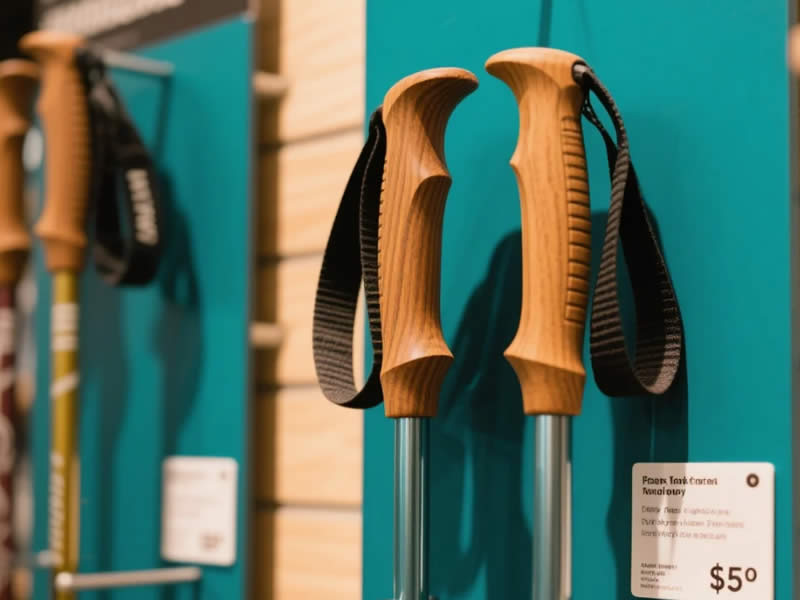
Why in‑store is the safer bet for newcomers
1. Grip comfort is a personal thing
A trekking pole grip might look comfortable in a product photo, but the real test is how it feels in your hand. Cork, foam, and rubber all have different textures and shapes. Some grips have ergonomic contours that fit one hand but not another. In a store, you can hold a Leki in one hand and a Black Diamond in the other, comparing them side‑by‑side. You'll immediately notice which one feels more natural. Online, you're guessing.
2. Length adjustment is not just about height
The general rule—elbow at 90°—is a starting point, but your walking style, torso length, and the terrain you'll tackle all influence the ideal length. In a store, a knowledgeable assistant will set the poles to your height, watch you walk, and fine‑tune the adjustment. They'll also show you how to adjust the length for uphill and downhill, which is a skill you'll need on the trail. You simply can't replicate that with a tape measure at home.
3. You can test the locking mechanism
The lock is the heart of a telescopic pole. Twist‑locks, flick‑locks, and cam‑locks all feel different. Some are stiff out of the box; others are smooth. In a shop, you can open and close the locks repeatedly to see which one you find easiest. You'll also notice whether the mechanism feels robust or flimsy. This tactile evaluation is critical because a lock that fails on the trail can be dangerous.
4. Expert advice tailored to you
Staff at specialist retailers like Cotswold Outdoor, Go Outdoors, and Ellis Brigham are often walkers themselves. They can ask about your typical walks (moors, forests, or rocky ridges) and recommend the right basket size, tip type, and material (aluminium vs. carbon). For a first‑timer, this guidance is worth its weight in gold—it prevents you from buying a pole that's unsuitable for your intended use.
5. You can walk around and simulate
Many larger stores now have demo areas with artificial rock or gravel where you can plant the poles and feel how they grip. Some even allow you to step outside for a brief test on the pavement. This real‑world simulation gives you confidence that the poles will perform as expected.
What online offers (and why it can be a trap)
Online shopping isn't without its advantages:
- Lower prices: Pure‑play retailers and marketplaces like Amazon often undercut physical stores by 10‑30%.
- Wider choice: You'll find brands and models that may not be stocked locally.
- Convenience: Next‑day delivery and easy returns are attractive.
However, for a first pair, these benefits come with significant risks:
- You can't test the feel: The grip might chafe, the lock might be awkward, and the weight might tire you out.
- Returns are a hassle: Even free returns involve printing labels, repackaging, and dropping off. In‑store, you simply walk in.
- Counterfeit risk: Third‑party sellers on marketplaces sometimes sell fakes or grey‑market goods that look like the real thing but fail quickly.
Many beginners who buy online end up returning the first pair and then visiting a store anyway. That's wasted time and shipping carbon.
The smart hybrid approach
For most first‑timers, the best strategy is a two‑step process:
- Research online – Read reviews, watch YouTube videos, and narrow down your list to 2–3 models.
- Visit a store – Try those specific models. Handle them, adjust them, and walk around. Ask the staff for their opinion.
- Price‑match – If you find a cheaper price online, many UK retailers will match it. Cotswold Outdoor and Go Outdoors both have price‑match policies, so you can enjoy the online price with in‑store service.
This approach gives you the best of both worlds: the hands‑on experience of a physical shop and the competitive pricing of online.
Which UK stores to visit
- Cotswold Outdoor: Nationwide, premium brands, knowledgeable staff, and price‑matching.
- Go Outdoors: Wide range from budget to premium, price‑matching, and large branches.
- Decathlon: Excellent for budget and mid‑range, generous 365‑day returns, and plenty of demo poles.
- Ellis Brigham: Specialist mountain shops with expert advice, especially in the Lake District.
- Independent shops: In walking hotspots, you'll find passionate staff who often have years of practical experience.
Final verdict
For your first pair of trekking poles, buy in‑store. The ability to test grip, lock, and length—combined with expert advice and price‑matching—far outweighs the convenience of online shopping. Use online research to shortlist, then visit a shop to make your final decision. A 15‑minute test can save you from blisters, wrist pain, and wasted money. Happy walking—and may your first poles be the start of many great adventures!




