




Can trekking poles help correct a pelvic tilt and improve walking gait?
Yes—but indirectly. Trekking poles are not a direct corrective tool for pelvic tilt, but they can play a significant supportive role in improving walking gait and pelvic alignment. By reducing load on the lower body, encouraging a more upright posture, and promoting symmetrical weight transfer, they can help create the conditions for a more balanced gait. However, they are a tool, not a cure—for true correction, you need a physiotherapist's assessment and a targeted exercise programme. This article explains the biomechanics, the research, and the practical steps you can take to use poles as part of a broader strategy for better posture and walking efficiency.
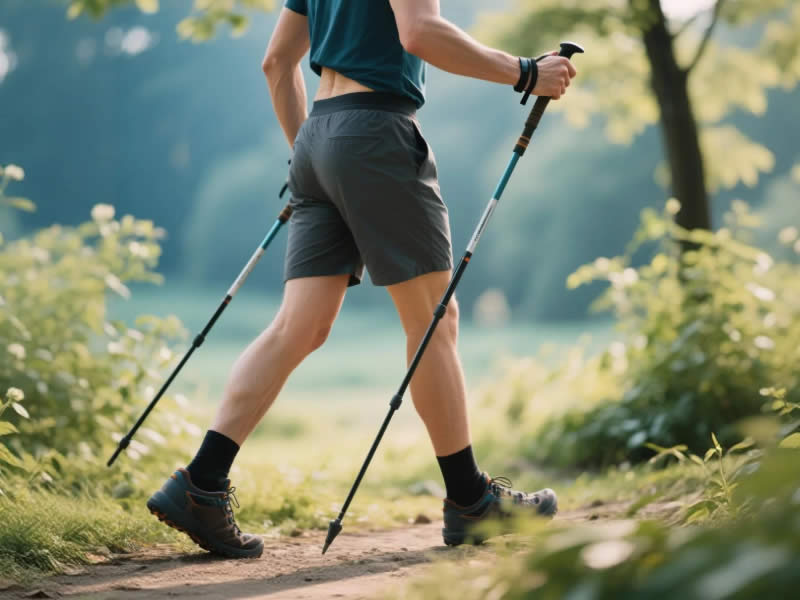
Understanding pelvic tilt and gait
Pelvic tilt refers to the angle of the pelvis relative to the spine and legs. An anterior tilt (pelvis rotated forward) is common and can be caused by tight hip flexors, weak glutes, or prolonged sitting. A lateral tilt (one side higher than the other) can result from leg length discrepancy or muscle imbalances. Both types can lead to:
- Lower back pain.
- Reduced hip extension.
- Altered knee and foot mechanics.
- Inefficient walking (wasted energy).
Walking gait is the pattern of movement you use to walk. An efficient gait involves a stable pelvis, good hip extension, and a smooth transfer of weight from one leg to the other. When the pelvis is tilted, your gait compensates—often by overusing the lower back, hip flexors, or one leg more than the other.
How trekking poles can help
1. Encouraging a more upright posture
When you use trekking poles with a relaxed grip and a long stride, you are naturally encouraged to stand taller. The poles provide feedback: if you hunch forward, the pole length feels wrong; if you stand upright, the poles engage your lats and core. This upright posture can help reduce an anterior pelvic tilt by allowing the hip flexors to lengthen and the glutes to engage more effectively.
2. Offloading weight to reduce compensatory movements
A pelvic tilt often leads to overuse of certain muscles—for example, the hip flexors may work too hard to stabilise the pelvis. By transferring up to 30% of your body weight to your arms, poles reduce the demand on the lower body. This can allow your glutes and core to work more efficiently, reducing the compensatory patterns that drive the tilt.
3. Promoting symmetrical weight transfer
A lateral pelvic tilt (one side higher) often results from an asymmetrical gait—you favour one leg, which causes the pelvis to drop on the opposite side. With two poles, you are encouraged to transfer weight symmetrically. Each step and each pole plant should be matched, which can help even out pelvic motion over time.
4. Reducing shock and improving proprioception
The impact of walking on hard surfaces can cause your pelvis to tilt in response to the shock. Poles reduce this shock, allowing the pelvis to maintain a more neutral position. Additionally, the extra points of contact give you better proprioceptive feedback—you become more aware of your pelvis and your posture.
What the research says
Biomechanical studies on poles and gait are relatively few, but there is evidence that poles:
- Reduce the amount of trunk rotation during walking, which can help stabilise the pelvis.
- Increase gluteal muscle activation when used with a long, pushing stride (the technique used in Nordic walking).
- Promote a more upright trunk angle, which is associated with a more neutral pelvic tilt.
These effects are indirect but meaningful. However, there is no study that directly shows poles correcting a pelvic tilt over time—that would require a controlled, long‑term intervention.
Practical steps: using poles to improve pelvic alignment
If you want to use poles to support pelvic alignment, follow these guidelines:
1. Get the length right
Correct pole length is essential. Stand upright with the pole tip on the floor, and adjust so your elbow is at roughly 90°. This length encourages an upright posture. If you have a pelvic tilt, a slightly longer pole may help you stand taller—but consult a professional.
2. Use a long, pushing stride
When walking with poles, focus on pushing down and back with each plant, extending your arm behind your hip. This engages your lats and core, which stabilises the pelvis. It also promotes hip extension—a movement that is often limited in people with an anterior pelvic tilt.
3. Engage your core
Poles are not just for arms—they can help you engage your core. As you plant each pole, think about pulling your belly button towards your spine and lifting through your pelvis. This creates a stable platform for your legs.
4. Practice Nordic walking technique
Nordic walking, which involves a more pronounced arm swing and a longer stride, has been shown to engage the glutes and core more than standard walking. A local instructor can teach you the technique.
Limitations and the importance of professional assessment
Trekking poles are a supportive tool, not a corrective device. They cannot reverse a pelvic tilt caused by long‑standing muscle imbalances, structural issues, or joint problems. To truly correct a pelvic tilt, you need:
- A physiotherapy assessment: A professional can identify the specific muscles that are tight or weak.
- Targeted exercises: Glute bridges, planks, hip flexor stretches, and other exercises are essential.
- Gait retraining: A therapist can analyse your walking pattern and give you drills to improve it.
Poles can be used alongside this programme—they can make walking more comfortable and allow you to practice good posture without overloading your joints.
The verdict
Trekking poles can help improve walking gait and support pelvic alignment by encouraging an upright posture, reducing compensatory movements, and promoting symmetrical weight transfer. However, they are not a cure. They are a tool that can be part of a broader strategy, which should include physiotherapy, targeted exercises, and gait retraining. For anyone with pelvic tilt or gait issues, combining poles with professional guidance is the most effective approach. Happy—and balanced—walking!




