




Do physiotherapists in the UK recommend specific pole techniques for glute activation?
Yes—UK physiotherapists commonly recommend specific trekking pole techniques for glute activation. The key principle is using the poles to encourage hip extension and to engage the glutes through a long, pushing stride. By planting the pole and pushing down and back, you force your hip into extension, activating the gluteus maximus on the opposite side. This technique is often part of a broader rehabilitation or conditioning programme, particularly for patients with gluteal weakness, lower back pain, or knee issues. This article explores the specific techniques recommended by UK physiotherapists, the biomechanical rationale, and how to integrate pole walking into a glute‑strengthening programme.
The role of the glutes in walking
The gluteus maximus is the largest muscle in the body and is responsible for hip extension—the movement of moving your leg backward. During walking, the glutes fire at the end of the stance phase, propelling you forward. Weak or underactive glutes are a common finding in patients with:
- Lower back pain (due to compensatory lumbar extension).
- Knee pain (as the hamstrings and quadriceps overwork).
- Hip pain (as the tensor fasciae latae and hip flexors compensate).
Strengthening the glutes is a cornerstone of rehabilitation for these conditions. Trekking poles can be a powerful tool to facilitate this activation, provided they are used with a specific technique.
The physiotherapist's recommended technique: the "long push"
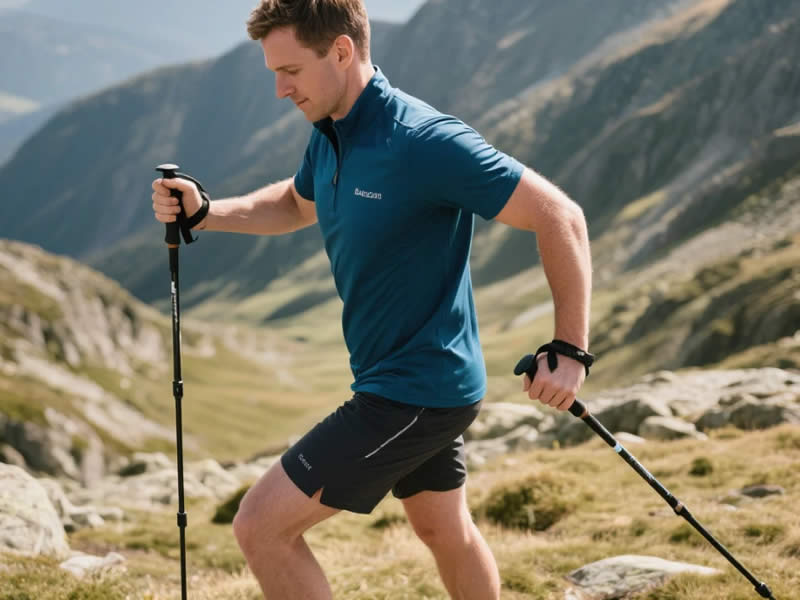
The core technique recommended by UK physiotherapists is the "long push" —a deliberate, forceful push down and back on the pole, extending your arm behind your hip. This movement forces your hip into extension on the opposite side, activating the gluteus maximus.
Step‑by‑step:
- Plant the pole: As you step forward, plant the pole of the opposite side (e.g., left foot forward, right pole planting).
- Push down and back: Instead of just pushing straight down, drive the pole backwards with a controlled, forceful motion. Your arm should extend behind your hip.
- Focus on the push‑off: The push‑off from the pole should be the signal for your glute to fire. Think of it as "pushing the ground behind you."
- Maintain an upright torso: Leaning forward inhibits glute activation. Keep your chest open, your shoulders back, and your core engaged. This allows the glutes to fire effectively.
Why this works: the biomechanics
The long push creates a contralateral (opposite side) loading pattern. When you push down and back with the right pole, the force travels up your right arm, through your torso, and into your left hip. This forces your left hip to extend, engaging the left gluteus maximus. With each step, you are creating a rhythmic, alternating activation that mimics the natural gait pattern but with enhanced loading.
This is different from a passive planting technique, where the pole is just placed on the ground without a forceful push. Passive planting does not engage the upper body muscles and does not create the hip extension demand that activates the glutes.
What UK physiotherapists specifically recommend
1. Glute activation drills with poles
Some physiotherapists use poles as a feedback tool for glute activation. A common drill is to walk with poles and focus on the "push‑off" feeling. The patient is instructed to "push the ground away" with the pole, and the therapist provides verbal feedback on whether the glute is firing.
2. Integration with strengthening exercises
Poles are often used in conjunction with glute‑strengthening exercises. For example, a patient might do 10 minutes of pole walking focusing on the long push, followed by 10 minutes of clamshells and glute bridges.
3. Use in gait retraining
For patients with a lateral pelvic tilt or a gluteus medius weakness, physiotherapists may use poles to promote a more symmetrical gait. The poles encourage a balanced, reciprocal pattern that can help "re‑educate" the glutes to fire in the correct sequence.
The importance of the wrist strap
The wrist strap is essential for this technique. A correctly adjusted strap allows you to push down without gripping the handle tightly. This frees you to focus on the push, rather than the grip. Hand up through the strap, then grip loosely. The strap should bear the load of the push, not your fingers.
Practical guidance for patients
1. Start on flat ground
Before attempting hills, practice the long push on flat, even terrain. This allows you to focus on the technique without worrying about balance.
2. Use a conscious cue
Think of "pushing the ground behind you" with each step. This mental cue helps engage the glutes.
3. Maintain a brisk pace
A cadence of 120‑140 steps per minute encourages a more rhythmic, consistent push.
4. Focus on posture
Keep your shoulders back and your core engaged. A forward lean reduces glute activation.
5. Integrate with your programme
Poles are a tool, not a cure. Combine pole walking with a targeted strengthening programme (glute bridges, clamshells, single‑leg squats) for the best results.
What the research says
There is a growing body of research on the use of walking poles for glute activation. A 2020 study published in the Journal of Physical Therapy Science examined the effect of Nordic walking (which uses a similar pole technique) on gluteus maximus activation. The study found that Nordic walking significantly increased gluteal activity compared to regular walking, particularly during the push‑off phase. The authors noted that the increased upper body engagement and the longer stride were key factors.
Important caveats
1. Poles do not replace strengthening
Poles can facilitate glute activation during walking, but they cannot strengthen the glutes on their own. You still need targeted exercises.
2. Proper technique is essential
A passive planting technique does not engage the glutes. The long push is the key.
3. Individual variation
The optimal technique depends on your specific muscle imbalances, your posture, and your walking style. A physiotherapist can tailor the technique to your needs.
The verdict
Yes, UK physiotherapists do recommend specific pole techniques for glute activation. The core technique is the long push—a forceful push down and back on the pole, extending the arm behind the hip. This movement forces the hip into extension on the opposite side, engaging the gluteus maximus. The technique is often used as part of a broader rehabilitation or conditioning programme, combined with targeted strengthening exercises and gait retraining. For patients with gluteal weakness, lower back pain, or knee issues, poles can be a valuable tool for facilitating glute activation. Always consult a physiotherapist for a personalised programme.




