




What is the difference between "Nordic walking poles" and "trekking poles" in UK shops?
In UK shops, the difference is fundamental: "Nordic walking poles" are designed for a specific fitness technique, while "trekking poles" are for balance and support on uneven ground. The distinction is not just marketing—it is based on design features that dictate how the pole is used. This article explains the key differences, the appropriate use cases, and how to choose the right pole for your needs.
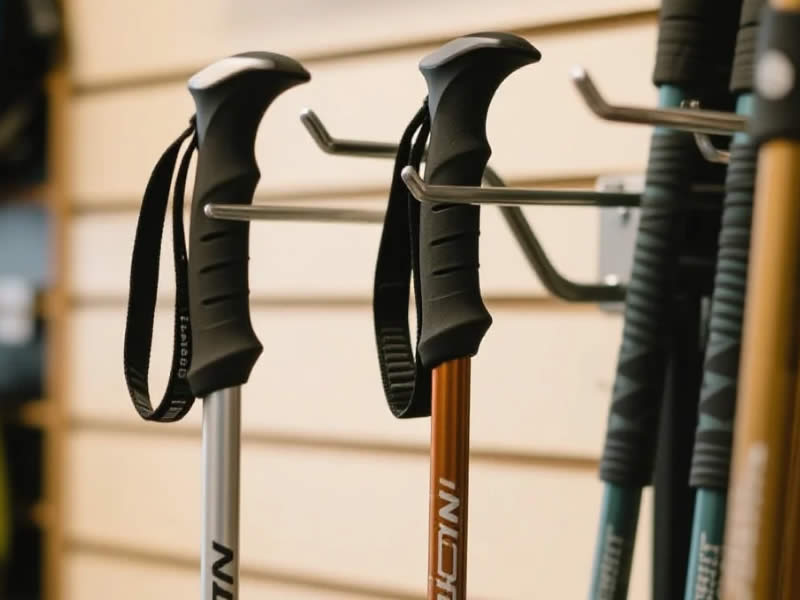
The fundamental difference: the wrist strap
The most significant difference lies in the wrist strap system. This single feature dictates the entire technique.
Nordic walking poles: the trigger‑strap
- Design: A wide, glove‑like strap (often called a "trigger‑strap" or "glove‑strap") that wraps around the hand. It is designed to transfer the load from the arm to the pole.
- Function: You can release the handle during the backward push, while the strap continues to transfer the force. This allows you to engage your core, arms, and shoulders in a full‑body, rhythmic motion.
- Technique: The pole is not gripped tightly; it is held loosely, and the strap does the work. This is the essence of Nordic walking.
Trekking poles: the standard loop strap
- Design: A simple, adjustable loop strap that goes around the wrist.
- Function: The strap is for security—to prevent you from dropping the pole. It provides some support, but you grip the handle to transfer power.
- Technique: You grip the handle firmly to push down on the pole. The pole is used for balance and support, not for a full‑body workout.
The implication: If you want to engage your upper body and get a cardiovascular workout, you need a trigger‑strap system. If you want stability on uneven ground, a standard loop strap is sufficient.
Pole length calculation
The correct length for each type of pole is calculated differently.
Nordic walking poles: 0.68 × height
- Formula: The pole length is calculated as 0.68 × your height in centimetres.
- Why: This gives a shorter pole, which encourages a more upright posture and a shorter, more frequent stride. This is biomechanically beneficial for the Nordic walking technique.
- Example: For a person 170 cm tall, the correct length is 170 × 0.68 = 115.6 cm.
Trekking poles: 0.70 × height (or the 90° rule)
- Formula: The pole length is typically calculated as 0.70 × height or by using the "elbow at 90°" rule.
- Why: This gives a longer pole, which is suitable for a longer stride and for providing support on uneven terrain.
- Example: For a person 170 cm tall, the correct length is 170 × 0.70 = 119 cm (or the elbow at 90° rule).
The implication: If you use a trekking pole with Nordic technique, it will be too long and will force you to lean forward, reducing the efficiency of the exercise. Conversely, using a Nordic pole for trekking will leave you with a pole that is too short for optimal support.
Shaft material and flex
Nordic walking poles
- Material: Often made of lighter materials (e.g., high‑grade aluminium or carbon) with a slight flex in the shaft.
- Reason: The flex absorbs the impact of the pole plant and reduces the shock transmitted to the shoulders and arms. This is beneficial for a rhythmic, repetitive motion.
Trekking poles
- Material: Heavier and stiffer, designed to withstand the forces of a heavy pack and rough terrain.
- Reason: The stiffness provides a solid, stable platform for pushing on rocky ground. They do not flex as much, which is fine for their intended purpose.
The implication: A Nordic pole is not designed to withstand the lateral forces of a heavy pack or rough terrain. It would be too flexible and could bend. A trekking pole is too stiff for the rhythmic flex required in Nordic walking.
Tip design
Nordic walking poles
- Tip: Often have a flexible rubber ferrule with a small, integrated tungsten carbide pin.
- Reason: This design provides excellent grip on asphalt, grass, and dirt without damaging the surface. It is designed for use on varied urban and park surfaces.
Trekking poles
- Tip: Typically use a rigid tungsten carbide tip.
- Reason: This is designed for maximum grip on rock and hard‑packed trails. It is not suitable for hard surfaces like concrete, as it can scratch and is loud.
The implication: A Nordic pole can be used on pavements, while a trekking pole is designed for off‑road use only.
Weight and design features
Nordic walking poles
- Lighter: Typically under 200g per pole.
- Design: Often have a distinctive, slender appearance, with a fixed strap and a simple flick‑lock or twist‑lock.
- Accessories: May come with interchangeable tips (road and trail) and a protective cover.
Trekking poles
- Heavier: Typically 250‑300g per pole.
- Design: Often have a robust, chunkier appearance, with a flick‑lock or twist‑lock and a wrist strap.
- Accessories: May come with a range of baskets (snow, mud) and interchangeable tips.
When to choose which
Choose Nordic walking poles if:
- You want a fitness tool to improve cardiovascular health, posture, and core strength.
- You will use them on flat, even surfaces (parks, promenades, urban paths).
- You are prepared to learn a specific technique (or take a class).
- You want to engage your upper body and get a more intense workout.
Choose trekking poles if:
- You need balance and stability on uneven, rocky, or muddy ground.
- You carry a heavy backpack and need support on descents.
- You want to reduce knee strain on steep hills.
- You are a hiker or walker who values stability and safety on the trail.
Summary table
| Feature | Nordic Walking Poles | Trekking Poles |
|---|---|---|
| Wrist strap | Trigger‑strap (glove‑like) | Standard loop strap |
| Length calculation | 0.68 × height | 0.70 × height (or 90° rule) |
| Shaft | Lightweight, slight flex | Heavier, stiff |
| Tip | Rubber ferrule + small pin | Rigid tungsten carbide |
| Technique | Full‑body, rhythmic push | Balanced support, plant and push |
| Best for | Fitness, flat ground, upper‑body workout | Hiking, uneven terrain, knee support |
The verdict
In UK shops, Nordic walking poles and trekking poles are distinct products with different designs, intended uses, and techniques. The wrist strap is the most obvious difference, but the length calculation, shaft flex, and tip design are equally important. Choosing the wrong type can lead to discomfort, poor performance, or even injury. For a fitness‑focused workout on flat ground, choose Nordic walking poles with a trigger‑strap. For balance and support on hills and trails, choose trekking poles with a standard loop strap. Always try the poles in a store to check the grip and the strap system—the trigger‑strap requires practice to use correctly. With the right choice, you'll get the most out of your walking experience.




