




Do British mountaineers prefer the term "ski poles" for winter trekking poles?
No—British mountaineers do not use the term "ski poles" for winter trekking poles. The two are distinct tools with different designs, and the terminology reflects that. "Ski poles" are designed exclusively for skiing, with a specific length for ski posture, a large basket, and a grip shape suited to gripping a ski pole while wearing gloves. "Trekking poles" (or "walking poles") are used for winter walking and mountaineering, often with a snow basket attached. The terms are not interchangeable.
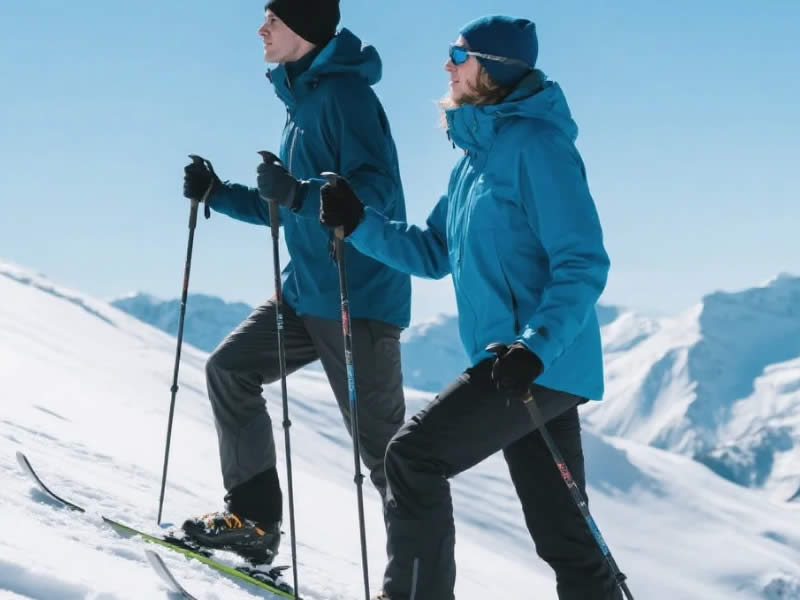
This article explains the key differences, the cultural context of British mountaineering, and the correct terminology for winter walking.
The fundamental difference: design and purpose
Ski poles
- Purpose: Designed for cross‑country or downhill skiing.
- Length: Fixed or adjustable, but the length is calculated based on the skier's height and the type of skiing (e.g., shorter for downhill, longer for cross‑country).
- Basket: Large, often with a specific shape to provide flotation in snow.
- Grip: A simple, straight grip, often with a small strap that goes around the wrist. The grip is designed to be held with a gloved hand while the skier is in a crouched position.
- Tip: A carbide tip for grip on ice or hardpack.
Trekking poles (for winter)
- Purpose: Designed for walking on snow‑covered terrain.
- Length: Adjustable, allowing the walker to lengthen them for descents and shorten them for ascents.
- Basket: A large snow basket (often called a "snow basket") is attached to prevent the pole from sinking into soft snow. This is the same type of basket used in skiing, but the pole itself is different.
- Grip: A comfortable, ergonomic grip, often with a wrist strap. The grip is designed for a walking motion.
- Tip: A carbide tip, but often with a rubber or metal ferrule to protect the tip on rocky ground.
The key difference: A ski pole is designed for the dynamic, forward‑leaning posture of skiing, while a trekking pole is designed for the upright posture of walking. The grip shape, length calculation, and overall structure are different.
British mountaineering terminology
In British mountaineering, the term "ice axe" is used for the classic mountaineering tool for steep ice and snow. For less steep winter terrain, "trekking poles" (or "walking poles") are the correct term. "Ski poles" is reserved for actual skiing.
On UK mountaineering forums (e.g., UKClimbing, Walkhighlands), you will see:
- "What are the best trekking poles for winter walking?"
- "Do I need snow baskets for my walking poles?"
- "Can I use ski poles for winter walking?"
The responses will consistently correct the terminology: "Ski poles are for skiing. For walking, you need trekking poles."
Why the distinction matters
1. The grip shape
A ski pole grip is designed to be held in a skiing position: hand on top of the grip, with the strap around the wrist. This is suitable for the crouched, forward‑leaning posture of skiing. A trekking pole grip is designed for an upright walking posture, with a more ergonomic shape and a wrist strap that allows you to push down on the pole.
2. The length calculation
The length of a ski pole is calculated based on the skier's height and the type of skiing. A trekking pole is adjustable, allowing the walker to change the length for different terrain.
3. The basket size
Both use similar snow baskets, but a ski pole's basket is often larger and designed for a specific type of snow, while a trekking pole's snow basket is more versatile.
4. The activity
The activity determines the terminology. If you are skiing, you use ski poles. If you are walking, you use walking poles. Even in winter, the activity determines the name.
When the terms might overlap
In some contexts, a walker might use a pair of ski poles as an improvised walking aid, particularly in flat, snowy terrain. However, this is a compromise—ski poles are not designed for walking and can be uncomfortable for prolonged use. British mountaineers would not call them "ski poles" in this context; they would still refer to them as "walking poles" or "trekking poles," acknowledging that they are being used for walking.
What to say when buying
If you are in a UK shop, the correct term to use is:
- "Trekking poles" or "walking poles" for the poles themselves.
- "Snow baskets" for the large baskets used in winter.
- "Mud baskets" for the smaller baskets used on soft ground.
If you want to use poles in snow, you should ask for "trekking poles with snow baskets." The staff will understand immediately.
A quick forum search test
A quick search on UKClimbing for "ski poles" will show that the term is rarely used outside of skiing discussions. A search for "trekking poles" will show hundreds of results on winter walking, gear recommendations, and technique. The community is consistent in its terminology.
Summary table
| Term | Usage | UK Mountaineering Context |
|---|---|---|
| Ski poles | For skiing | Not used for walking |
| Trekking poles | For walking on uneven ground | Standard term for winter walking |
| Walking poles | For walking (all seasons) | Used interchangeably with trekking poles |
| Snow baskets | The large basket | The correct term for the basket used in snow |
The verdict
No—British mountaineers do not prefer the term "ski poles" for winter trekking poles. The two are distinct tools with different designs and purposes. The correct term for poles used for walking on snow‑covered terrain is "trekking poles" or "walking poles" with "snow baskets." If you are on a UK mountaineering forum and refer to your trekking poles as "ski poles," you will likely be corrected. The distinction is important because it reflects the different design, the different intended use, and the different technique required. For any winter walking, use the correct term—it will help you get the right advice and the right equipment for the job.




