




Does the UK brand Lifeventure make good quality carbon poles?
For hikers and backpackers seeking lightweight, affordable trekking poles, the British brand Lifeventure often appears on the radar. Known for practical travel accessories and outdoor gear, Lifeventure has expanded into carbon‑fibre poles – notably the Trail Light and Ultra Carbon models – priced competitively around £60–£80 per pair. But the crucial question lingers: are they genuinely good quality, or do they sacrifice durability for a low price tag? This in‑depth review dissects the materials, construction, performance, and real‑world reliability of Lifeventure’s carbon poles, comparing them with premium alternatives and advising exactly who should – and should not – buy them.
Lifeventure as a Brand: What Do They Stand For?
Founded in the 1990s, Lifeventure has built a reputation for functional, no‑frills travel gear – from silk sleeping liners to washbags and dry bags. Their trekking poles are a natural extension, aimed at the budget‑conscious weekend walker rather than professional mountaineers. Unlike specialist pole manufacturers (Leki, Black Diamond, Komperdell), Lifeventure does not invest heavily in proprietary locking technologies or advanced carbon layups. Instead, they source from established Asian factories, tweak designs for the UK market, and offer a reassuring two‑year warranty. This approach keeps costs down but raises legitimate concerns about quality control and long‑term resilience – especially when carbon fibre is involved.
The Carbon Poles: Specifications and Range
Lifeventure currently offers two main carbon models:
- Trail Light Carbon: 3‑section collapsible, twist‑lock or flip‑lock options, cork or foam grips, tungsten‑carbide tips, weight ~180 g per pole.
- Ultra Carbon: Slightly lighter (~170 g) with a more refined cam‑lock system and carbon‑weave finish, priced around £75.
Both are marketed for “long‑distance walking, backpacking, and trekking” – a bold claim given their featherlight construction. The shafts are made from 100% carbon fibre, not a carbon‑aluminium hybrid, which maximises weight saving but also increases brittleness. The sections telescope from about 65 cm to 135 cm, covering most height ranges.
Build Quality: Where Carbon Excels and Fails
Carbon fibre offers unmatched vibration damping – a real benefit on hard‑packed trails, as it reduces arm fatigue over many miles. Lifeventure’s poles absorb shock well, and their low swing weight makes them feel almost effortless on ascents. However, carbon’s Achilles’ heel is its poor resistance to point impact. Drop your pole on a rocky path, or wedge it between stones while crossing a stream, and the shaft can develop micro‑cracks that suddenly propagate into a complete break. User reports on UK forums (e.g., WalkHighlands, Reddit) are mixed: several hikers have completed the West Highland Way without issue, while others snapped a pole within the first week on the South Downs – usually after a trip or a fall. Lifeventure’s carbon layup is not as multi‑directional as that of premium brands; they use a standard uni‑directional weave, which is stiffer but less impact‑resistant than the braided or woven carbon found in Black Diamond’s Alpine Carbon models.
Locking Mechanisms: Flip‑Locks vs. Twist‑Locks
If you choose Lifeventure carbon poles, you must insist on the flip‑lock version. The twist‑lock variant is notoriously unreliable – internal expanders can seize in wet weather or fail to grip under heavy load. Many negative reviews for Lifeventure poles specifically target the twist‑lock mechanism, with users reporting sudden telescoping during descents. The flip‑lock (cam‑lock) system, however, is more dependable. It uses a plastic lever and a metal cam, adjustable with a hex key. While not as robust as Leki’s SpeedLock or Black Diamond’s FlickLock – which have metal levers and larger clamping surfaces – Lifeventure’s cams hold well if you tighten them correctly and keep the mating surfaces clean. For day hikes and moderate backpacking, they are adequate; for heavy, aggressive use, they may require frequent re‑tensioning.
Grips and Straps: Comfort Versus Durability
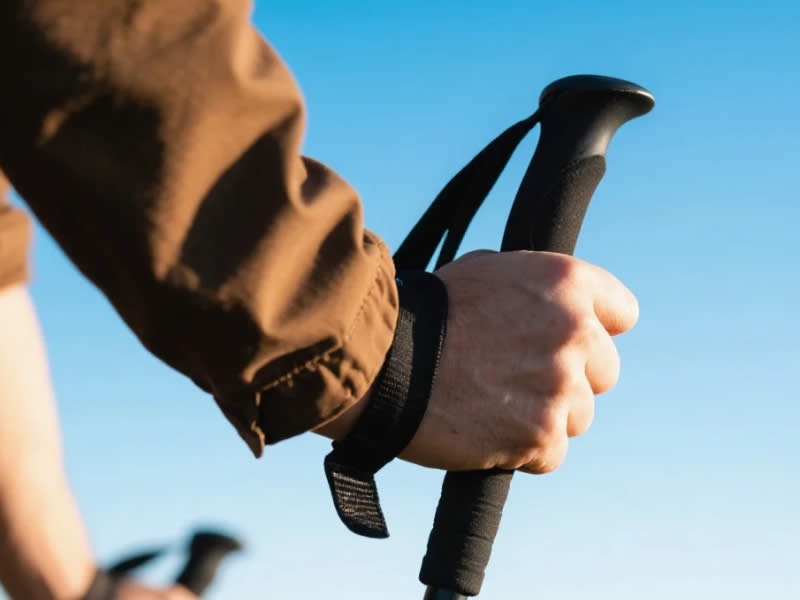
Lifeventure offers both cork and EVA foam grips. The cork version is contoured, sweat‑absorbent, and comfortable for all‑day use – though the cork density is lower than that of premium brands, leading to faster compression after 100+ miles. Foam grips are lighter and warmer in winter but become slippery when wet and wear out quickly if you use poles without gloves. The wrist straps are thin, unpadded nylon – functional but not luxurious. On long, steep slogs, narrow straps can dig into your hands, causing discomfort. Some users replace the straps with aftermarket padded versions, but that adds cost. Overall, the grip quality is acceptable for the price but does not compete with ergonomic designs from Pacerpoles or Leki.
Tips and Baskets: Replaceable but Wear Fast
The tungsten‑carbide tips are screw‑replaceable – a welcome feature that extends pole life. However, several reviewers note that Lifeventure’s tips are softer than those of higher‑end brands, wearing down noticeably after 200–300 km on abrasive surfaces (e.g., limestone or gritstone). Replacement tips are available online (~£10 per set), but you may need to swap them mid‑way through a long trail like the Pennine Way. The supplied mud baskets are small and plastic, adequate for summer walking but prone to breaking on rocky ground. If you plan to tackle boggy or snowy routes, consider buying larger universal baskets separately.
Real‑World Performance: What Users Actually Say
Aggregating reviews from Snow+Rock, Amazon, and outdoor forums, Lifeventure carbon poles average 4.0–4.2 stars out of 5. Positive reviews highlight the “incredibly light weight,” “good value for money,” and “smooth locking when maintained.” Negative critiques almost always mention breakage – usually from an accidental side‑load or a fall – and occasional lock slippage in wet conditions. A notable pattern: satisfied users tend to be day‑walkers or gentle backpackers on soft terrain, while dissatisfied ones are thru‑hikers who pushed the poles hard on rocky or uneven trails. One detailed account described using the Trail Light on the Coast‑to‑Coast path; the poles survived all 192 miles but required daily cam adjustments and a tip replacement after day 10. Another user snapped both poles on the same trip after a tumble on Striding Edge – a clear case of misuse beyond the product’s intended design.
Comparing with Competitors
For a fair evaluation, consider three alternatives:
- Black Diamond Alpine Carbon Cork (~£140) – uses a woven carbon layup, metal FlickLock, and superior cork; far more impact‑resistant, but double the price.
- Leki Makalu FX Carbon (~£130) – features the robust SpeedLock system, integrated shock absorbers, and a five‑year warranty; premium build.
- Decathlon’s Forclaz MT900 Carbon (~£50) – direct competitor, similar weight and price, with slightly better user reviews for lock durability.
Against these, Lifeventure sits near the bottom of the premium tier but holds its own against Decathlon. It is not a “bad” pole – it is a budget pole that demands careful handling and realistic expectations.
Who Should Buy Lifeventure Carbon Poles?
These poles are an excellent choice for:
- Day hikers on well‑maintained trails.
- Lightweight backpackers who prioritise pack weight and walk on soft ground (e.g., forest tracks, coastal paths).
- Occasional walkers who will use them a few times a year.
- Those on a strict budget who understand carbon’s fragility and accept the trade‑off.
Conversely, avoid them if you:
- Plan a rocky, technical, or long‑distance trail (e.g., Pennine Way, Alps, Pyrenees).
- Are heavy‑footed or prone to stumbling.
- Expect your gear to survive falls and rough handling without constant vigilance.
- Prefer a “set and forget” approach – these require routine maintenance.
Maintenance Tips to Maximise Lifespan
- Before each hike, check cam screws and tighten if the lever feels loose.
- After use, separate sections and wipe the inside of the lower tube to remove grit.
- Store poles unextended and unlocked to avoid fatigue on the carbon fibres.
- Inspect for visible cracks or splinters after any impact – if you see damage, retire the pole immediately.
- Carry spare tips and a small hex key in your repair kit for on‑trail adjustments.
Following these steps can extend a Lifeventure carbon pole’s life from a few hundred miles to over a thousand.
The Verdict: Are They Good Quality?
Quality is a relative term. If “good quality” means premium materials, bulletproof locks, and a three‑year warranty, then no – Lifeventure does not match that standard. But if “good quality” means fit for purpose, offering reliable performance for gentle to moderate walking at a competitive price, then yes, they are good quality for their class. They excel in weight reduction and comfort, and their flip‑lock carbon model is a genuine bargain for the recreational walker. However, they are not expedition‑ready; treat them as lightweight consumables rather than lifelong companions. For the average UK rambler tackling the South West Coast Path or the Norfolk Coast, they will serve well. For the Pennine Way or any similarly demanding route, you are better off investing in aluminium poles or higher‑end carbon – your safety and peace of mind are worth the extra cost.
Ultimately, Lifeventure’s carbon poles are a testament to “you get what you pay for” – but in this case, what you pay for is thoughtful design, decent materials, and a brand that stands behind its product. With proper care and realistic expectations, they can be a very good choice indeed. Just remember: treat them kindly, and they will treat you kindly in return.




