




Can I use plumber's tape to silence a loose locking collar on the trail?
The short answer is yes – PTFE plumber's tape (commonly known as Teflon tape) can be a lifesaving temporary fix for a loose or rattling locking collar when you are miles from the nearest repair shop. However, it is a trail bodge, not a permanent solution. In this comprehensive guide, we will explain exactly how to apply it, why it works, what its limitations are, and when you should never rely on it. By the end, you will know whether to reach for that little white roll in your repair kit – or whether you should have packed a different tool altogether.
Understanding the Problem: Why Locking Collars Go Loose
Trekking poles use either twist‑locks (internal expanding sleeves) or flip‑locks (external cam levers) to secure telescopic sections. Over time, the threads on twist‑locks can wear, the internal bushings can compress, or the lock's grip can loosen due to grit and moisture. When this happens, the collar no longer clamps firmly, and two annoying symptoms appear: the pole may collapse under load (dangerous) or the loose collar vibrates, producing an irritating rattle with every stride.
On the trail, you cannot simply replace the collar or bushings. You need a quick, lightweight fix that restores tension and silences the noise – at least until you can get home or to a gear shop. This is where plumber's tape enters the picture.
What Is Plumber's Tape and How Does It Work?
Plumber's tape – properly called PTFE (polytetrafluoroethylene) thread seal tape – is a thin, white, non‑adhesive film used in plumbing to seal pipe threads and prevent leaks. It is cheap, weighs almost nothing, and takes up negligible space in a repair kit. When wrapped around the threaded portion of a twist‑lock collar (or even around the inner shaft where the collar contacts it), the tape fills microscopic gaps, increases friction, and dampens vibrations. The PTFE material is slippery enough to allow the collar to rotate smoothly for adjustment, yet compressible enough to create a tighter interference fit when clamped down. In essence, it acts as a makeshift shim.
Step‑by‑Step: How to Apply Plumber's Tape on the Trail
If you are out hiking and your locking collar is loose or rattling, follow these instructions carefully:
- Identify the type of lock: For twist‑locks, the tape goes on the threads of the expander or on the inner tube surface. For flip‑locks, wrap it around the inner shaft just below the clamping area – but be cautious, as too much can prevent the cam from closing.
- Clean the area: Use a dry cloth to wipe away mud, sand, or moisture from the shaft and collar. If you have a few drops of water, you can rinse, but dry thoroughly – tape adheres better to dry surfaces.
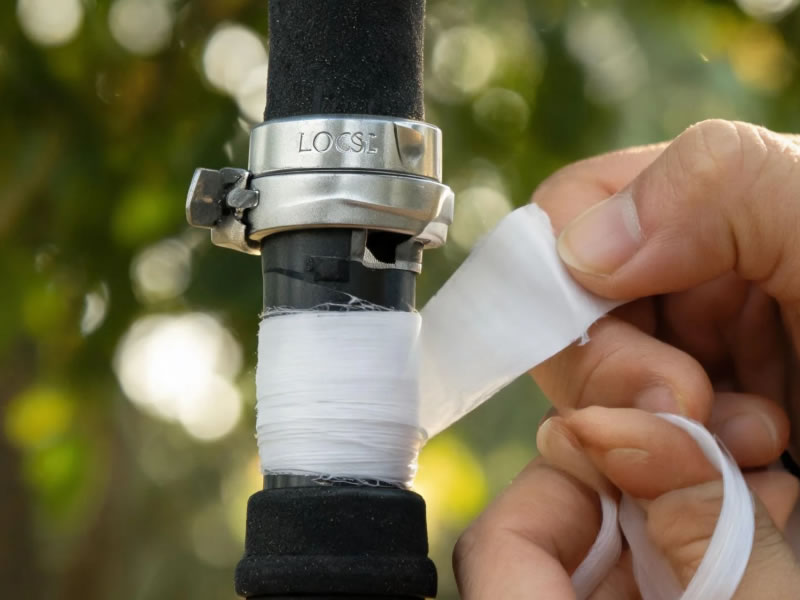
- Wrap the tape:Extend the pole slightly, so the inner tube is exposed.Hold the tape firmly and wrap it clockwise (the same direction as the collar threads tighten) around the inner tube or threads. Overlap each layer by about 50%.For twist‑locks: Wrap 2–3 layers around the threaded section of the expander (the part that screws into the collar). Do not cover the entire length – just the engagement area.For flip‑locks: Wrap 1–2 layers around the inner shaft where the clamp sits. This adds bulk and increases clamping pressure.
- Reassemble and test: Slide the sections together, engage the lock, and tighten as usual. The tape should compress and create a snug fit. Extend the pole fully, lock it, and press down firmly – if it holds and the rattle is gone, you have succeeded.
- Trim excess: Any tape sticking out can be cut with a knife or torn off – it is soft and easy to remove.
How Long Does the Fix Last?
In dry conditions, a plumber's tape fix can last for a full day or even a weekend of hiking. However, moisture is the enemy – water can cause the tape to slip or degrade, especially if you cross streams or walk in persistent rain. The tape may also compress further over time, gradually loosening the collar again. You should check the lock every few hours and re‑wrap if necessary. For a multi‑day trip, you may need to reapply daily. It is, as mentioned, a temporary measure – not a permanent repair.
Important Warnings and Limitations
- Do not over‑wrap: Applying more than 3–4 layers can make the collar too tight, preventing it from locking or, worse, jamming the mechanism so you cannot adjust the pole. If you cannot close the flip‑lock or turn the twist‑lock, remove tape and start again with fewer layers.
- Tape is not a structural fix: If the collar is loose because the internal metal thread is stripped or the shaft is bent, tape will not solve that. In such cases, the pole is unsafe – you should stop using it or deploy your spare pole.
- Avoid oil‑based lubricants: Some hikers apply grease or oil to the collar – do not mix these with PTFE tape. Oil can cause the tape to unravel and attract dirt, making the problem worse.
- Check for cracks: Before wrapping, inspect the collar and shaft for visible cracks. If you find any, do not rely on tape – the pole is compromised.
Alternative Trail Fixes
If you do not have plumber's tape, consider these other temporary fixes:
- Duct tape or electrical tape: Wrap a thin strip around the inner shaft. These tapes are adhesive and can hold better than PTFE, but they may leave sticky residue.
- A piece of inner tube (bicycle): Cut a thin rubber band from an old inner tube and stretch it over the collar area – it acts as a friction pad.
- A twig or matchstick: Wedge a thin splinter of wood into the locking slot to increase pressure – a classic bushcraft bodge, but less reliable.
None of these are as clean or reversible as plumber's tape, which is why PTFE remains the repair‑kit favourite.
When to Seek a Permanent Repair
A tape‑fixed collar should be treated as a temporary get‑you‑home solution. As soon as you finish your hike, inspect the pole properly. For twist‑locks, you may need to replace the internal expander bushings – these are available as spare parts from most manufacturers. For flip‑locks, a new cam or clamp assembly is often required. If the shaft itself is worn, consider buying a new upper section or a complete new pole. Remember, safety on the trail is paramount – a collapsing pole on a steep descent can lead to a fall and serious injury.
Should You Carry Plumber's Tape?
Absolutely – it is one of the lightest, cheapest, and most versatile items in a repair kit. A small roll (about 10 m) costs less than £2, weighs virtually nothing, and can also be used to seal leaks on water bottles, wrap blisters (as a makeshift dressing), or protect gear straps. For trekking pole maintenance, it is a trail‑tested hack that has saved countless hikes. Just remember: it is a fix, not a cure.
The Final Verdict
So, can you use plumber's tape to silence a loose locking collar on the trail? Yes – and it works effectively in most cases. Apply 2–3 layers clockwise, test the tension, and adjust as needed. Keep an eye on it, reapply if it slips, and always plan for a proper repair at home. With this simple trick, you can turn an irritating rattle into a distant memory and enjoy the rest of your hike in peace. Just do not forget to add a roll to your repair kit before you head out – you never know when it might save your day.




