




Does a noisy pole indicate a structural failure or just dirt inside?
When your trekking pole starts making an unusual noise – a rattle, a squeak, or a grinding sound – your first thought might be panic. Is it about to snap? Will it collapse on the next descent? Or is it simply some grit that worked its way inside? The honest answer is it could be either. In this in‑depth guide, we will help you distinguish between harmless dirt‑related noises and those that signal a serious structural problem. By the end, you will be able to diagnose the sound, take appropriate action, and hike with confidence – knowing exactly when to clean, when to adjust, and when to retire a pole.
The Two Broad Categories of Pole Noise
Every noise from a trekking pole falls into one of two categories:
- Harmonic or transient noises – rattles, clicks, or scrapes that come from internal movement, debris, or loose fittings. These are generally non‑structural.
- Cracking or popping noises – sharp, sudden sounds that occur under load, often accompanied by a visible change in the pole's shape. These are structural warning signs.
Understanding this basic split is the first step to an accurate diagnosis.
Noise Caused by Dirt and Debris – The Most Common Culprit
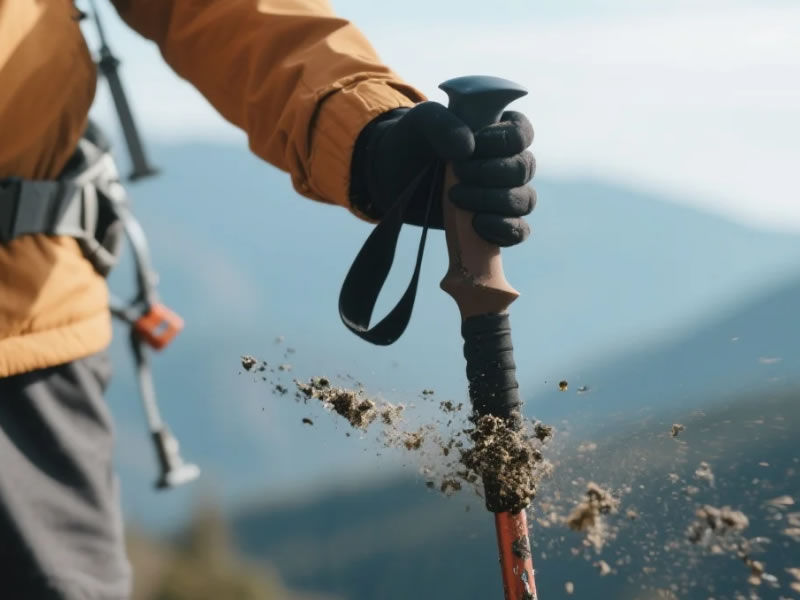
By far, the most frequent cause of a noisy pole is foreign material inside the shaft. Sand, tiny stones, dried mud, or even flakes of anodised coating can enter through the joints, the locking mechanism, or the tip. As you walk, these particles tumble and rub against the inner walls, producing a gritty rattle or a scratching sound. This is especially common after hiking on sandy beaches, dusty trails, or through peat bogs.
How to recognise a dirt‑related noise:
- The noise is often a light, dry rattle that changes pitch or location when you shake the pole.
- It usually persists whether the pole is extended or collapsed.
- There is no visible damage to the shaft, and the pole locks and supports your weight normally.
- The noise may come and go as debris shifts position.
How to fix it:
- Remove the lower sections (if telescopic) or separate the folding sections.
- Shake each section over a clean surface – you might see dust or grit fall out.
- Rinse with water (if the pole is waterproof) and dry thoroughly.
- Use compressed air or a long brush to dislodge stubborn particles.
- Once clean, the noise should disappear completely.
If the noise stops after cleaning, the problem was purely superficial – no structural issue.
Noise from Loose Locking Collars and Fittings
Another common non‑structural source is a loose locking collar – either a twist‑lock or a flip‑lock that has lost its tension. The loose metal parts can vibrate, producing a buzzing or clicking sound. This is not a failure of the shaft itself, but a maintenance issue.
How to recognise a loose‑lock noise:
- The sound is often a metallic click or buzz that occurs rhythmically with each step.
- It is localised near the joint, not throughout the shaft.
- The pole may still hold weight, but you might feel a slight wobble.
- The noise can be temporarily silenced by tightening the lock.
How to fix it:
- Tighten the twist‑lock or adjust the cam screw on a flip‑lock.
- If the noise persists, apply a small amount of dry lubricant or, as a temporary bodge, plumber's tape to the threads.
- If the lock cannot be tightened enough, the internal bushings may be worn – replace them.
This type of noise is also not structural; it is a sign of wear that can be easily addressed with routine maintenance.
Noise from Internal Cords – For Folding Poles
Folding (Z‑style) poles have an internal elastic cord that holds the sections together. Over time, this cord can stretch, fray, or twist, causing sections to knock against each other or against the cord guides. This produces a soft, dull rattle that is often mistaken for debris.
How to recognise a cord‑related noise:
- The rattle is usually muffled and seems to come from the centre of the pole.
- It may change when you fold or extend the pole.
- You may notice that the sections do not collapse as tightly as they used to.
How to fix it:
- Check the cord tension – if it is slack, shorten the knot or replace the cord.
- A frayed cord should be replaced immediately (repair kits are available).
- Once the cord is properly tensioned, the rattling stops.
This is a repair, not a structural failure, but a badly frayed cord that snaps could cause a sudden collapse – so treat it seriously.
Structural Failure – The Danger Zone
Now for the critical part: when noise means your pole is failing. A structural issue is usually accompanied by one or more of the following:
- A loud crack or pop when you put weight on the pole – this can indicate a fracture propagating through the shaft.
- Visible damage – dents, bends, deep scratches, or a section that is no longer straight.
- A wobbly joint – if a section moves laterally even when locked, the internal bushing or the shaft itself is worn or broken.
- A grinding or crunching feeling as you extend or collapse the pole – often a sign of delamination in carbon or a crushed aluminium tube.
Structural noises are never isolated – they come with a change in performance, feel, or appearance. If you hear a sharp crack, immediately stop using the pole. Fold it and stow it safely; do not rely on it for support.
How to Diagnose with a Simple Step‑by‑Step Test
If you are unsure whether a noise is dirt or damage, perform this roadside diagnostic:
- Visual inspection: Examine every section of the pole in good light. Look for cracks, dents, bends, or any irregularity. Run your fingers along the shaft – feel for rough spots.
- Shake test: Hold the pole loosely and shake it. Listen for the noise. If it is a light rattle that shifts, it is likely debris. If it is a single, solid knock, it might be a loose internal component.
- Lock and load: Extend the pole fully, lock it, and press down firmly on a flat surface, leaning your weight gradually. If you hear a cracking sound or feel a sudden give, the pole is compromised.
- Flex test: Gently flex the pole sideways (not excessively). A healthy pole will have a uniform spring. A cracked pole will feel spongy or produce a creaking noise.
- Clean and re‑test: Clean the pole thoroughly, then repeat the shake and load tests. If the noise persists after cleaning, it is unlikely to be dirt.
What to Do If You Suspect a Structural Failure
- Immediately stop using the pole – switch to a single pole or, if you have a spare, deploy it.
- Do not attempt to repair a cracked shaft – tape or glue will not restore structural integrity.
- If you are on a multi‑day trip and the pole is your only support, consider using it as a stabiliser on flat terrain only, and avoid leaning heavily.
- Replace the pole as soon as possible. Carbon poles can be repaired by specialist companies, but in most cases, replacement is safer and more cost‑effective.
Preventative Maintenance to Avoid False Alarms
To reduce the chance of a dirt‑related noise and to catch structural issues early:
- Clean your poles after every muddy or sandy hike.
- Disassemble telescopic poles regularly and wipe the inner surfaces.
- Inspect for cracks or wear before every trip.
- Store poles with locks released to relieve stress.
- Do not overload poles beyond their weight rating – they are for walking support, not as levers for heavy lifting.
The Final Verdict
So, does a noisy pole indicate a structural failure or just dirt inside? Both are possible – but dirt is far more common. Use the diagnostic steps above: clean thoroughly, inspect visually, and test under load. If the noise disappears after cleaning and all locks are tight, it was harmless debris. If the noise remains, or if you see damage, the pole may be unsafe. When in doubt, err on the side of caution – a new pole is cheaper than a broken ankle. Trust your senses, and never ignore a sound that feels wrong.




