




What poles do the Mountain Rescue teams use in the Scottish Highlands?
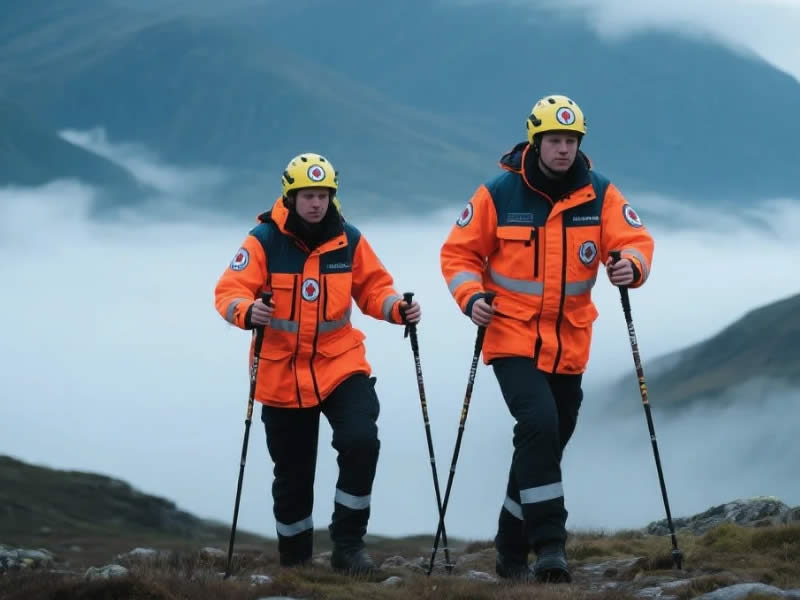
When you're in the unforgiving, rapidly changing environment of the Scottish Highlands, the equipment you carry can be the difference between a successful rescue and a tragic outcome. Mountain Rescue teams in Scotland are volunteer experts who operate in some of the UK's most extreme conditions – horizontal rain, sub‑zero windchill, deep snow, and treacherous, slippery rock. Their choice of trekking poles is not based on marketing hype or weight‑saving fads; it's based on reliability, durability, and performance under the worst possible conditions. So, what exactly do they carry? The short answer is: sturdy, 3‑section telescopic aluminium poles with reliable flip‑locks, carbide tips, and large, versatile baskets – from brands like Leki, Black Diamond, and Komperdell. Here's the detailed breakdown.
1. Why aluminium over carbon – the primary choice
Almost without exception, Mountain Rescue teams in the Highlands choose aluminium over carbon fibre. Carbon is lighter and dampens vibration, but it is brittle. A sudden sideways strike against a sharp rock – which is almost inevitable on Scottish scree – can shatter a carbon pole, leaving the rescuer with a useless, jagged shaft. Aluminium, especially high‑grade 7075‑T6 alloy, bends rather than breaks. A bent pole can often be straightened or still used for support, while a snapped pole is a liability. In rescue scenarios, you cannot afford a catastrophic failure.
Team members routinely lean heavily on their poles when carrying stretchers or heavy equipment, and the lateral loads are far higher than typical walking. The slightly greater weight of aluminium (about 50‑100g per pole) is a small price for the peace of mind that the poles will withstand the abuse.
2. Flip‑locks vs. twist‑locks – the decisive factor
Ask any Highland rescuer about locking mechanisms, and they'll tell you: flip‑locks (cam‑locks) are non‑negotiable. Twist‑locks, while common on budget poles, are notoriously unreliable in wet, cold, and muddy conditions. They rely on internal expansion wedges that can clog with grit or become impossible to turn with cold, gloved fingers. They also have a tendency to slip under heavy, dynamic loads – exactly when you don't want them to.
Flip‑locks, like the Black Diamond FlickLock or Leki SpeedLock 2, provide a positive, mechanical clamp. You can adjust them with one thumb, even wearing thick gloves, and they hold their tension far more consistently. They're also easier to clean and service in the field – a critical feature on multi‑day call‑outs.
3. Shaft diameter and wall thickness – built for abuse
Standard recreational poles often have lower shaft diameters of 14‑16mm. Rescue teams, however, typically use poles with 18‑20mm diameter lower sections and thicker walls (1.2‑1.5mm). This gives them the stiffness needed to withstand heavy loading and the robustness to resist bending when wedged between rocks. Models like the Black Diamond Expedition 3 or Leki Makalu are favourites because they offer this thicker, more robust construction while still being manageable for a day's walking.
4. Extended length – reaching across steep terrain
The Highlands have steep, deep gullies and sudden drops. Rescue poles need to extend further than standard walking poles – often up to 140‑145 cm – to allow the rescuer to reach across a crevasse, brace against a steep slope, or provide a support for a casualty. Many standard poles stop at 135 cm, which can be insufficient for these demanding situations. Teams choose poles that offer a longer maximum extension, even if they weigh a little more.
5. The basket – a critical accessory
Highland terrain is a mix of soft peat, deep heather, and, in winter, significant snow. A large basket is essential. Snow baskets (8‑10 cm diameter) prevent the pole from plunging into the soft ground or deep snow, which would otherwise waste energy and destabilise the walker. Teams often fit these baskets and leave them on year‑round – they may be slightly annoying on rocky sections, but the benefit on boggy moorland far outweighs the minor inconvenience. Smaller, removable baskets are often carried to switch between seasons.
6. Tip choice – grip on wet rock and ice
The poles used by rescue teams invariably end in tungsten‑carbide tips – the hardest and most durable material available. These tips bite into wet, greasy rock and penetrate snow and ice where rubber or steel tips would skid. Some models feature a slightly blunt, conical profile that grips without digging too deep, which is useful on the smooth, slabby rock common in the Cairngorms.
7. The preferred brands – and why
While individuals have personal preferences, three brands dominate the rescue scene:
- Leki – The Makalu series is a classic, with the robust SpeedLock 2 system and an 18mm shaft. The cork grip is comfortable over long hours and doesn't become slippery when wet.
- Black Diamond – The Expedition 3 is a mountaineering stalwart, with the FlickLock Pro and a 20mm lower section. It's heavy but virtually indestructible.
- Komperdell – The Titan model is a favourite for its 7075 shaft, powerful cam‑lock, and long extension range.
These brands have established track records in extreme environments, and their spare parts (replacement tips, baskets, screws) are widely available – a practical consideration for kit maintenance.
8. What about gaiters and grips?
Rescue teams often use poles with extended foam grips – handles that run further down the shaft. This allows them to choke up (grip lower) on steep ascents without losing the ability to push off. The foam also insulates against the cold better than bare metal. Cork grips are less common in this environment because they can become waterlogged; closed‑cell foam is preferred.
9. A note on technique – the rescuer's mindset
Even the best poles won't help if used incorrectly. Rescue team members are trained to plant their poles vertically and to use the wrist straps to take the load, not their grip. They also adjust pole length frequently – shortening for uphills, extending for downhills and crossings – something that flip‑locks make easy.
10. What you can learn from their choice
If you're heading to the Highlands, take a page from the rescuers' book:
- Choose aluminium over carbon for rocky routes.
- Prioritise reliable flip‑locks.
- Ensure your poles can extend to at least 135‑140 cm.
- Fit a large basket for boggy or snowy conditions.
- Check your tips are sharp and replace them when worn.
- And always carry a spare locking screw and a small multi‑tool.
The Mountain Rescue teams don't choose their poles for their style points – they choose them because they work when the conditions are at their worst. For anyone venturing into the Scottish hills, that's the most compelling recommendation you could ask for.




