




What are the benefits of using trekking poles for knee pain?
If you've ever finished a hillwalk with aching, swollen knees, you've probably wondered: Could trekking poles have made a difference? The answer is a resounding yes. For millions of walkers – from weekend ramblers to long‑distance thru‑hikers – trekking poles are one of the most effective, low‑cost tools for reducing knee pain, preventing injury, and extending your active years. This guide explains the biomechanical benefits, the science behind them, and how to use poles correctly to protect your knees on every step.
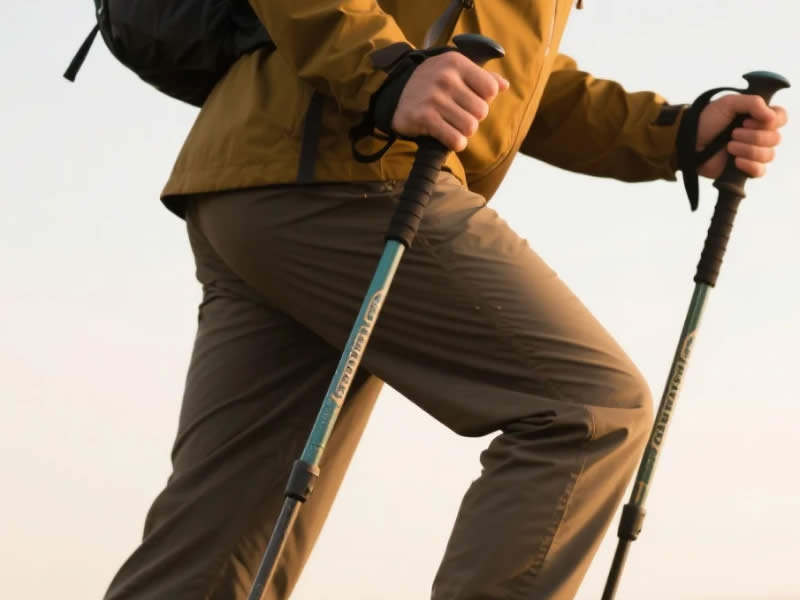
The knee problem – why walking hurts
Your knees are the body's shock absorbers. On a flat surface, each step subjects your knee joint to a force of about 1.5 times your body weight – that's 100‑120 kg for an average person. On a descent, that force jumps to 3‑4 times your body weight because your quads work eccentrically (lengthening under tension) to control your speed. Multiply that by thousands of steps on a steep mountain trail, and you can see why knees are the number‑one complaint among hillwalkers.
Common conditions aggravated by walking include:
- Patellofemoral pain syndrome (runner's knee) – pain around the kneecap.
- Osteoarthritis – wear and tear of cartilage.
- Iliotibial (IT) band syndrome – friction on the outside of the knee.
- Meniscus tears – damage to the shock‑absorbing cartilage.
Trekking poles don't cure these conditions, but they significantly reduce the forces that trigger and worsen them.
How trekking poles protect your knees – the four key mechanisms
1. Impact reduction – the 20‑25% rule
Numerous biomechanical studies (including a well‑cited 2015 paper in the Journal of Sports Sciences) show that using trekking poles on descents reduces the peak impact force on the knee joint by 20‑25%. Here's how it works: when you plant a pole ahead of your foot, some of your body weight transfers through your arm, shoulder, and into the pole – effectively bypassing your knee. Over a 1,000‑metre descent, this translates into millions of newton‑seconds of force not absorbed by your cartilage. For walkers with early arthritis, this can be the difference between walking 10 miles and walking 2.
2. Load redistribution – from legs to arms
Your arms and shoulders are generally stronger than you give them credit for. With proper pole technique and correctly adjusted straps, you can offload up to 30% of your body weight from your lower limbs onto your upper body. This is especially beneficial on steep ascents, where your quads and glutes are working hardest. Instead of hauling 100% of your weight up a hill, you're using your arms to "pull" yourself upwards, sparing your knees from the cumulative strain of every upward step.
3. Balance and stability – preventing awkward twists
Many knee injuries don't come from overuse alone – they come from a sudden, awkward twist on uneven ground. A misplaced foot on a wet rock, a hidden root, or a loose stone can hyper‑rotate your knee, straining ligaments or tearing cartilage. Trekking poles act as outriggers, giving you two extra points of contact with the ground. On a rocky or muddy slope, this increased stability dramatically reduces the risk of a destabilising stumble. For walkers with existing knee instability, this is arguably the most valuable benefit.
4. Improved gait pattern – reducing lateral stress
When you're tired, your walking form deteriorates – you tend to drop your hips, swing your legs outward, and heel‑strike harder, all of which put uneven stress on the knee joint. Poles enforce a more symmetrical, upright gait. The rhythmic planting of poles encourages a consistent stride length and a smoother cadence, which reduces the lateral (side‑to‑side) forces that can aggravate IT band syndrome and patellar tracking issues.
The evidence – what science says
- A 2018 study in Medicine & Science in Sports & Exercise found that trekking poles reduced knee adduction moment (a measure of medial knee load) by 18% on downhill walking – a significant protective effect against osteoarthritis progression.
- Research on elderly walkers with knee osteoarthritis showed that pole users reported 40% less pain after a 30‑minute walk compared to non‑users, and they could walk 25% further before reaching their pain threshold.
- Ultrarunners and long‑distance walkers consistently report lower post‑hike knee soreness when using poles, with many attributing their ability to complete multi‑day events directly to pole use.
Who benefits most?
| Condition | Benefit from poles |
|---|---|
| Mild to moderate osteoarthritis | Reduced pain on descents; longer pain‑free walking distances |
| Patellofemoral pain (runner's knee) | Reduced patellar compression on hills |
| IT band syndrome | Less lateral hip drop and knee rotation |
| Recovering from knee surgery (with medical approval) | Gradual load reintroduction with support |
| Overweight walkers | Reduced joint stress per step |
| Older walkers (60+) | Improved balance and confidence; fall prevention |
How to use poles correctly for knee protection
Using poles for knee pain requires proper technique – misuse can actually strain your wrists or shoulders.
- Adjust length for descents – lengthen poles 5‑10 cm from your flat‑terrain setting. This gives you a longer reach for braking.
- Plant ahead – place the pole tip about 30 cm ahead of your foot, at an angle that points the grip toward your shoulder. Your wrist should drop as you put weight on the strap – let the strap bear the load, not your grip.
- Use double planting on steep drops – both poles ahead of you, step between them, then repeat. This creates a three‑point stance (two poles + one foot) that minimises knee impact.
- Keep elbows soft – don't lock them; a slight bend absorbs shock.
- Don't over‑grip – a tight grip transmits tension up your arm and into your shoulder, but doesn't improve knee support. Relax your fingers; let the straps work.
Combining poles with other knee‑friendly habits
Poles are part of a toolkit, not a standalone cure. For maximum benefit:
- Use a lighter pack – every kilogram on your back adds 3‑4 kg of force to your knees per step.
- Walk with a shortened stride on descents – shorter steps reduce the braking force on your quads.
- Strengthen your quads and glutes – strong muscles stabilise the knee joint.
- Wear supportive, well‑cushioned boots – good midsoles absorb additional shock.
- Consider knee braces or kinesiology tape – for extra support on known weak knees.
The psychological benefit – confidence and enjoyment
There's a less tangible but equally important benefit: confidence. When you know your poles are there to catch you and cushion your knees, you walk more freely. You take on steeper terrain, extend your distances, and finish your walks without that nagging "I've overdone it" ache. For many, this psychological boost is what keeps them walking into older age.
A note on pole types for knee sufferers
- Aluminium is more forgiving on knees than carbon – it flexes slightly, absorbing some shock, whereas carbon is stiffer and transmits vibration.
- Cork grips are ideal – they absorb sweat and stay tacky, reducing the need for a tight grip that can cause hand fatigue.
- Lever‑locks are more reliable than twist‑locks – a slipping pole can cause you to lurch and twist a knee, which is exactly what you want to avoid.
Final verdict – a small investment for long‑term gain
Trekking poles are one of the most cost‑effective knee‑protection tools available. A £40‑50 pair of quality poles can save you thousands in physiotherapy, medication, or even surgery over a lifetime of walking. They don't just reduce pain – they enable you to walk further, more confidently, and with less worry about the next descent.
If you have knee pain, don't wait until it sidelines you. Invest in a pair of poles, learn the correct technique, and make them a permanent part of your hillwalking kit. Your knees – and your future self – will thank you.




