




How to prevent losing trekking pole baskets in mud?
You're halfway across a boggy moor, your poles sinking deep with every step, when you pull one out and notice – the basket is gone. Somewhere in that black, sucking peat, your mud basket has been swallowed forever. It's a frustratingly common experience on UK hills, especially after heavy rain. A lost basket not only reduces the pole's effectiveness on soft ground (it sinks deeper), but it can also unbalance your rhythm and, on some trails, make walking in deep mud almost impossible. This guide explains why baskets come off, how to prevent it, what to do if you lose one, and how to choose baskets that are less likely to abandon you in the first place.
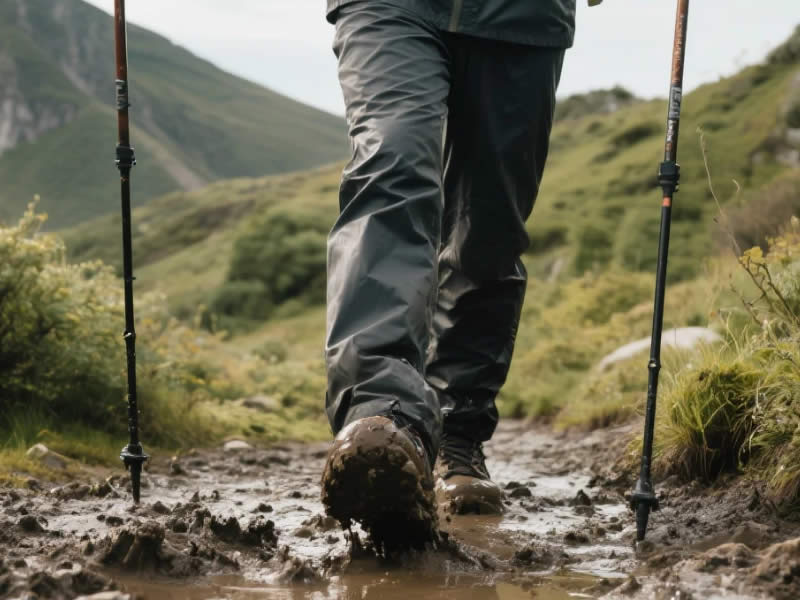
Why do baskets come off in mud?
The cause is usually a combination of suction and twist. Here's what happens:
- Suction – when you push a pole into deep, sticky mud (the classic UK peat or clay), the basket acts like a plunger. The mud seals around it, creating a vacuum when you try to pull the pole out. That upward force can be surprisingly strong – often enough to pop a loosely fitted basket off the shaft.
- Twisting – when you pull the pole out at an angle, or twist it to release the suction, you're effectively unscrewing the basket (most are threaded on). This is the number‑one reason baskets get left behind – the natural motion of a sideways pull acts as a counter‑clockwise rotation, which unscrews the basket.
- Worn threads – over time, the threads on the basket or the pole tip can wear down, reducing friction and allowing the basket to loosen gradually without you noticing.
- Poor design – some budget baskets simply don't have a positive locking mechanism; they rely on friction alone, which is never reliable in wet, sticky conditions.
Prevention starts before you step onto the bog
1. Tighten them properly before you start
Most baskets have a twist‑on fitting – you screw them onto the tip of the pole until they stop. "Until they stop" doesn't mean "as hard as you can" – over‑tightening can strip the threads. But they should be snug and firm. If your baskets have a click‑stop (a positive lock that clicks into place), make sure you hear the click on both poles.
Pro tip: Before each walk, give your baskets a test twist – if they're loose, tighten them. Make this part of your pre‑walk ritual.
2. Use a locking collar or secondary clip
Some premium baskets feature a locking collar – a small plastic ring that screws down over the basket to hold it in place. Others have a spring‑loaded clip or a push‑button lock (common on Leki and Black Diamond models). These mechanical locks are far more reliable than friction alone.
If your existing baskets don't have a lock: Check if your brand sells a "basket lock" accessory – some do. For example, Leki offers a locking ring that fits many of their baskets.
3. Use plumber's tape for extra friction
A cheap, effective bodge: wrap a couple of layers of PTFE plumber's tape (thread seal tape) around the tip threads before you screw on the basket. This fills the thread gaps, increases friction, and makes the basket much harder to unscrew accidentally. It's invisible once fitted, and it doesn't damage the threads. A roll costs £2 and lasts for years.
4. Choose baskets with a wide, slotted design for mud
The shape of the basket matters. Mud baskets (as opposed to snow baskets) have wide, slotted designs that allow mud to pass through, reducing suction. The slots break the vacuum effect, so the basket comes out more easily. If you're using snow baskets in mud (they have smaller, solid surfaces), they'll grip more and increase your risk of losing them. Always use mud baskets on UK moors.
On‑the‑trail techniques – how to pull without losing
1. Pull straight up – never twist
When you extract the pole from deep mud, pull it out in a straight, vertical line – don't rotate it. Twisting is what unscrews the basket. If the pole is stuck, wiggle it gently from side‑to‑side (perpendicular to the shaft) to break the suction, then pull straight up.
2. Use your leg for leverage
If you're sinking deep, place your foot against the lower section of the pole and push your foot down while pulling up – this gives you more leverage and reduces the twisting force on the basket.
3. Don't over‑plant in deep mud
In extremely boggy ground, avoid plunging the pole so deep that the basket disappears below the surface. Plant it more shallowly – you'll still get support, and you'll reduce the risk of the basket getting stuck in a suction seal.
4. Stow baskets on rocky sections
If you're moving from boggy ground onto rocky terrain, consider removing the baskets and stowing them in your pocket. Baskets are unnecessary on rock (they get in the way) and are more likely to catch on crevices and get lost. Some walkers keep baskets in a small pouch and only attach them when needed.
What to do if you lose a basket mid‑walk
1. Carry spares
This is the only guaranteed solution. A spare pair of mud baskets weighs next to nothing and packs flat. Keep them in your pack's front pocket. Brands like Black Diamond and Leki sell baskets individually for £3‑5 each. If you're walking a 20‑mile route with boggy sections, a spare set is cheap insurance.
2. Use a temporary fix
If you don't have a spare, you can improvise:
- Grass or heather bundle – stuff a handful of grass or heather into the basket fitting (or around the tip) to act as a temporary wider base. It won't last long, but it can get you across the worst sections.
- Tape or cable tie – if you have duct tape or a cable tie, you can secure the basket more firmly to the shaft (if you still have it but it's loose). It's a bodge, but it works.
3. Walk with a single basket
If you've lost one, you can still manage – you'll just need to plant that pole more carefully, avoiding deep mud. Or, stow the basket‑less pole and use only one pole for the rest of the walk. It's not ideal, but it's not a disaster.
Choosing baskets that stay on – buying advice
When buying replacement baskets or new poles, look for:
- Positive locking – a click‑stop, a locking collar, or a clip system. Avoid baskets that rely solely on friction threads.
- Compatibility – ensure the basket is designed for your pole model. Some brands have proprietary fittings; others use a universal thread (10mm is common). Check before buying.
- Mud‑specific design – wide, slotted baskets are best for UK conditions. They reduce suction and break the vacuum effect.
- Material – flexible, tough plastic (like reinforced nylon) lasts longer than brittle, cheap plastic.
Brand‑specific solutions
| Brand | Locking feature |
|---|---|
| Black Diamond | Click‑stop with a positive detent; some models have a locking collar. |
| Leki | Many baskets have a locking ring that screws down after fitting. |
| Komperdell | Vario‑baskets with a push‑clip lock. |
| Decathlon | Basic twist‑on without lock – use plumber's tape as a workaround. |
The cost of losing a basket – and the simple fix
A lost basket is a minor expense (£3‑5) but a major inconvenience – you lose efficiency, the pole sinks deeper, and you may have to alter your gait. The simplest, most reliable prevention is:
- Fit baskets correctly – snug, with a positive lock where possible.
- Add plumber's tape for extra friction.
- Pull straight up – don't twist.
- Carry spares – because even with all precautions, mud can win.
Final checklist – before every boggy walk
- □
- □
- □
- □
- □
Over to you
Losing a basket in a peat bog is frustrating, but it's almost always preventable. With the right technique, a little preparation, and a spare set tucked in your pack, you can keep your baskets where they belong – on your poles, not in the mud. Next time you're crossing a wet moor, plant with confidence, pull straight up, and save yourself the hunt for that missing plastic disc. Happy bog‑trotting! (Word count: ~1,100)
How to prevent losing trekking pole baskets in mud?
You're halfway across a boggy moor, your poles sinking deep with every step, when you pull one out and notice – the basket is gone. Somewhere in that black, sucking peat, your mud basket has been swallowed forever. It's a frustratingly common experience on UK hills, especially after heavy rain. A lost basket not only reduces the pole's effectiveness on soft ground (it sinks deeper), but it can also unbalance your rhythm and, on some trails, make walking in deep mud almost impossible. This guide explains why baskets come off, how to prevent it, what to do if you lose one, and how to choose baskets that are less likely to abandon you in the first place.
Why do baskets come off in mud?
The cause is usually a combination of suction and twist. Here's what happens:
- Suction – when you push a pole into deep, sticky mud (the classic UK peat or clay), the basket acts like a plunger. The mud seals around it, creating a vacuum when you try to pull the pole out. That upward force can be surprisingly strong – often enough to pop a loosely fitted basket off the shaft.
- Twisting – when you pull the pole out at an angle, or twist it to release the suction, you're effectively unscrewing the basket (most are threaded on). This is the number‑one reason baskets get left behind – the natural motion of a sideways pull acts as a counter‑clockwise rotation, which unscrews the basket.
- Worn threads – over time, the threads on the basket or the pole tip can wear down, reducing friction and allowing the basket to loosen gradually without you noticing.
- Poor design – some budget baskets simply don't have a positive locking mechanism; they rely on friction alone, which is never reliable in wet, sticky conditions.
Prevention starts before you step onto the bog
1. Tighten them properly before you start
Most baskets have a twist‑on fitting – you screw them onto the tip of the pole until they stop. "Until they stop" doesn't mean "as hard as you can" – over‑tightening can strip the threads. But they should be snug and firm. If your baskets have a click‑stop (a positive lock that clicks into place), make sure you hear the click on both poles.
Pro tip: Before each walk, give your baskets a test twist – if they're loose, tighten them. Make this part of your pre‑walk ritual.
2. Use a locking collar or secondary clip
Some premium baskets feature a locking collar – a small plastic ring that screws down over the basket to hold it in place. Others have a spring‑loaded clip or a push‑button lock (common on Leki and Black Diamond models). These mechanical locks are far more reliable than friction alone.
If your existing baskets don't have a lock: Check if your brand sells a "basket lock" accessory – some do. For example, Leki offers a locking ring that fits many of their baskets.
3. Use plumber's tape for extra friction
A cheap, effective bodge: wrap a couple of layers of PTFE plumber's tape (thread seal tape) around the tip threads before you screw on the basket. This fills the thread gaps, increases friction, and makes the basket much harder to unscrew accidentally. It's invisible once fitted, and it doesn't damage the threads. A roll costs £2 and lasts for years.
4. Choose baskets with a wide, slotted design for mud
The shape of the basket matters. Mud baskets (as opposed to snow baskets) have wide, slotted designs that allow mud to pass through, reducing suction. The slots break the vacuum effect, so the basket comes out more easily. If you're using snow baskets in mud (they have smaller, solid surfaces), they'll grip more and increase your risk of losing them. Always use mud baskets on UK moors.
On‑the‑trail techniques – how to pull without losing
1. Pull straight up – never twist
When you extract the pole from deep mud, pull it out in a straight, vertical line – don't rotate it. Twisting is what unscrews the basket. If the pole is stuck, wiggle it gently from side‑to‑side (perpendicular to the shaft) to break the suction, then pull straight up.
2. Use your leg for leverage
If you're sinking deep, place your foot against the lower section of the pole and push your foot down while pulling up – this gives you more leverage and reduces the twisting force on the basket.
3. Don't over‑plant in deep mud
In extremely boggy ground, avoid plunging the pole so deep that the basket disappears below the surface. Plant it more shallowly – you'll still get support, and you'll reduce the risk of the basket getting stuck in a suction seal.
4. Stow baskets on rocky sections
If you're moving from boggy ground onto rocky terrain, consider removing the baskets and stowing them in your pocket. Baskets are unnecessary on rock (they get in the way) and are more likely to catch on crevices and get lost. Some walkers keep baskets in a small pouch and only attach them when needed.
What to do if you lose a basket mid‑walk
1. Carry spares
This is the only guaranteed solution. A spare pair of mud baskets weighs next to nothing and packs flat. Keep them in your pack's front pocket. Brands like Black Diamond and Leki sell baskets individually for £3‑5 each. If you're walking a 20‑mile route with boggy sections, a spare set is cheap insurance.
2. Use a temporary fix
If you don't have a spare, you can improvise:
- Grass or heather bundle – stuff a handful of grass or heather into the basket fitting (or around the tip) to act as a temporary wider base. It won't last long, but it can get you across the worst sections.
- Tape or cable tie – if you have duct tape or a cable tie, you can secure the basket more firmly to the shaft (if you still have it but it's loose). It's a bodge, but it works.
3. Walk with a single basket
If you've lost one, you can still manage – you'll just need to plant that pole more carefully, avoiding deep mud. Or, stow the basket‑less pole and use only one pole for the rest of the walk. It's not ideal, but it's not a disaster.
Choosing baskets that stay on – buying advice
When buying replacement baskets or new poles, look for:
- Positive locking – a click‑stop, a locking collar, or a clip system. Avoid baskets that rely solely on friction threads.
- Compatibility – ensure the basket is designed for your pole model. Some brands have proprietary fittings; others use a universal thread (10mm is common). Check before buying.
- Mud‑specific design – wide, slotted baskets are best for UK conditions. They reduce suction and break the vacuum effect.
- Material – flexible, tough plastic (like reinforced nylon) lasts longer than brittle, cheap plastic.
Brand‑specific solutions
| Brand | Locking feature |
|---|---|
| Black Diamond | Click‑stop with a positive detent; some models have a locking collar. |
| Leki | Many baskets have a locking ring that screws down after fitting. |
| Komperdell | Vario‑baskets with a push‑clip lock. |
| Decathlon | Basic twist‑on without lock – use plumber's tape as a workaround. |
The cost of losing a basket – and the simple fix
A lost basket is a minor expense (£3‑5) but a major inconvenience – you lose efficiency, the pole sinks deeper, and you may have to alter your gait. The simplest, most reliable prevention is:
- Fit baskets correctly – snug, with a positive lock where possible.
- Add plumber's tape for extra friction.
- Pull straight up – don't twist.
- Carry spares – because even with all precautions, mud can win.
Final checklist – before every boggy walk
- □
- □
- □
- □
- □
Over to you
Losing a basket in a peat bog is frustrating, but it's almost always preventable. With the right technique, a little preparation, and a spare set tucked in your pack, you can keep your baskets where they belong – on your poles, not in the mud. Next time you're crossing a wet moor, plant with confidence, pull straight up, and save yourself the hunt for that missing plastic disc. Happy bog‑trotting!




