




How to use trekking poles on a steep uphill scree slope?
A steep scree slope—a long, shifting, loose, and unstable sea of small rocks—is one of the most physically and mentally demanding terrains a hillwalker can encounter. Every step forward is met with a slide backward, and the relentless, exhausting effort can feel like walking up a descending escalator. In these conditions, your trekking poles transition from being walking aids to essential tools for survival and efficiency. The short answer to using them effectively on scree is to shorten your poles, use a deliberate double-plant technique, and treat each step as a test of the ground. This guide explains the specific techniques and adjustments that will transform a frustrating, energy-sapping slog into a manageable, controlled ascent.
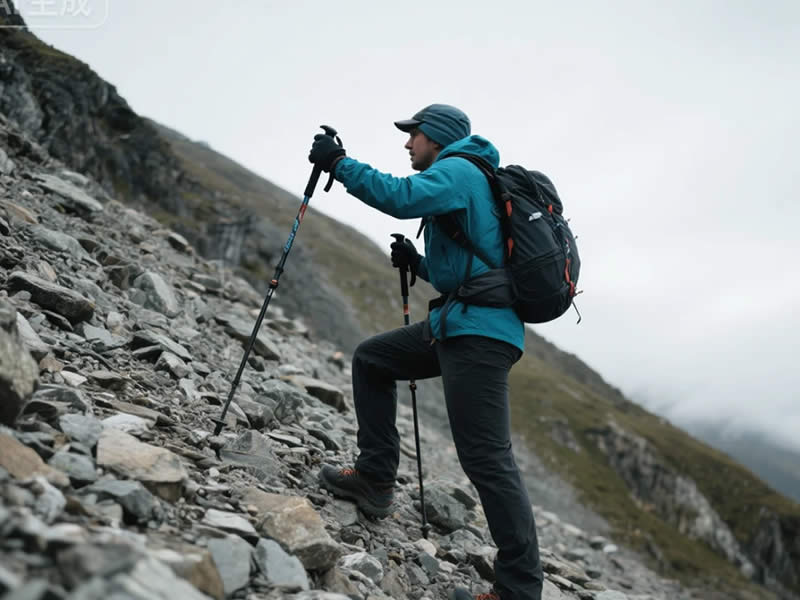
The Problem with Scree: Why It's So Demanding
Before you can learn the technique, you need to understand the challenge. Scree is a surface composed of loose, angular stones that shift under your weight. This creates a unique set of problems:
- Zero Friction: The rocks move. You can't push off with your feet as you would on solid ground. You lose energy to the shifting rock.
- High Energy Cost: You are essentially stepping up and sliding back. The effort required is significantly higher than on a solid path.
- Instability: Your footing is always uncertain. A misplaced step can send you sliding back a metre, twisting an ankle, or losing your balance.
Step 1: The Preparation – Shorten Your Poles
This is a non-negotiable adjustment. On a steep ascent, you are effectively walking on a ramp. The ground is closer to your hands relative to your body.
- The Adjustment: Shorten your poles by 5‑7 cm from your flat‑terrain setting.
- Why: A shorter pole prevents you from raising your shoulder to reach the ground. This keeps your shoulders relaxed, your chest open for breathing, and your centre of gravity lower and more stable on the loose surface. If you leave your poles at their flat length, you'll be fighting the terrain and straining your upper back.
Step 2: The Technique – The "Scree Stutter"
The standard, alternating gait you use on flat ground (left pole with right foot) is not efficient on a steep scree slope. The shifting ground requires a more deliberate, stable approach.
The "Double‑Plant" Method
This is the gold standard for scree walking. Instead of alternating your poles, you use them together for each step.
- Plant Both Poles: Plant both poles firmly in the scree ahead of your leading foot, one slightly higher than the other. The poles should be at a slight backward angle, not vertical.
- Push and Step: Lean your weight onto the poles, and use the resistance to push yourself up one step with your leading foot.
- Transfer Weight: As your foot lands, immediately shift your weight onto it.
- Re-plant: Lift both poles and repeat the process for the next step.
Why It Works: The two poles and your front foot create a stable, three‑point triangle of support. This prevents the exhausting "one step forward, half step back" motion. You are effectively using your arms to pull your body up, which saves your leg strength and prevents the fatigue that can ruin a long climb.
Step 3: The Footwork – Testing the Ground
On scree, your poles are not just for propulsion; they are for testing the ground.
- Probe Before You Step: Before you commit your full weight to a step, use your pole tip to probe the ground ahead. Does it feel stable, or does it sink deeply? If the pole sinks, the ground is probably too soft to hold your weight.
- Plant on the Surface: Do not jam your poles into deep gaps between rocks. Plant the tip on the surface of a stable-looking rock or on the top of a large scree stone. Jamming a tip into a deep gap can cause it to snap or get stuck.
- The "Pivot" Step: On scree, you often don't lift your foot cleanly; you pivot it on the spot to gain a better foothold. Use your poles as stabilisers while you adjust your foot position.
Step 4: The Body Position – Face Slightly Sideways
Instead of facing directly up the slope, try turning your body slightly sideways (about 45 degrees).
- Why: This helps you avoid slipping backward. Your downhill pole (the one on the lower side) becomes a powerful anchor to stop you from sliding. You can use it to brace yourself while you take a step with your uphill foot.
- A "Herringbone" Style: Adopt a slight "herringbone" step, with your toes pointing outwards. This creates a wider base and gives you more stability on the shifting rocks.
Step 5: The "No Slip" Rule
Never let your weight get behind your leading foot. This is the golden rule of scree ascent. If your weight is behind the point of contact, you will slip backwards. Always be leaning forward into the hill, using your poles to support that forward lean.
- The Pole Anchor: When you plant your poles, they should be acting as an anchor, preventing you from sliding back. This forward lean is what transfers your weight effectively through the poles.
The Transition: Lengthen for the Descent
The hard work is over. You've reached the top of the scree, and you're standing on solid ground again. Your poles are still shortened for the uphill. This is now a hazard for the descent.
- The Mistake: Walking down the other side of the scree or onto a solid path with your poles still shortened.
- The Fix: Immediately lengthen your poles back to your flat‑terrain length, and if you are descending, lengthen them further (5‑10 cm) for the downhill. A shortened pole on a descent will make you stoop and will reduce your braking power, potentially leading to a fall.
Pro Tips for Scree Walking
- Use a Gaiters: Scree is notorious for getting into your boots. A pair of gaiters will keep the grit out and prevent blisters.
- Take Your Time: Scree is not the place to rush. A steady, deliberate pace is faster in the long run than a frantic, slip-sliding scramble.
- Keep Your Grip Light: On the ascent, you are using the poles actively. Avoid a death grip; keep your hands relaxed to prevent blisters.
- Be Aware of Your Party: If you are in a group, avoid walking directly below someone else, as they may dislodge rocks.
Summary Checklist
| Step | Action |
|---|---|
| 1 | Shorten Poles: Reduce length by 5‑7 cm. |
| 2 | Double‑Plant: Plant both poles together for each step. |
| 3 | Test the Ground: Probe with your poles before you step. |
| 4 | Body Position: Face slightly sideways to anchor yourself. |
| 5 | Transition: Lengthen poles immediately for the descent. |
Final Thought
A steep uphill scree slope is a test of technique as much as strength. By using a double-plant technique, shortening your poles, and treating your poles as probes, you can conserve energy, maintain your balance, and turn a daunting obstacle into a manageable, even satisfying, challenge. Remember, the goal is not to be the fastest but to be the most controlled. Your poles are your key to achieving that control.




