




Can I use trekking poles for self-defence while hiking alone?
The short answer is yes, you can physically use a trekking pole as a defensive tool, but it is legally and practically problematic. While a trekking pole is not a weapon, it is a solid, long object that could be used to create distance or strike in a threatening situation. However, using it for self-defence in the UK carries significant legal risks, and practically, it is a poor substitute for proper safety measures. This guide explores the legal implications, the practical limitations, and the far better alternatives for staying safe on the trails.
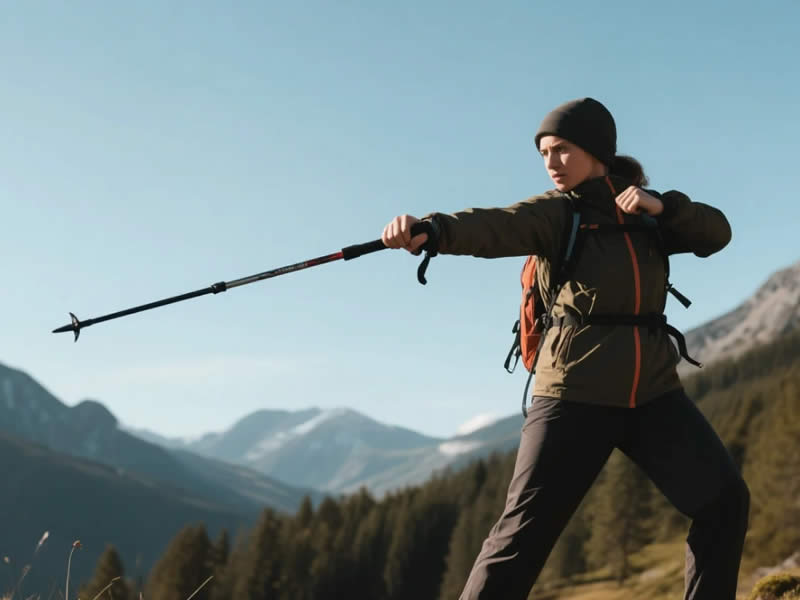
The Legal Perspective – A Grey Area
In the UK, the law around self-defence is clear but nuanced. You are allowed to use "reasonable force" to defend yourself or others. The key word is reasonable. If you are being attacked, you can use an object to defend yourself. However, the law also distinguishes between an object you happen to be carrying and an object you are carrying as a weapon.
The Offensive Weapons Act
Under UK law, if you carry an object with the intent to use it as a weapon, that object becomes an offensive weapon. If you tell a police officer "I carry these poles for self-defence," you are essentially admitting that you are carrying them as a weapon. This is a serious offence.
- The Test: Is the object being carried for a legitimate purpose? A trekking pole's legitimate purpose is walking. If you are stopped and asked why you have them, saying "for self-defence" would be a mistake.
Reasonable Force
If you are attacked and you use your pole to defend yourself, the law will assess the force you used. Did you use the pole to create distance, or did you use it to strike someone repeatedly? The force must be proportionate to the threat.
The Verdict: You can use a trekking pole to defend yourself if you are under attack, but you cannot legally carry it for that purpose. The law looks at your intent.
The Practical Reality – Why It's a Bad Idea
Even if you put the legal grey area aside, a trekking pole is a poor self-defence tool. Here's why.
1. It Can Be Grabbed
A trekking pole is long and relatively light. If you try to swing it or jab it, an attacker can simply grab it. Once they have a grip on the pole, they have control, and you are now in close quarters without a weapon. This is far more dangerous than not having a pole at all.
2. It Can Snag and Break
If you try to strike with a pole and it catches on a branch, it will be yanked from your hands. If it's a carbon fibre pole, it can snap cleanly. Aluminium poles can bend. A broken pole is useless.
3. You Can Be Disarmed
An attacker can apply leverage to the pole to disarm you, perhaps breaking your wrist or fingers in the process. A pole is a lever; in the wrong hands, it can be used against you.
4. Limited Reach and Power
A trekking pole is designed for walking, not combat. It lacks the weight and striking surface of a proper weapon. A jab might be a mild deterrent, but a full-strength swing is unwieldy.
The Best Self-Defence is Prevention
The safest approach to hiking alone is to avoid needing to defend yourself in the first place. Here are the strategies that are far more effective than any trekking pole.
1. A Personal Alarm
This is the single most effective deterrent. A personal alarm emits a loud, high-pitched sound (often 130+ decibels). This is enough to disorient an attacker and alert nearby walkers. It's lightweight, cheap, and legal to carry.
2. Stay Aware
The most important safety tool is your brain. Avoid wearing headphones on the trail. Listen to your surroundings. Trust your instincts—if a situation or a person feels wrong, turn back or take a detour. Awareness is your primary defence.
3. Walk with a Group
There is safety in numbers. If you are concerned about hiking alone, join a local walking group, use a social media group to find a walking partner, or tell someone your exact route and expected return time.
4. Know Your Route
Stick to well-trodden paths. Let someone know where you are going. Check the weather and the terrain. Being lost, cold, or exhausted makes you vulnerable.
What to Do If You Are Confronted
If you are confronted by a person who is threatening you, your goal is to escape, not to fight.
- Create Distance: If you have a pole, you can use it to create distance between you and the threat. Hold it horizontally in front of you. This is a defensive, non-aggressive posture.
- Speak Calmly and Firmly: Use a confident, calm voice. "Stay back" or "Please leave me alone."
- Use the Pole as a Last Resort: If you are physically attacked and cannot escape, use the pole to jab at the attacker's chest or knee. Aim for a vulnerable area and then run.
- Run: The moment you have an opportunity to escape, take it. Your life is more important than your gear.
Alternative: The Walking Stick
Some walkers prefer a traditional wooden walking stick, which is a sturdier object. However, the same legal and practical issues apply.
A Quick Comparison Table
| Option | Legal | Effective | Risk |
|---|---|---|---|
| Trekking Pole | Grey area (intent) | Poor | Can be grabbed or broken |
| Personal Alarm | Legal | High | None |
| Awareness | Legal | High | None |
| Walking in a Group | Legal | High | None |
The Verdict
You can physically use a trekking pole for self-defence if you are attacked, but it is not a good idea to rely on it. The legal risks of carrying a pole for self-defence are significant, and practically, a pole is a clumsy, easily disarmable tool. Your best defence on the trail is prevention—awareness, a personal alarm, and walking with a companion. The hills are a place of peace and beauty, and your gear should be there to help you enjoy them, not to prepare for a fight.




