




Best trekking poles for plus-size hikers?
Durability over weight – choose 7075 aluminium with lever-locks and avoid carbon. For plus-size hikers (over 100 kg / 220 lbs), the priority is a pole that won't bend, snap, or slip under load. The short answer is that you need a robust, 3‑section telescopic pole with a reliable locking mechanism. This guide covers the key features, the best models, and the testing process to ensure your poles are safe and reliable.
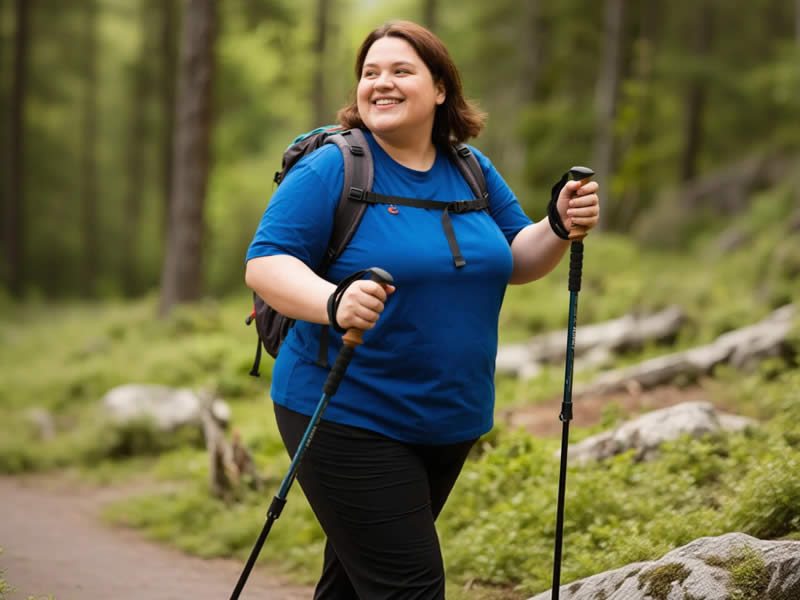
The Physics: Why Plus-Size Hikers Need More from a Pole
A trekking pole is essentially a lever. When you plant the pole and lean your weight on it, you are applying a bending force (torque) to the shaft. The heavier the load, the greater the force.
- The Risk: A standard, lightweight pole may bend or snap under the strain.
- The Solution: You need a pole with a thicker wall and a stronger alloy.
The 7075 aluminium alloy is the gold standard for strength. It has a high tensile strength and is the most durable material used in trekking poles.
Critical Features for Plus-Size Hikers
1. Material – 7075 Aluminium is Non-Negotiable
Carbon fibre is a liability for a plus-size hiker. It is stiff but brittle. A sudden sideways impact can cause it to snap catastrophically. Aluminium bends under stress, giving you a visual warning and often allowing you to straighten it and continue.
7075 aluminium is the strongest alloy used in trekking poles, with a tensile strength of over 570 MPa. It is the safest and most reliable choice for heavier users.
2. Locking Mechanism – Lever-Locks Only
Twist-locks are a hazard for plus-size hikers. They rely on an internal expanding wedge that can slip under sustained weight, especially in wet conditions.
External lever-locks (like Black Diamond's FlickLock) clamp directly onto the shaft. They are more secure, adjustable, and reliable under heavy loads. A slipping lock on a descent is a dangerous situation.
3. Shaft Construction – 3‑Section Telescopic
Folding Z‑poles are convenient but have weaker joints. The internal cord and thin‑walled sections are not designed for the repeated stress of a heavy load.
Three‑section telescopic poles with a generous overlap between sections provide the most robust structure. The overlap distributes the load across a greater area, reducing the risk of bending at the joint.
Avoid: Two‑section poles—they have longer unsupported sections that are more prone to flex.
4. Baskets – Robust with a Positive Lock
Heavier walkers often sink deeper into soft ground. Standard mud baskets can deform or pop off under the extra suction. Look for baskets with a positive locking collar (screws down or clips securely) rather than a simple friction fit.
5. Tips – Replaceable with a Wide Base
Carbide tips are universal, but some have a narrower base than others. A tip with a wider base offers better lateral stability under heavy load. Ensure the tips are replaceable—you'll wear them out faster.
The Best Poles for Plus-Size Hikers
1. Black Diamond Trail Pro – The Standard-Setter
- Material: 7075 aluminium
- Lock: FlickLock (bombproof, adjustable clamp pressure)
- Grip: Cork with extended foam upper
- Baskets: Power‑baskets (large, with a locking collar)
- Tips: Replaceable carbide
- Weight: ~240g per pole
- Why it's the top choice: The FlickLock is the most reliable lock under load—it doesn't slip. The large baskets stay put even in soft ground. The aluminium shaft is robust and has been proven on thousands of heavy‑user descents. The extended grip is useful for steep sections where you need to choke up.
- Verdict: The safest, most reliable pole for plus-size walkers.
2. Leki Makalu (with SpeedLock 2)
- Material: 7075 aluminium
- Lock: SpeedLock 2 (lever‑lock, with a wide clamping surface)
- Grip: Cork
- Baskets: Standard mud baskets—upgrade to Leki's winter basket for more surface area.
- Tips: Replaceable carbide (Flex Tip option)
- Weight: ~250g per pole
- Why it's a contender: The SpeedLock 2 has a wider clamp than many rivals, distributing pressure more evenly. The cork grip is comfortable and stays tacky. The Makalu is a classic for good reason—it's simple, robust, and reliable.
- Verdict: An excellent, trusted option that's slightly lighter in the hand than the Trail Pro.
3. Komperdell Powerlock 3.0 (with winter baskets)
- Material: 7075 aluminium
- Lock: Powerlock 3.0 (lever‑lock with a secure clamp)
- Grip: Cork/foam hybrid
- Baskets: Large snow baskets included
- Tips: Replaceable carbide
- Weight: ~250g per pole
- Why it's worth considering: The Powerlock 3.0 is a robust lever‑lock that holds well under pressure. The large baskets (included) are a bonus for soft ground. The grip is comfortable, though not as refined as Black Diamond's cork.
- Verdict: A reliable, budget‑friendly alternative to the Black Diamond Trail Pro.
What to Avoid
- Carbon fibre folding poles – the thin joints are a known failure point.
- Twist‑locks – they slip under sustained load.
- Two‑section telescopic poles – the unsupported sections flex too much.
- Poles with non‑replaceable tips – when they wear, you'll need new poles.
- Any pole that flexes visibly when you lean your full weight on it—this is a sign the shaft wall is too thin.
The "Lean Test" – How to Test a Pole
Before you buy, do a simple test (if you're in a shop):
- Extend the pole to your flat‑terrain length.
- Lock it firmly.
- Plant the tip on the ground.
- Lean your full weight onto the handle (as if you're descending a steep slope).
- Observe: Does the pole flex? Does the lock slip? Do you hear any creaking?
- Repeat for both poles.
If the pole bends noticeably, avoid it. If the lock slips, tighten it (if possible) and test again. If it still slips, reject it.
Maintenance for Plus-Size Use
- Check lock tension regularly – lever‑locks can loosen over time. Keep a small Allen key in your pack.
- Replace tips early – worn tips are more likely to slip on wet rock, which can cause a sudden overload.
- Inspect shafts for dents – a dent is a weak point. If you see one, replace the pole.
- Dry thoroughly after wet use – moisture can corrode locks and shafts.
A Quick Comparison Table
| Feature | Black Diamond Trail Pro | Leki Makalu | Komperdell Powerlock |
|---|---|---|---|
| Material | 7075 Aluminium | 7075 Aluminium | 7075 Aluminium |
| Lock | FlickLock | SpeedLock 2 | Powerlock 3.0 |
| Grip | Cork | Cork | Cork/Foam |
| Weight | ~240g | ~250g | ~250g |
| Durability | Bombproof | Very Good | Good |
| Best For | Maximum security | Classic reliability | Budget-friendly |
The Verdict
For plus-size hikers, the Black Diamond Trail Pro is the safest and most reliable choice. Its FlickLock, robust 7075 aluminium shaft, and large baskets with locking collars are specifically designed for the stresses of heavy‑load walking.
If you already own a quality pole like the Leki Makalu, you can make it work—but ensure you upgrade the baskets and check the lock tension regularly. For occasional use, a mid‑range option like the Komperdell Powerlock 3.0 is a good compromise.
The golden rule: Don't compromise on lock reliability and shaft strength. A broken pole on a steep descent is not just an inconvenience—it can lead to a fall. Choose wisely, test thoroughly, and maintain diligently. Your knees—and your safety—will thank you.




