




How to Fix a Slightly Bent Aluminum Hiking Pole Section?
A bent aluminum hiking pole section is a common issue, often resulting from a slip, a fall, or the pole getting wedged between rocks. Before you consider replacing the entire pole or section, a slight, smooth bend can sometimes be carefully corrected at home. However, it's crucial to understand the limits of DIY repair to avoid compromising the pole's structural integrity. This guide will walk you through a safe, methodical approach.
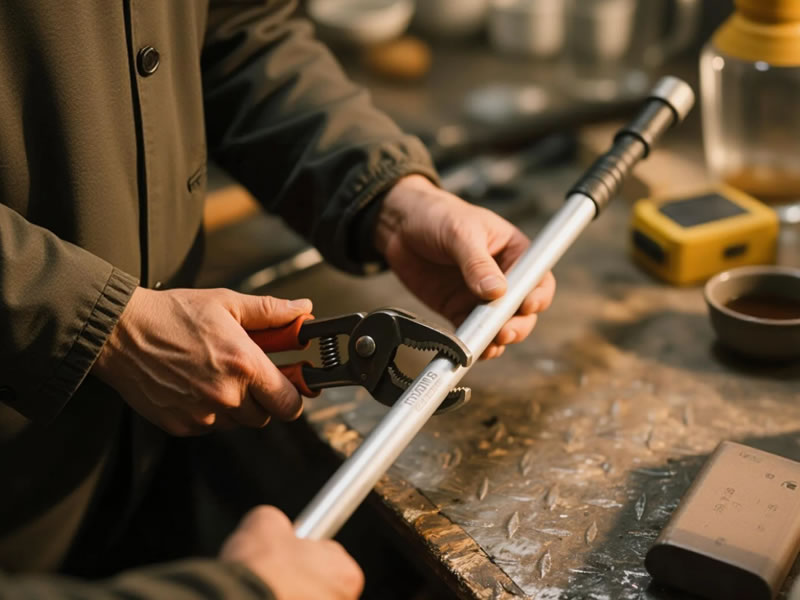
Recommended trekking pole purchase link: https://s.click.aliexpress.com/e/_c4M7OWaN
Critical First Step: Assessment
Not all bends are created equal. DO NOT ATTEMPT TO REPAIR IF:
- There is a sharp kink or crease in the metal.
- There is any visible cracking, splitting, or material fatigue.
- The bend is located at or near a welded joint or locking mechanism.
- The bend is severe (over 15-20 degrees).
What is "Fixable": A gentle, smooth curvature over several inches of the shaft, with no visible cracking. The goal is to restore function, not necessarily perfect cosmetic straightness.
Tools & Preparation
- Work Surface: A solid, flat, hard surface like a concrete floor, garage workbench, or sturdy table.
- Support Blocks: Two pieces of dense wood (2x4s) or a sturdy metal pipe/bar with an inner diameter slightly larger than your pole.
- Pressure Application: A rubber mallet is ideal. A regular hammer can be used with extreme caution if wrapped in cloth or used with a wood block to prevent marring the metal. Never strike aluminum directly with a steel hammer.
- Safety Gear: Wear safety glasses.
- Disassembly: Completely remove the bent section from the pole. Take out any internal mechanisms if possible (e.g., shock springs).
The Straightening Process: A Gradual Approach
Method 1: Using Support Blocks and Pressure (Best for Mid-Section Bends)
- Place the two wooden blocks parallel to each other on your work surface, with a gap between them slightly wider than the bend's apex.
- Lay the bent pole section across the gap, with the apex of the bend facing upward.
- Apply slow, gradual, downward pressure with your hands on both sides of the bend. Use your body weight gently. You may hear slight creaking; this is normal.
- Check progress frequently by rolling the section on a flat surface. Flip it over and repeat as needed.
- If hand pressure isn't enough, use a wood block as a buffer and tap gently with a rubber mallet, working from the edges of the bend toward the center.
Method 2: Using a Form (Ideal for Gentle Curves)
- Find a cylindrical form with an inner diameter matching your pole's original outer diameter (e.g., a metal pipe, the unbent section of another pole, a vise with curved jaws).
- Insert the bent section into the form and slowly roll and apply pressure, working the curve straight against the form's inner wall.
Golden Rules to Prevent Catastrophe
- Work Slowly: Aluminum 6061 or 7075 can be work-hardened. Sudden, forceful bending can cause it to snap.
- Multiple Passes: It is better to make ten gentle corrections than one forceful one.
- Cold Working Only: Do not apply heat (e.g., from a torch). This will destroy the heat-treated temper (T6) of the alloy, permanently weakening it.
- Test Fit Frequently: Reassemble the section with its adjacent sections to ensure it still telescopes smoothly and the locks engage properly.
Post-Repair Inspection and Testing
- Visual: Inspect meticulously for any new micro-cracks, especially along the seams of the shaft.
- Tactile: Run your fingers over the area. Any raised ridges or sharp edges indicate over-stressing.
- Functional Test: Reassemble the pole. Extend and lock it. Apply moderate downward pressure. Does it hold without slipping? Does it feel solid?
- Field Test: Before relying on it in a critical situation, use the pole on a short, low-risk hike to see if it performs reliably.
When to Stop: Recognizing a Lost Cause
If during the process you notice:
- The metal begins to wrinkle or buckle.
- A sharp kink develops.
- The locking mechanism no longer fits or functions....stop immediately. You have reached the limit of safe repair.
The Final Verdict: A Temporary Solution, Not a Restoration
Successfully straightening a bent aluminum pole section is a temporary, field-expedient fix. The metal has been permanently weakened at the bend point, making it more susceptible to future failure. It should be considered a "get-you-home" or "backup pole" repair.
The safest long-term solution is to replace the damaged section. Contact the pole's manufacturer (like Black Diamond, LEKI, Komperdell) directly. Most sell individual replacement sections at a reasonable cost, which is a far wiser investment in your safety than trusting a compromised DIY repair on a steep descent.
Proceed with patience, respect for the material's limits, and when in doubt, replace it. Your poles are vital safety equipment; their reliability should never be in question.




