




Walking poles for self-arrest on snow slopes?
For hikers who venture onto snow-covered trails, the question of self-arrest inevitably arises. Self-arrest is the life-saving technique of stopping a slide down a steep snow slope using a mountaineering ice axe. For those carrying walking poles instead of an ice axe, the natural question is: can walking poles serve the same purpose? The answer is a firm no. Walking poles are not designed for self-arrest, and attempting to use them as such can lead to equipment failure, injury, or worse. Understanding the differences—and knowing what to do if you find yourself on snow without an ice axe—is essential for winter hiker safety.
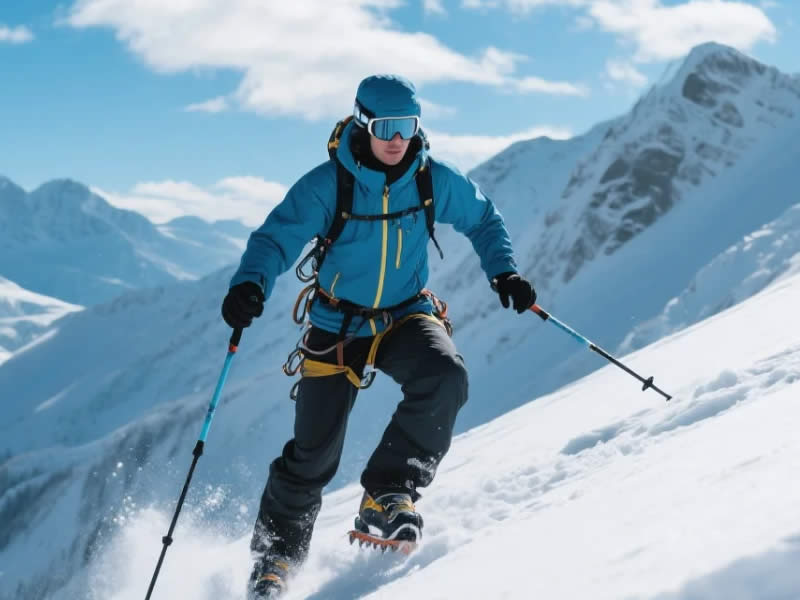
Recommended trekking pole purchase link: https://s.click.aliexpress.com/e/_c4M7OWaN
What Is Self-Arrest?
Self-arrest is a technique taught in mountaineering and winter hiking courses. When a climber or hiker falls on a steep snow slope and begins sliding, they must quickly roll onto their stomach, dig the pick of an ice axe into the snow, and apply body weight to stop the slide. The ice axe is specifically engineered for this purpose:
- Pick – A sharp, curved metal pick designed to penetrate hard snow and ice.
- Shaft – A strong, straight shaft that can withstand significant leverage.
- Adze or hammer – The opposite end of the pick, which can also be used for cutting steps or anchoring.
- Leash or grip – Designed to maintain control during a dynamic fall.
This combination of features makes the ice axe a reliable tool for arresting a fall. Walking poles share none of these characteristics.
Why Walking Poles Are Not Self-Arrest Tools
1. No Effective Pick
The carbide tip of a walking pole is sharp, but it is tiny—typically a few millimeters wide. When pressed into hard snow or ice during a high‑speed slide, it cannot penetrate sufficiently to generate the stopping force required. The tip will either skip across the surface or snap under lateral stress.
2. Weak Shaft and Locks
Walking pole shafts are designed for vertical compression—supporting your weight as you plant them while walking. During a slide, forces are applied laterally and dynamically. Lever locks or twist locks can fail under these forces, causing the pole to collapse. A collapsing pole during a fall can cause sudden loss of stability and increase the risk of injury.
3. Handle Design
Ice axe handles (or grips) are designed to be held securely while applying force through the pick. Walking pole grips, by contrast, are ergonomic for forward motion, not for the “pushing down and digging in” motion required for self-arrest. The wrist straps, while useful for walking, can entangle a falling hiker and increase the risk of wrist or shoulder injury.
4. Risk of Injury
Attempting self-arrest with a walking pole introduces significant injury risks:
- Broken pole – A carbon fiber pole can splinter, causing puncture wounds.
- Wrist or shoulder injury – The pole may act as a lever against your body, hyperextending joints.
- Loss of control – Fumbling with an inadequate tool wastes precious seconds during a slide.
What to Do If You Slip Without an Ice Axe
If you are hiking on snow slopes that require self-arrest capability, you should be carrying an ice axe—period. However, if you find yourself sliding without one, here are the recommended actions:
- Assume the self-arrest position – Roll onto your stomach, feet pointing downhill, body arched slightly, and dig in with your hands, knees, and toes. Use your hands like claws, pressing fingers into the snow.
- Use your walking poles only as a last resort – If you have poles in hand, you can attempt to drag them sideways across the snow surface to create friction, but do not expect them to stop you. Hold them across your body, not pointed downhill.
- Protect your face – Keep your head up, looking downhill to avoid face‑planting into the snow.
- Practice in safe conditions – Before encountering steep snow, practice sliding and stopping on a safe, low‑angle slope with an instructor. Never practice self-arrest with walking poles—they will give you a false sense of security.
When to Use Poles on Snow
Walking poles are excellent tools for snow travel—in appropriate terrain. They provide:
- Balance – On low‑angle snowfields, poles help maintain stability.
- Rhythm – A consistent planting rhythm aids efficient travel.
- Fatigue reduction – Poles distribute effort across the upper body.
- Snow depth assessment – Poles can probe snow depth to avoid post‑holing.
The key is terrain assessment. If the slope is steep enough that a fall would result in a dangerous slide, you should have an ice axe in hand and poles stowed. Many winter hikers carry both: poles for flat and moderate terrain, ice axe deployed when crossing steeper slopes or traversing avalanche terrain.
The Ice Axe Alternative
For hikers who venture onto snow slopes, a lightweight mountaineering axe is the appropriate tool. Modern ice axes are available in lightweight designs suitable for hiking and ski touring. A basic ice axe weighs roughly the same as a pair of trekking poles and can be carried in one hand while using a single pole for balance, or stowed on a pack when not needed.
Key self-arrest principles:
- Take a course – Self-arrest must be practiced under professional instruction. Reading about it is not enough.
- Carry the right tool – An ice axe, not walking poles.
- Know your limits – If a slope makes you uncomfortable, turn back or choose an alternate route.
Final Thoughts
Walking poles are outstanding tools for stability, efficiency, and joint protection on trails, including low‑angle snow. But they are not self-arrest devices. On snow slopes where a fall could result in a dangerous slide, an ice axe—combined with proper training—is the only acceptable tool. Attempting to substitute poles for an ice axe is a gamble with potentially fatal consequences. Respect the terrain, carry appropriate gear, and invest the time to learn skills that could save your life. The mountains will be there for your next adventure—ensure you are prepared for them.




