




First aid uses for walking poles?
In the backcountry, where professional medical help may be hours or days away, the gear you carry becomes your emergency room. Walking poles—already in your hands—are among the most versatile tools for improvised first aid. Lightweight, strong, and often adjustable, they can serve as splints, stretcher supports, traction aids, and more. Knowing how to adapt your poles for medical emergencies can transform a crisis into a manageable situation while you wait for rescue.
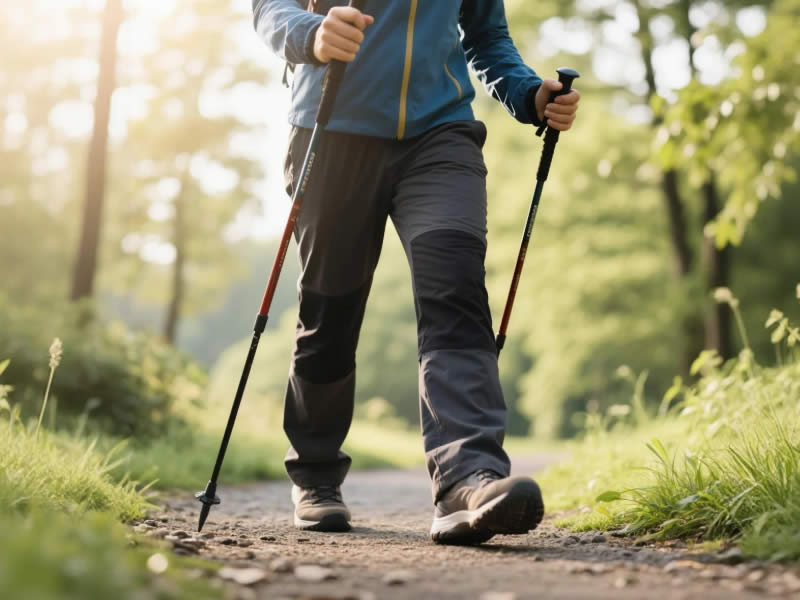
Recommended trekking pole purchase link: https://s.click.aliexpress.com/e/_c4M7OWaN
1. Splinting Fractures and Sprains
The most common first aid use for walking poles is immobilizing injured limbs. Whether it’s a fractured forearm, a badly sprained ankle, or a suspected lower leg fracture, poles provide the rigidity needed to prevent further injury.
For a lower leg or ankle:
- Place one pole on each side of the injured leg, extending from above the knee to past the heel (for a fracture) or from mid‑calf to past the ankle (for an ankle injury).
- Pad generously with clothing, a sleeping pad, or a backpack to cushion pressure points.
- Secure the poles with shoelaces, paracord, straps, or torn fabric strips. Tie above and below the injury site, avoiding direct pressure over the fracture.
- Check circulation in toes regularly—if they become cold or blue, loosen the splint.
For a forearm or wrist:
- Use a single pole adjusted to run from elbow to past the wrist.
- Pad the pole and secure it along the injured forearm.
- Create a sling from a shirt, jacket, or triangular bandage to support the arm across the chest.
2. Improvised Stretcher
When a patient cannot walk, a stretcher becomes essential. Walking poles can form the rigid side rails of an improvised stretcher.
- Using jackets or tarps – Slide two poles through the sleeves of two jackets (zipped up) or through the edges of a tarp. The fabric forms a supportive bed between the poles.
- Using sleeping pads – Roll a foam sleeping pad around the poles, creating a rigid, cushioned surface.
- Team carry – With at least four rescuers, poles provide structure for a stable, level carry. Always maintain spinal precautions if a spinal injury is suspected.
3. Assisting Ambulation
For minor injuries where walking is possible but painful, poles can serve as crutches or support aids.
- Single pole as cane – Adjust a pole to a comfortable height for the injured person to lean on.
- Two poles as crutches – In a pinch, two poles can function as forearm crutches. Remove the wrist straps to prevent entanglement, and pad the grips if needed.
- Traction for hip or knee injuries – Poles can support weight while another rescuer helps stabilize the injured side.
4. Spinal Immobilization
In suspected spinal injuries, keeping the head and neck stable is critical until help arrives. Walking poles can assist in creating improvised cervical spine immobilization.
- Head stabilizers – Place two poles alongside the patient’s head, extending past the shoulders. Use clothing, tape, or straps to secure the poles to a sleeping pad or backboard, creating lateral head blocks.
- Log roll aid – Poles can serve as levers to assist in carefully log‑rolling a patient onto a backboard without twisting the spine.
Important: Spinal injuries require extreme caution. If you suspect a spinal injury, avoid moving the patient unless absolutely necessary (e.g., immediate danger). Use poles to stabilize, not to move.
5. Signaling and Marking
While not a direct first aid treatment, signaling is part of medical emergencies. Reflective poles or brightly colored poles can be used to:
- Mark the location of an injured person for rescue teams.
- Wave to attract attention from aircraft or distant searchers.
- Create ground signals (SOS, X) visible from the air.
6. Additional Emergency Uses
- Tent pole repair – If a tent pole breaks, a walking pole can serve as a temporary replacement to maintain shelter.
- Traction splint – In remote wilderness medicine, advanced practitioners may use poles to create improvised traction for femoral fractures, though this requires specific training.
- Debris probe – After an avalanche or landslide, poles can help probe for buried victims—though a dedicated probe is far superior.
Important Safety Considerations
- Do not realign bones – Splint the injury in the position found. Attempting to straighten a deformed limb can cause further damage.
- Monitor circulation – Any splint can become too tight as swelling increases. Check toes or fingers regularly for warmth, color, and sensation.
- Remove wrist straps – When using poles for patient care, remove straps to prevent entanglement or accidental movement.
- Sterilize if possible – If poles contact open wounds, clean them with antiseptic wipes or boiling water if available.
Training and Preparation
Improvised first aid skills are best learned before an emergency. Consider:
- Taking a Wilderness First Aid (WFA) or Wilderness First Responder (WFR) course.
- Practicing splinting techniques with your poles in non‑emergency settings.
- Carrying a basic first aid kit that complements your poles—including tape, gauze, and triangular bandages.
Final Thoughts
Walking poles are more than balance aids; they are essential components of a backcountry first aid kit. With a little knowledge and creativity, they can immobilize fractures, support stretchers, assist ambulation, and even help stabilize spinal injuries. While they are no substitute for professional medical care, they can provide critical stabilization until help arrives. Take time to learn these techniques before you need them—because in the wilderness, your gear is often your only resource.




