




Are expensive Leki trekking poles really better than cheap alternatives?
When you see Leki poles priced at €120–180 next to supermarket poles for €20, it’s natural to wonder: is the premium just clever marketing? After testing both on Germany’s demanding trails—from the jagged Alps to the muddy Harz—the answer is clear for serious hikers. But let’s break down exactly what you get (and lose) with each.
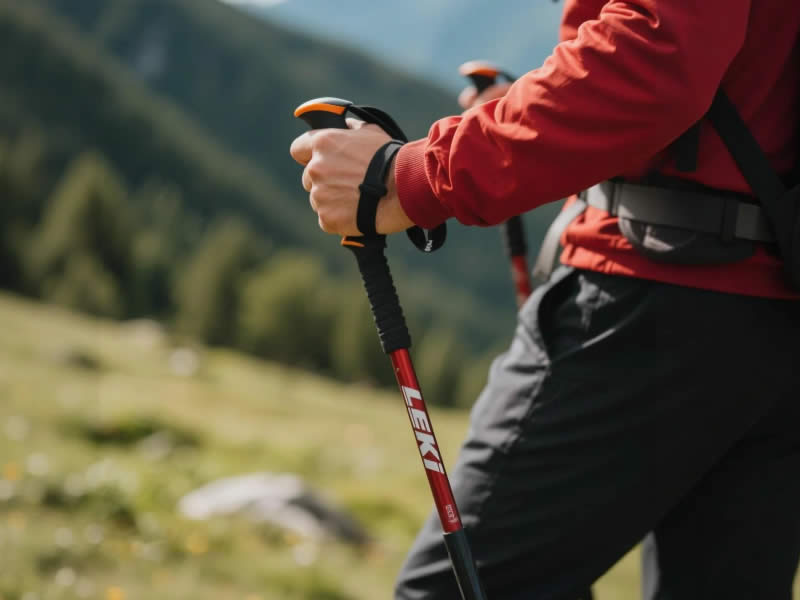
Recommended trekking pole purchase link: https://s.click.aliexpress.com/e/_c4M7OWaN
The case for Leki: engineering that lasts
Leki has spent decades refining three critical components:
- SpeedLock mechanism – Unlike cheap twist locks that slip when wet or cold, Leki’s external lever lock uses a metal cam and threaded dial. You can tighten it with your fingers, even with gloves. It holds firmly under full body weight. Cheap poles often use plastic levers that crack or twist locks that fail mid‑step—a dangerous situation on a rocky descent.
- Grip comfort – Leki’s cork/foam hybrids are shaped to reduce hand fatigue. The extended foam section lets you choke up for steep climbs without adjusting length. Budget poles typically use hard rubber or thin foam that becomes slippery after an hour of sweating, forcing you to grip tighter and tire faster.
- Carbide tip quality – Leki uses high‑grade tungsten carbide, pressed (not glued) into the shaft. They bite into wet rock and last 3–5 years of heavy use. Cheap poles often have soft steel tips that round off in a single season, turning into dangerous skates on smooth surfaces.
Where cheap poles can work – and where they fail
A decent budget option like Decathlon Forclaz MT500 (€40) or Cascade Mountain Tech (€50) uses aluminum shafts and lever locks. For gentle, well‑maintained trails (e.g., Rhine riverbanks, flat forest loops), they perform fine. However, under a heavy backpack (10+ kg) or on uneven terrain, cheaper aluminum alloys may bend more easily. The wrist straps are often unpadded nylon that cuts into your skin.
The real danger is the €15 no‑name pole. These use twist locks that slip without warning, plastic baskets that shatter, and shafts that snap at the ferrule. I’ve seen a hiker fall face‑first when a cheap pole collapsed on a wet downhill. That’s not a bargain.
The value equation for 2026
- Casual flat‑land hiker (<10 days/year): A €40–50 pair with lever locks is fine. Skip the €20 junk.
- Weekly hiker, Alps or Black Forest, with overnight pack: Leki’s durability, secure locks, and repairability justify €100+. You’ll use them for a decade.
- Ultralight backpacker: Consider Leki’s carbon options, but also look at Komperdell or Black Diamond. The brand isn’t the only premium choice.
Final verdict
Yes, expensive Leki poles are significantly better for anyone who hikes regularly on challenging terrain. The safety, comfort, and longevity outweigh the upfront cost. But if you only walk gentle paths twice a month, a quality budget lever‑lock pole will serve you well. Never buy the absolute cheapest – your knees and your face are worth more than €20.




