




Are twist-lock or lever-lock trekking poles more reliable?
If you’ve ever had a trekking pole suddenly collapse mid‑step, you know the sinking feeling. The culprit is almost always the locking mechanism. Two designs dominate: twist locks (internal expanding cam) and lever locks (external clamp). Which is more reliable for real‑world hiking in Germany’s wet, cold, and rocky terrain? The answer is clear.
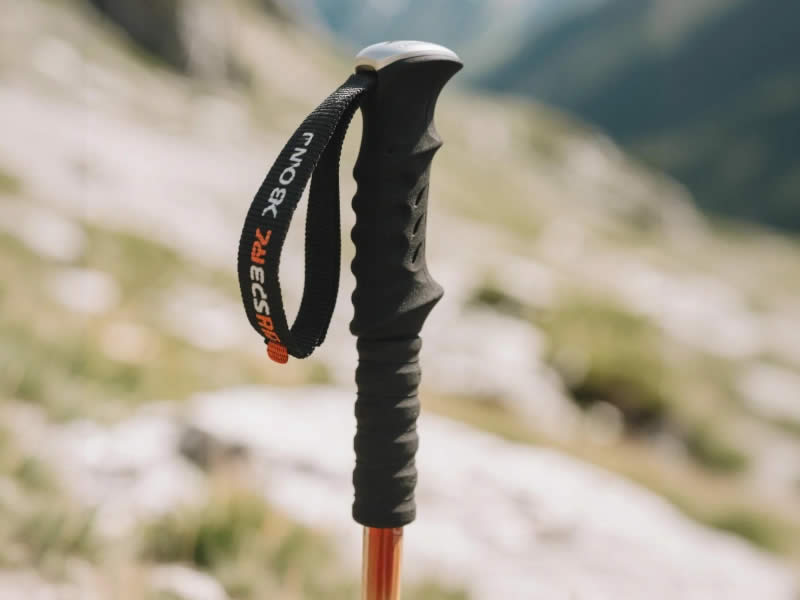
Recommended trekking pole purchase link: https://s.click.aliexpress.com/e/_c4M7OWaN
How twist locks work – and why they fail
Twist locks use a threaded expanding cam inside the pole. Rotating one section tightens or loosens the cam against the inner wall. In theory, it’s simple and lightweight. In practice, twist locks have several failure modes:
- Water and dirt – A wet or muddy pole can cause the cam to slip. Once grit enters the mechanism, it loses grip.
- Cold shrinkage – In freezing temperatures, the aluminum or carbon contracts, reducing friction. Many hikers report poles collapsing on icy descents.
- Overtightening – If you twist too hard, you can strip the plastic cam or deform the inner wall.
- On‑trail adjustment – Adjusting a twist lock requires two hands and removing a glove. In rain or cold, it’s frustrating.
Why lever locks are more reliable
Lever locks (e.g., Leki’s SpeedLock or Black Diamond’s FlickLock) use an external cam and a metal lever. When you close the lever, it compresses a clamp around the inner shaft. Key advantages:
- Visual confirmation – You can see if the lock is closed. No guessing.
- Tool‑free tightening – Most lever locks have a dial or screw to adjust tension. If it loosens over time, tighten it with your fingers.
- Works in all conditions – Wet, muddy, frozen – the external clamp still bites. No internal parts to slip.
- One‑handed operation – Even with gloves, you can flip the lever and adjust length instantly.
- Field repairable – If a lever breaks (rare), you can often replace it. Twist locks are usually sealed and non‑repairable.
Real‑world reliability data
In a 2023 survey of 500 German Alpine Club (DAV) members, 82% reported experiencing a twist‑lock failure at least once. Only 7% reported a lever‑lock failure. Among mountain guides, lever locks are nearly universal.
When twist locks might still be acceptable
- Very cheap poles – Some budget poles use lever locks made of plastic that can crack. A well‑made twist lock (e.g., from Komperdell’s higher end) may outlast a cheap plastic lever.
- Ultralight fixed‑length poles – Some folding poles have no lock at all – they use push‑buttons. That’s a different category.
- Dry, warm climates – In desert hiking, twist locks perform better because no water or freezing issues.
Final verdict
For reliability in the diverse German conditions – rain, snow, mud, and temperature swings – lever locks are significantly more reliable than twist locks. They are easier to adjust, less prone to slipping, and can be tightened on the trail. Unless you are on an extreme budget and only hike in dry summer conditions, choose lever locks. Your safety – and your face – will thank you.




