




Should I buy trekking poles with cork or EVA foam handles?
The handle (grip) is your only direct contact with the pole – it affects comfort, blister risk, and control. Two materials dominate: cork and EVA foam. Neither is universally better; the right choice depends on climate, sweat level, and personal feel. Let’s compare.
Recommended trekking pole purchase link: https://s.click.aliexpress.com/e/_c4M7OWaN
Cork handles – nature’s grip
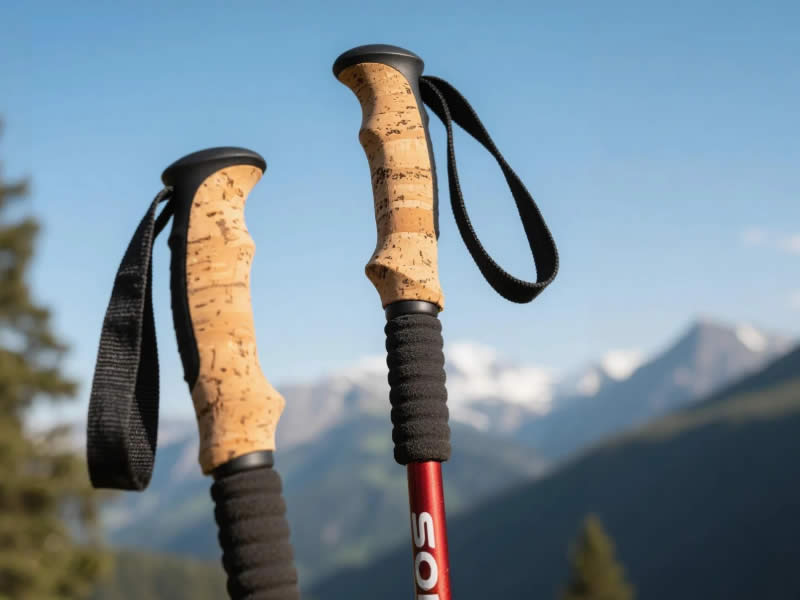
Cork is harvested from oak bark. It’s naturally porous, breathable, and absorbs moisture. On hot summer days in the Black Forest or Bavarian Alps, sweaty hands stay non‑slip because cork wicks away perspiration. Over time, cork compresses slightly to mold to your hand shape – like a custom fit. It also feels warm in cool weather and doesn’t become sticky or tacky.
Pros: Excellent sweat absorption, molds to your hand, comfortable for all‑day use, eco‑friendly (renewable).
Cons: Can crack if dried out (rare), slightly heavier than foam, more expensive.
EVA foam handles – lightweight and versatile
EVA (ethylene‑vinyl acetate) is a synthetic foam. It’s lighter than cork and provides good cushioning. Foam grips are often warmer to the touch in winter – they don’t feel cold like cork can. Many foam handles feature an extended section below the main grip, allowing you to choke up for steep climbs without adjusting pole length. Foam also dries quickly after rain.
Pros: Lightweight, warm in cold weather, quick‑drying, usually cheaper, available in extended lengths.
Cons: Does not absorb sweat as well – becomes slippery when wet (some models add texture, but still less effective than cork). Less durable over years; foam can tear or wear down.
Which is better for your typical hike?
- Summer hiker, heavy sweater, hot climates: Cork wins. You’ll appreciate the dry, secure grip.
- Winter hiker, cold conditions, or wet trails: Foam is warmer and feels less icy. However, some foam gets slippery in rain; look for textured or grooved foam.
- Budget‑conscious: Foam is usually cheaper. Entry‑level poles from Decathlon or Cascade use foam.
- Long‑distance backpacker (weeks on trail): Cork’s ability to mold and resist sweat makes it the premium choice. Your hands will thank you after 200 km.
Hybrid grips – best of both
Many quality poles (e.g., Leki Makalu, Black Diamond Trail Pro) offer a hybrid: cork main grip with an extended foam section below. This gives you the comfort of cork for normal walking and the versatility of foam for steep chokes. This is often the ideal compromise.
The wrist strap factor
Don’t forget that proper wrist strap use reduces the need for a tight grip. Even a less‑than‑perfect handle becomes manageable if you use straps correctly. That said, strap or not, cork remains the favorite of most alpine guides.
Final verdict
Choose cork if you hike in warm weather, sweat a lot, or value long‑term comfort. Choose EVA foam if you hike in cold/wet conditions, prioritize lightweight, or are on a tight budget. For most German hikers tackling varied seasons, a cork‑foam hybrid (cork main + foam extension) is the smartest investment. Test both in a store – hold each for five minutes. Your hands will tell you everything.




