




What Is the Best Walking Pole for Seniors? A Comprehensive Guide to Safety, Comfort, and Independence
For seniors, the simple act of walking—whether around the neighborhood, through a park, or on a woodland trail—is a cornerstone of physical health, social connection, and emotional well‑being. Yet age‑related challenges such as arthritis, reduced balance, joint stiffness, and diminished grip strength can turn a once‑enjoyable stroll into a precarious undertaking. The right walking pole can transform this experience, providing stability, reducing pain, and restoring confidence. But with dozens of models on the market, each touting different features, the question remains: What is the best walking pole for seniors?
The answer is not a single product, but a set of design criteria tailored to the unique physiology and needs of older adults. This guide identifies those non‑negotiable features, reviews the top‑rated poles that embody them, and explains why investing in the right equipment is one of the most impactful decisions a senior can make for their long‑term mobility.
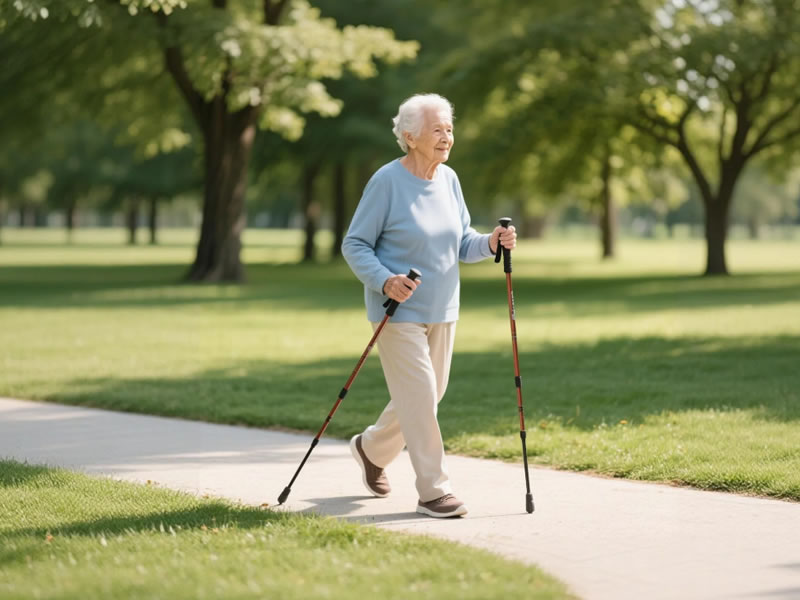
Recommended trekking pole purchase link: https://s.click.aliexpress.com/e/_c4M7OWaN
Part I: The Seven Non‑Negotiable Features of a Senior‑Friendly Walking Pole
1. Ergonomic, Large‑Format Grip
Standard trekking pole grips are often too small for arthritic hands and require significant grip strength to hold securely. Seniors need a contoured, oversized handle that cradles the palm and distributes pressure across a wider surface. The grip should be made of soft, compressible materials (cork or high‑density foam) that absorb sweat and reduce vibration. Straight or slightly angled grips are preferable; extreme forward angles (common in Nordic poles) can be uncomfortable for seniors with limited shoulder mobility.
2. Tool‑Free Length Adjustability
Proper pole length is essential for posture, balance, and joint protection. Seniors often need to adjust length for different footwear, terrain, or simply to share a pole with a spouse. External lever locks (FlickLocks) are vastly superior to twist locks—they require minimal hand strength, provide visible confirmation of security, and remain reliable in cold or wet conditions. The adjustment range should accommodate heights from approximately 5’0” to 6’2” (typically 105–135 cm).
3. Lightweight but Sturdy Construction
Heavy poles cause arm fatigue and discourage use. Yet ultra‑lightweight carbon fibre poles can be too fragile for seniors who may inadvertently strike curbs or doorframes. The ideal compromise is high‑grade aluminum (6061 or 7075 alloy) —light enough to swing easily (under 1 lb / 450 g per pole) yet robust enough to withstand occasional impacts without catastrophic failure.
4. Shock Absorption
Every footstep transmits a shockwave up through the wrist, elbow, shoulder, and cervical spine. For seniors with osteoarthritis, rotator cuff issues, or degenerative disc disease, this repetitive micro‑trauma can be debilitating. Internal spring mechanisms (often called anti‑shock or shock‑absorbing poles) compress on impact, significantly reducing the jarring force. Look for models with an on/off switch so the spring can be locked out for users who prefer a solid feel.
5. Interchangeable Tips
Seniors rarely walk exclusively on one surface. The best poles come with:
- Large, durable rubber “bell” tips for pavement, tile, and indoor use—they grip securely, are silent, and protect floors.
- Carbide steel tips that screw into the base of the rubber foot, providing exceptional traction on grass, gravel, and trails.
- Optional snow baskets for winter walking.
6. Comfortable, Adjustable Wrist Straps
A strap that cannot be easily adjusted or that digs into the wrist is a deal‑breaker. Seniors need wide, padded, neoprene or mesh straps that can be cinched one‑handed. The best systems allow the strap to be detached quickly—a valuable safety feature if the pole becomes caught on an obstacle.
7. Weight‑Bearing Capacity
Not all poles are engineered to support significant load. Seniors who are overweight, who carry groceries, or who rely heavily on poles for balance need a manufacturer‑rated capacity of at least 250 lbs per pole. This information should be clearly stated in the product specifications.
Part II: Top‑Rated Walking Poles for Seniors
Based on the above criteria, clinical endorsements, and thousands of verified user reviews, the following models represent the current gold standard.
🥇 Urban Poling Activator – The Clinically Certified Choice
Designed by: An occupational therapist and gerontologist.
Key Certification: The Arthritis Foundation Ease‑of‑Use Commendation—an independent, evidence‑based validation that the product delivers measurable benefit for people with arthritis and physical limitations.
Why It Excels:
- Proprietary ergonomic grip: The large, contoured handle supports the hand in a neutral position, reducing the need for tight finger closure. It is specifically shaped to accommodate arthritic hands.
- Shock‑absorbing internal spring: Reduces impact on wrists, elbows, and shoulders.
- Tool‑free length adjustment: External lever locks are easy to operate even with reduced hand strength.
- Interchangeable tip system: Includes both large rubber “asphalt feet” and durable carbide tips; optional snow baskets available.
- Weight capacity: 250 lbs per pole.
- Made in Canada with high‑quality 7075 aluminum.
Best For: Seniors with arthritis, joint replacements, or general age‑related hand weakness; those seeking a medically endorsed product.
Considerations: Premium price point ($120–$150/pair). Not sold in all big‑box retailers; available online and through physiotherapy clinics.
🥈 Dr. Cane Adjustable Walking Pole – The Ergonomic Innovator
Designed by: A physician specializing in mobility aids.
Signature Feature: 360‑degree rotating base.
Why It Excels:
- Patented pivoting foot: The rubber base rotates a full 360°, maintaining full contact with the ground regardless of pole angle. This provides exceptional stability on uneven pavement and eliminates the “slipping out” sensation of fixed‑tip poles.
- Oversized, soft foam grip: Extremely comfortable for long walks; reduces hand fatigue.
- Reflective accents: Enhances visibility during low‑light walks.
- Simple push‑button adjustment: While not infinitely adjustable, the discrete length settings are easy to operate and lock securely.
- Very affordable: Typically $40–$60 per pole.
Considerations: Not shock‑absorbing. Heavier than carbon‑fibre alternatives. Carbide tip not included (optional accessory). Better suited for pavement than aggressive trails.
Best For: Seniors who primarily walk on paved or lightly graveled surfaces and prioritize stability and affordability.
🥉 LEKI Wanderfreund / Black Diamond Trail Sport – The Lightweight Adjustables
Why They Excel:
Both LEKI and Black Diamond are legacy brands trusted by alpine guides and long‑distance hikers. Their entry‑level adjustable poles are excellent for active seniors who venture onto varied terrain.
LEKI Wanderfreund:
- Speed Lock 2 system: External lever locks that are exceptionally secure and easy to adjust.
- Aergon grip: Slightly larger than standard trekking grips; comfortable cork material molds to the hand.
- Internal shock absorption (optional on some models).
- Interchangeable tip system.
Black Diamond Trail Sport:
- FlickLock Pro levers: The industry benchmark for reliability.
- Foam grip: Soft, moisture‑wicking, and comfortable for all‑day use.
- Lightweight aluminum construction.
- Affordable price (~$70–$90/pair).
Considerations: Grips are not as generously oversized as Activator or Dr. Cane; may not suit severe arthritis.
Best For: Active seniors who hike on uneven trails, value brand reliability, and have mild‑to‑moderate hand function.
Part III: Two Poles vs. One – The Clear Verdict
Always recommend two poles for seniors. A single pole creates an asymmetric gait, unevenly loads the hips and knees, and provides only unilateral stability. Two poles:
- Balance the workload across both arms and legs.
- Create a stable four‑point base (quadpod) for superior fall prevention.
- Enforce reciprocal arm‑leg motion, which engages the core and promotes a natural walking rhythm.
- Prevent the development of compensatory pain on the unassisted side.
The only exception is a temporary injury that prevents use of one arm. For all other seniors, two poles are non‑negotiable.
Part IV: How to Choose – A Decision Framework
| If you... | Recommended Pole | Key Reason |
|---|---|---|
| Have arthritis, hand weakness, or recent joint replacement | Urban Poling Activator | Arthritis Foundation certified; ergonomic grip; shock absorption |
| Walk primarily on pavement, boardwalks, or indoor surfaces | Dr. Cane Adjustable | 360° rotating foot; excellent grip on hard, smooth surfaces |
| Are an active senior who hikes on trails | LEKI Wanderfreund or Black Diamond Trail Sport | Durable, lightweight, reliable locks, good grip |
| Have a limited budget but need basic stability | Cascade Mountain Tech Aluminum with Cork Grip | Lever locks, cork grip, under $50/pair |
| Need maximum adjustability (multiple users, varying footwear) | Any model with external lever locks | Quick, tool‑free length changes |
Part V: Final Tips Before You Buy
- Try before you buy (if possible). Visit a store that carries multiple models. Grip the handles. Simulate a walking motion. The pole should feel like an extension of your arm, not a tool you are fighting.
- Adjust to the correct length. Standing upright with the tip on the floor, your elbow should be bent at a comfortable 90° angle. A pole that is too long forces shoulder elevation; too short encourages hunching.
- Check the return policy. Some seniors need a week of neighborhood walks to decide if a pole truly suits them. Purchase from retailers with generous return windows.
- Consider the weight. If lifting the pole repeatedly causes arm fatigue, it is too heavy. Seniors with shoulder issues should prioritize models under 1 lb per pole.
Conclusion: The Best Pole Is the One You Will Use
The “best” walking pole for seniors is not an abstract title awarded by a magazine or influencer. It is the pole that fits your hand comfortably, supports your body safely, and accompanies you on the walks that matter.
For the senior with arthritic fingers, the Urban Poling Activator is worth every penny of its premium price—it is a medical device disguised as fitness equipment. For the budget‑conscious pavement walker, the Dr. Cane delivers outstanding stability at a fraction of the cost. For the trail‑loving septuagenarian, a LEKI or Black Diamond provides the durability and precision required for uneven terrain.
But across all these choices, a single truth unites them: walking poles are not a concession to age. They are an investment in continued independence, in fall‑free years, in the simple joy of moving through the world under your own power.
Choose wisely. Walk confidently. And never hesitate to ask for help—whether from a knowledgeable retailer, a physical therapist, or the experienced seniors who have already found their perfect pole. Your future self, still striding strongly, will thank you.




