




Auto-lock walking poles – convenience vs security?
Imagine pulling your trekking poles from your pack, giving them a gentle shake, and watching them snap into place—fully extended, locked, and ready to use in under three seconds. No levers to flip, no sections to twist, no adjustments to make. This is the promise of auto-lock walking poles, a category that prioritizes speed and simplicity above all else. But this convenience comes with a fundamental trade-off: security. Understanding the balance between these two priorities is essential for choosing poles that match your hiking style and risk tolerance.
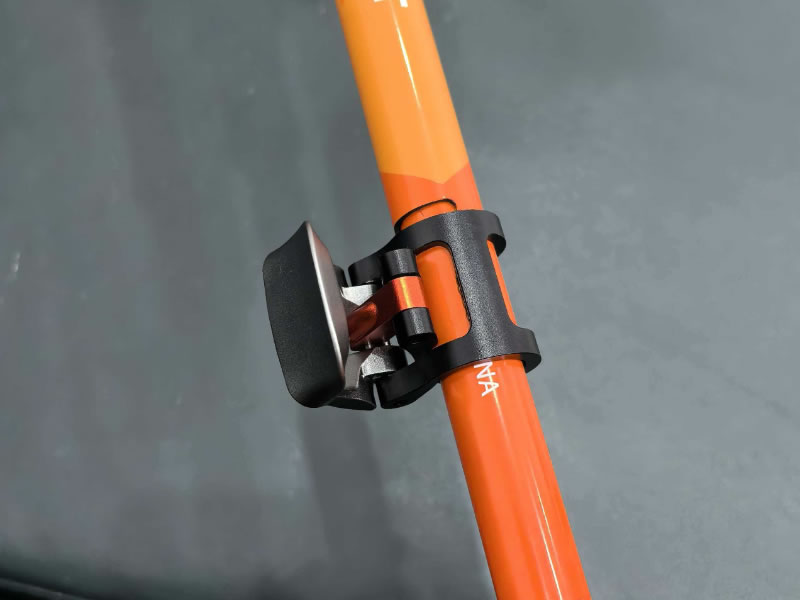
Buy Link: https://www.aliexpress.com/item/1005006081017549.html
How Auto-Lock Systems Work
Auto-lock mechanisms vary by manufacturer, but they share a common principle: the pole locks automatically when extended to full length, requiring no manual action from the user.
Internal Cord Systems (Z-Pole Style):
Pioneered by Black Diamond with their Z-Pole series, this design uses an internal cord running through all sections. When you pull the pole open, each section locks into place via internal buttons or cams. To collapse, you press a release button and push the sections together. The cord keeps everything connected.
Push-Button Folding Systems:
Similar to tent pole designs, these use spring-loaded buttons that snap into holes when the pole is extended. No levers, no twisting—just pull until you hear the click.
Spring-Loaded Cam Systems:
Less common, these use internal cams that engage automatically when sections are pulled apart, creating friction that locks the pole.
The Convenience Factor
Speed:
Auto-lock poles are the fastest to deploy and stow. From pack to trail in seconds. For trail runners switching between running and scrambling, or for travelers who need to pack poles frequently, this speed is transformative.
Simplicity:
No learning curve. No tension adjustments. No wondering whether a lever is tight enough. Extend and go. Collapse and store.
Packability:
Most auto-lock poles are folding designs that collapse into bundles 12 to 16 inches long—small enough to fit inside carry-on luggage or pack interiors. The auto-lock mechanism contributes to this compactness by eliminating external levers.
Reduced Snagging:
With no external levers or protruding hardware, auto-lock poles glide through brush and slide easily into pack pockets without catching.
The Security Trade-Off
No Redundancy:
Auto-lock poles typically rely on a single locking point for each section. If that mechanism fails—if a button jams, a spring breaks, or a cam wears out—the pole collapses completely. There is no backup. With external lever systems (flick locks), you have two independent locks on telescoping poles; failure of one still leaves the other holding.
Sudden Failure:
Manual locks often give warning. A flick lock loosens gradually; a twist lock slips progressively. Auto-lock mechanisms tend to fail suddenly. One moment the pole is locked; the next, it is collapsed. On steep or technical terrain, this sudden loss of support can cause dangerous falls.
Difficult Field Repair:
When an auto-lock fails, field repair is usually impossible. Internal buttons, springs, and cords are not accessible without disassembly tools and replacement parts. A failed auto-lock pole often becomes a fixed-length or unusable pole for the remainder of the hike.
Less Adjustment Flexibility:
Most auto-lock poles lock only at full extension. If you want a shorter length for steep climbs or a longer length for descents, you cannot adjust them. Some models offer limited adjustment via secondary locks, but this compromises the auto-lock simplicity.
Quality Matters Immensely
| Quality Level | Reliability | Typical Use |
|---|---|---|
| Premium (Black Diamond, Gossamer Gear) | High | Serious hiking, backpacking |
| Mid-range | Moderate | Casual day hiking |
| Budget | Unpredictable | Light use only |
Premium auto-lock systems from established brands use durable springs, reinforced buttons, and high-quality internal cords. They undergo rigorous testing and can last for years. Budget auto-lock poles often use cheap plastic components that fail quickly.
Convenience vs Security: The Trade-Off Matrix
| Factor | Auto-Lock | Manual External Lock |
|---|---|---|
| Deployment speed | Excellent | Good |
| Packability | Excellent | Good |
| Snag resistance | Excellent | Fair |
| Redundancy | None | Dual locks available |
| Failure warning | Poor (sudden) | Good (gradual) |
| Field repairability | Poor | Good |
| Adjustment range | Limited | Full |
| Best for | Speed, travel, light loads | Reliability, heavy loads, technical terrain |
Who Should Choose Auto-Lock?
Auto-lock poles are ideal for:
- Trail runners who need rapid deployment
- Travelers who pack poles frequently
- Day hikers on gentle, predictable terrain
- Those who prioritize speed and simplicity above all
Auto-lock poles are NOT ideal for:
- Backpackers carrying heavy loads
- Technical or steep terrain
- Hikers who frequently adjust pole length
- Anyone who cannot risk sudden pole failure
The Verdict
Auto-lock walking poles offer unmatched convenience at the cost of security. They are brilliant tools for the right applications—speed-oriented activities, travel, and light-duty hiking. But for situations where reliability is paramount—heavy packs, technical terrain, remote backcountry—the security of manual external locks with dual adjustments remains superior.
Ask yourself: Is speed worth the risk? Your terrain and your confidence will tell you.




