




Quick-deploy folding walking poles for emergencies?
Emergencies rarely announce themselves. A sudden injury on the trail, a vehicle breakdown in a remote area, or the need to improvise a shelter can all demand walking poles that deploy in seconds. In these moments, quick‑deploy folding poles—those that can go from collapsed to fully locked in one fluid motion—become more than a convenience; they become a critical piece of safety gear. This guide explains what makes a pole “quick‑deploy,” which designs excel in emergency scenarios, and how to choose one that can be stashed and ready for when you need it most.
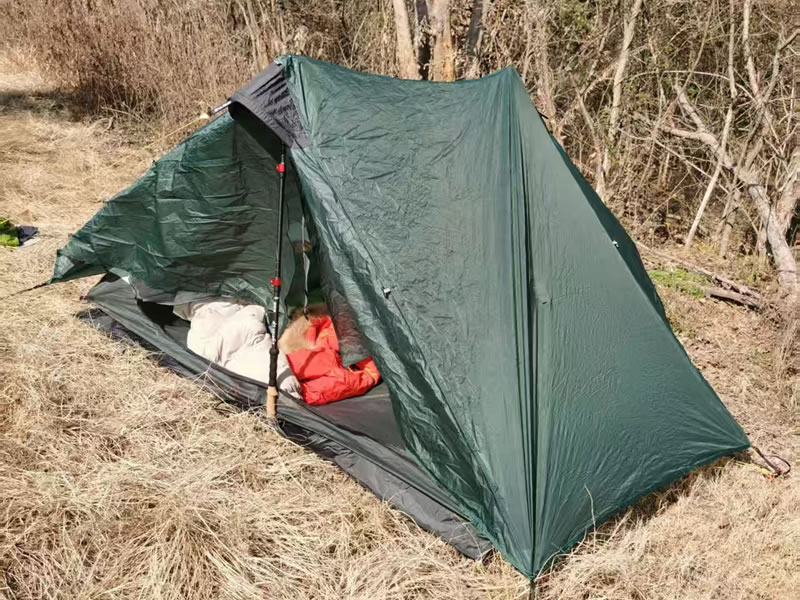
Recommended trekking pole purchase link: https://s.click.aliexpress.com/e/_c4M7OWaN
What “Quick‑Deploy” Means in an Emergency
In a non‑emergency setting, taking an extra 10 or 20 seconds to extend a telescoping pole and tighten a flick lock is trivial. In an emergency—a twisted ankle on a steep slope, a sudden storm, or the need to support an injured companion—those seconds matter. Quick‑deploy poles are designed to be opened with a single, intuitive motion, typically a firm pull that simultaneously extends all sections and engages internal locks.
Key characteristics:
- No external levers to flip (or minimal levers that don’t impede the initial deployment)
- Internal cord‑and‑button locking (Z‑pole style) that snaps into place automatically
- One‑motion deployment: you pull the pole apart and it locks itself
- Storable in a collapsed state (kept in a vehicle, emergency kit, or pack pocket) without risk of accidental deployment
Top Quick‑Deploy Designs
1. Black Diamond Distance Z Series
- Mechanism: Classic 3‑section Z‑pole with internal cord and push‑button release.
- Deployment: Grasp the handle, pull the lower section, and the internal cord tensions the buttons into their locking holes. The entire motion takes under three seconds.
- Why it excels for emergencies: No levers to operate. The pole is either collapsed or locked—no partial positions. It is intuitive even under stress. Available in both aluminum and carbon versions; the aluminum model is more impact‑resistant for vehicle or gear‑bag storage.
2. Gossamer Gear LT5
- Mechanism: 3‑section folding with twist‑lock internal buttons.
- Deployment: Similar to the Distance Z—pull to extend, and the sections lock automatically.
- Why it excels: Extremely lightweight (under 6 oz per pair), making it easy to carry as a “just‑in‑case” item in a daypack or emergency kit. The carbon construction dampens vibration, which can be helpful if used as a temporary splint or support.
3. Leki Micro Vario
- Mechanism: 4‑section folding with a Speed Lock (external flick lock) on the lower section.
- Deployment: Slightly slower than the pure Z‑poles because the flick lock must be engaged after extending the sections. However, the 4‑section design collapses extremely short (15–16 inches), making it easier to store in tight spaces like a car glovebox or under a seat.
- Why it excels: Best for situations where storage space is extremely limited and you are willing to accept a two‑step deployment for the benefit of length adjustability (useful if the pole will serve multiple users or shelter pitching).
Beyond Deployment: Reliability in Emergencies
Quick deployment is only part of the equation. In an emergency, the pole must be reliable under unplanned stress.
- Fewer moving parts: Pure Z‑poles (no external levers) have fewer components that can be damaged in storage or mis‑operated under pressure.
- Replaceable tips: Ensure the pole has standard interchangeable tips. A worn or damaged tip can be swapped quickly if the emergency involves extended use.
- Durable materials: For poles stored in a vehicle, consider aluminum over carbon. Carbon can be damaged by hard impacts with other gear; aluminum is more forgiving.
Storing Poles for Emergency Use
To be truly useful, quick‑deploy poles must be stored where you can reach them instantly:
- In a vehicle: Keep a pair collapsed in the trunk or behind a seat. Use rubber tip covers to prevent rattles and protect interior fabrics.
- In a daypack or emergency kit: Choose an ultralight model like the Gossamer Gear LT5. It adds negligible weight and packs flat.
- At home or basecamp: Store poles in an accessible location (near the door, in a gear closet) already collapsed, ready to grab.
Comparison: Quick‑Deploy Models
| Model | Deployment Motion | External Levers? | Collapsed Length | Weight (pair) | Best Emergency Use |
|---|---|---|---|---|---|
| Black Diamond Distance Z | Pull → locks automatically | No | 16″ | 14–17 oz | Trailside injury, shelter support |
| Gossamer Gear LT5 | Pull → locks automatically | No | 23″ | <6 oz | Ultralight emergency kit |
| Leki Micro Vario | Extend, then close lever | Yes (1 lever) | 15–16″ | 15–19 oz | Vehicle storage, adjustable length needed |
The Verdict
For pure speed in an emergency, the Black Diamond Distance Z (or any similar Z‑pole with internal cord and buttons) is the gold standard. A single pull locks all sections; there is nothing to twist or flip. It is intuitive enough for anyone to use, even if they have never handled folding poles before.
If storage space is extremely tight (e.g., a motorcycle side case or a small emergency pouch), the Leki Micro Vario’s 4‑section 15‑inch collapsed length is hard to beat, though deployment requires an extra step.
For those who want a lightweight “just‑in‑case” pole to carry on every hike, the Gossamer Gear LT5 offers ultralight simplicity and the same one‑motion deployment.
Final recommendation: Keep a pair of pure Z‑pole style folding poles (like Black Diamond Distance Z) in your vehicle and another ultralight pair in your daypack. In an emergency, you won’t have time to read instructions or fiddle with levers—poles that deploy instantly are gear you can trust when seconds count.




