




Using Walking Poles for Balance on Narrow Ridges? A Complete Guide to Exposed Terrain
Few experiences in hiking are as exhilarating—or as nerve-wracking—as traversing a narrow ridge. With exposure on one or both sides, every step demands focus. One misplaced foot or momentary loss of balance can have serious consequences. In these exposed environments, walking poles become more than comfort tools; they are essential safety equipment. Used correctly, they transform a nerve-racking scramble into a controlled, confident traverse. This guide covers the techniques and mindset for using poles on narrow ridges.
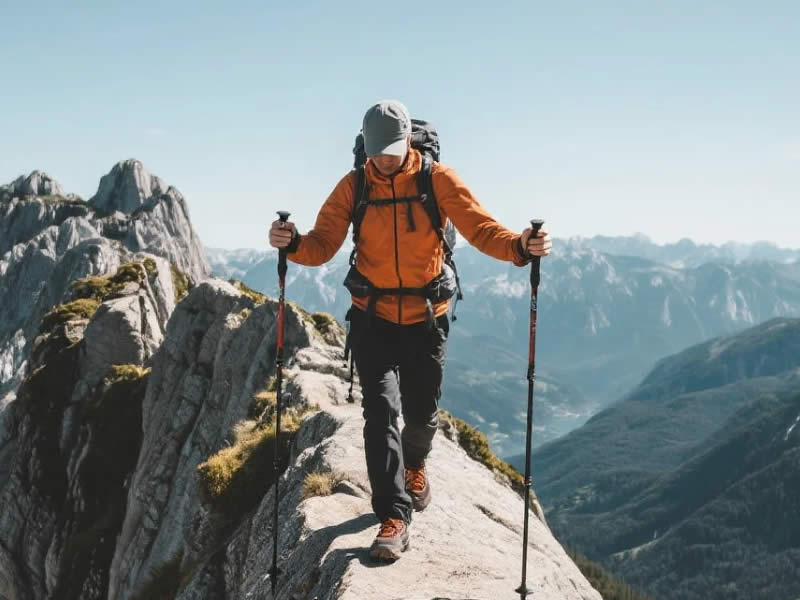
Recommended trekking pole purchase link: https://s.click.aliexpress.com/e/_c4M7OWaN
The Short Answer
Yes, walking poles are invaluable for narrow ridges. Use both poles to create a four-point base—far more stable than two feet alone. Keep poles planted on the ridge surface, never over the edge. Move slowly, maintaining three points of contact at all times (two feet + one pole, or two poles + one foot). Shorten poles slightly for better control; longer poles can throw you off balance. Never clip wrist straps—you must be able to drop a pole instantly if you stumble. Stay focused, breathe, and let your poles extend your stability. If winds are high or the ridge is particularly exposed, consider using one pole as a handrail against rock while the other plants. Your poles are your safety net—use them deliberately.
Why Narrow Ridges Demand Extra Stability
Narrow ridges present unique challenges that walking poles address perfectly:
Exposure: The psychological weight of a drop-off on one or both sides affects balance. Your body tenses, your movements become hesitant. Poles provide physical reassurance that counters the fear response.
Narrow Footing: You may be stepping on a surface just wide enough for one foot. Poles create additional points of contact, effectively widening your stability base.
Variable Surface: Ridges can combine rock, dirt, loose scree, and even snow. Poles test the surface before you commit your weight.
Wind: Exposed ridges are often windy. Poles anchor you against gusts that might otherwise push you off balance.
Fatigue: The concentration required for ridge walking is exhausting. Poles reduce the physical and mental load, letting you focus on foot placement.
Critical Preparation Before the Ridge
Adjust Pole Length
Before you reach the exposed section, shorten your poles slightly—5-10cm shorter than your normal flat-ground length. Shorter poles:
- Keep your center of gravity lower
- Reduce the chance of overreaching
- Allow quicker, more controlled movements
Check Locks
Ensure all sections are securely locked. The last thing you need is a collapsing pole at a critical moment.
Remove Wrist Straps
This is non-negotiable on exposed terrain. If you stumble, you must be able to drop a pole instantly. A trapped wrist could pull you off balance—or worse, over the edge.
Secure Loose Gear
Tighten pack straps so nothing dangles. A swinging water bottle can throw off your balance.
The Technique: Four Points of Contact
Maintain Three Points at All Times
The golden rule of exposed terrain: never move more than one limb at a time. Always keep three points of contact with the ridge:
- Two feet + one pole planted
- Or two poles + one foot planted
This rhythm ensures you always have a stable base.
Plant Poles on the Ridge Surface
Keep both poles on the ridge itself—never over the edge. They should be placed:
- Slightly wider than your shoulders for a stable base
- Directly on the rock or dirt you're traversing
- Far enough ahead to provide support, but not so far that you overreach
Move Deliberately
- Plant one pole
- Move the opposite foot
- Plant the second pole
- Move the other foot
This creates a steady, rhythmic progression. Resist the urge to rush.
Use the Poles to "Feel" the Surface
Before transferring your weight to a foot, use a pole to test the ground. Is it solid? Loose? Slick? The feedback through the pole tells you what your foot will experience.
Keep Your Center Low
Bend your knees slightly. A lower center of gravity improves stability. If the ridge is very narrow, consider a slight crouch.
Look Ahead, Not Down
Focus on the path a few feet ahead, not directly at your feet. Your peripheral vision will handle immediate foot placement. Let your poles guide the way.
Advanced Techniques for Exposed Sections
The Handrail Method
If the ridge has a rock wall on one side:
- Use one pole as a handrail, pressing it against the wall for lateral stability
- Keep the other pole planted on the ridge
- Move slowly, maintaining three points of contact
Crab-Walking
On extremely narrow ridges where facing forward feels unstable:
- Turn sideways to the ridge
- Keep both poles on the ridge surface, one ahead, one behind
- Step sideways, keeping three points of contact
The "Pole Tripod"
For very brief, technical sections where you need both hands:
- Plant both poles firmly on the ridge
- Lean forward slightly, letting the poles take your weight
- Move your feet while the poles support you
- This creates a temporary tripod, freeing your hands for scrambling
When to Use One Pole
Sometimes two poles feel too cumbersome on a narrow ridge. Consider using just one if:
- You need a free hand to steady yourself against rock
- The ridge is too narrow to plant both poles
- You're using the other hand for balance on a handrail
If using one pole, keep the other collapsed and stowed in your pack. Don't let it dangle.
Mental Techniques
Stay Present
Anxiety pulls your mind into the future (what if I fall?) or the past (that slip was close). Gently bring your attention back to the present: your breath, the feel of the poles, the placement of your feet.
Breathe
When tension rises, breathing becomes shallow. Consciously deepen your breath. Exhale fully before each step.
Focus on the Poles
Let your poles become your anchor. Feel them contact the ridge. Trust them to support you.
Move at Your Pace
If you're in a group, let faster hikers go ahead. Your safety is more important than keeping pace.
What Experienced Ridge Walkers Say
"I used to freeze on narrow ridges," shares Michael, an avid hiker. "Learning to use my poles as a four-point base changed everything. I plant them, move deliberately, and suddenly the exposure feels manageable."
"The wrist strap rule is essential," says Sarah, a mountain guide. "I've seen people get pulled off balance because a pole caught and they couldn't let go. On a ridge, you must be able to drop a pole instantly."
When to Turn Back
No technique replaces good judgment. Consider turning back if:
- Winds are strong enough to affect your balance
- The surface is icy or wet
- You feel overwhelmed by fear
- You're hiking alone and conditions are marginal
The mountain will wait. Your safety won't.
The Bottom Line
Walking poles on narrow ridges transform a potentially terrifying experience into a controlled, manageable traverse. Use both poles to create a four-point base. Shorten them for better control. Never use wrist straps. Move deliberately, maintaining three points of contact at all times. Test the surface before committing your weight. And most importantly, trust your poles—they are your safety net on exposed terrain.
With practice, what once felt like a test of nerve becomes a test of skill. Your poles will carry you safely across the narrowest paths, leaving you free to appreciate the views that make the exposure worthwhile.
Disclaimer: This article provides general guidance for using walking poles on exposed terrain. Narrow ridges are inherently risky. Always assess conditions, maintain appropriate fitness, and consider professional instruction for technical routes. When in doubt, turn back.




