




Walking Pole for Wildlife Encounters – How to Use? A Complete Guide to Safe Deterrence
Encountering wildlife is one of the great privileges of hiking. A glimpse of a bear foraging in a meadow, a moose standing still in the mist, or even a curious fox crossing the trail can be a highlight of any adventure. But wildlife encounters can also be tense. A surprised animal may feel threatened. A habituated animal may approach too closely. In these moments, your walking pole can serve as a valuable tool—not as a weapon, but as a way to communicate, create space, and deter unwanted approach. This guide covers how to use your pole safely and effectively in wildlife encounters.
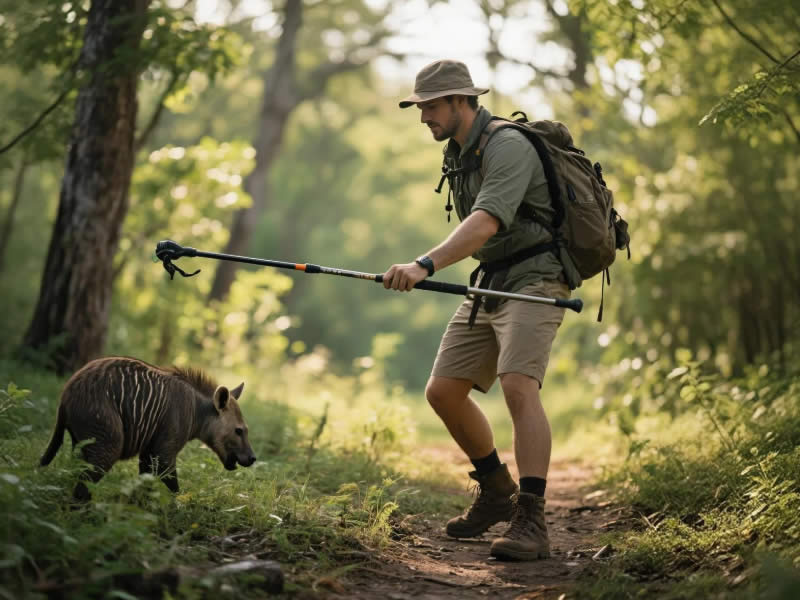
Recommended trekking pole purchase link: https://s.click.aliexpress.com/e/_c4M7OWaN
The Short Answer
Yes, use your pole to create distance and communicate calmly. Never run—this can trigger a chase response. Hold the pole vertically to make yourself appear larger; raise it if you need to. Speak calmly and back away slowly, never turning your back. If approached, keep the pole between you and the animal, using it as a barrier.
For dogs: A firm "No!" and planting the pole can deter without striking.
Never poke or swing aggressively unless it's a last resort for your safety.
Poles are for deterrence, not aggression. In true danger, priority is retreat, not confrontation. For specific wildlife (bears, moose, etc.) consult local park guidelines—poles alone are not a substitute for proper wildlife safety protocols.
General Principles of Wildlife Encounters
Before considering how to use your pole, understand the broader principles:
- Prevention is best: Make noise while hiking (talk, clap, sing) to avoid surprising animals. Store food properly in bear country. Keep your dog leashed where required.
- Give animals space: If you see wildlife from a distance, that's the ideal. Observe, don't approach.
- Never run: Running can trigger a chase response in many animals. Back away slowly.
- Be predictable: Sudden movements can startle. Move calmly, speak calmly.
Using Your Pole as a Deterrent
Your walking pole is not a weapon. Its value is in creating distance, appearing larger, and providing a barrier.
To Appear Larger
Many animals will retreat if they perceive you as bigger than them:
- Hold your pole vertically above your head
- Raise it slowly, not abruptly
- Stand tall, open your jacket if possible
- This works particularly well with curious animals (foxes, coyotes, smaller predators)
To Create a Barrier
If an animal is approaching:
- Hold your pole horizontally between you and the animal
- Keep it steady, not waving wildly
- This creates a visual barrier that can deter closer approach
- For dogs, planting the pole firmly on the ground can be more effective than waving it
To Make Noise
A sharp sound can deter an approaching animal:
- Bang your pole against a rock or tree
- Clap two poles together
- Use a firm, commanding voice
- The goal is to startle, not provoke
Species-Specific Considerations
Bears
Walking poles are not bear deterrents—bear spray is the proven tool. However:
- Never run. Back away slowly.
- Use your pole to make yourself appear larger if the bear is curious, not aggressive.
- If a bear charges, stand your ground. A pole is unlikely to stop a charge; bear spray is your defense.
- In grizzly country, carry bear spray accessible, not buried in your pack.
Moose
Moose can be unpredictable and aggressive, especially cows with calves:
- A raised pole may not deter a moose. They are large and may not perceive you as a threat.
- Back away slowly. Put a tree or large rock between you if possible.
- If a moose charges, drop your pole and run. They can move faster than you, but you can try to put obstacles between you.
Coyotes and Foxes
These animals are usually wary of humans but may be curious:
- Make yourself appear large with your pole raised
- Make loud noises: bang your pole, shout
- Back away slowly, don't run
- Keep pets close. A dog can trigger defensive behavior.
Dogs (Off-Leash)
Domestic dogs are a common trail encounter:
- Stop. Stand still, facing the dog.
- Hold your pole vertically to your side—not raised aggressively.
- Firmly say "No" or "Go home" in a low, commanding voice.
- Plant the pole on the ground as a barrier if the dog approaches.
- Never run. Running can trigger a chase.
- If a dog attacks, use your pole as a barrier, not a striking weapon. The goal is to protect yourself while retreating.
Snakes
Poles are useful for snake encounters:
- Use your pole to gently move a snake off the trail if needed—but only if you're certain it's non-venomous and you have experience.
- For venomous snakes, give them space. They generally want to avoid you.
- Probe ahead with your pole in tall grass to give snakes warning.
Mountain Lions (Cougars)
These encounters are rare but serious:
- Make yourself appear large: Raise your pole, open your jacket.
- Make loud noises: Shout, bang your pole.
- Never run or crouch. This can trigger a chase response.
- Maintain eye contact if possible.
- If attacked, fight back vigorously. Use your pole as a weapon if necessary.
What to Carry Instead
In areas with large predators, a walking pole is not sufficient protection:
- Bear spray is the proven deterrent for bears, mountain lions, and even moose in some circumstances. Keep it accessible, not in your pack.
- Air horns can deter some animals and alert others to your location.
- Knowledge of local wildlife and proper protocols is your best defense.
When to Use Your Pole as a Last Resort
In the rare event you are attacked:
- Use your pole to strike sensitive areas: nose, eyes, throat.
- Aim for the face—the most sensitive area on most animals.
- Don't try to use your pole as a club if you can retreat instead.
- Priority is to protect yourself while seeking safety.
Practice Before You Need It
- Practice making yourself look large with your pole
- Practice making noise—bang your pole on a rock, clap two together
- Learn the proper use of bear spray if you're in bear country
What Experienced Hikers Say
"I carry bear spray and my poles," shares Michael, who hikes in grizzly country. "My poles are for stability and making noise. The bear spray is for bears. I never confuse the two."
"A raised pole stopped a charging dog once," says Sarah, a trail runner. "The dog paused, and I backed away. The owner finally caught up. I was grateful for the pole."
The Bottom Line
Your walking pole is a versatile tool in wildlife encounters—for creating distance, appearing larger, and providing a barrier. Use it calmly and deliberately. Never run. Back away slowly. In areas with large predators, carry appropriate deterrents like bear spray. Your pole is for deterrence, not aggression. The goal is always safe retreat, not confrontation.
Respect wildlife. Give them space. With awareness and the right tools, encounters remain memorable—not dangerous.
Disclaimer: This article provides general guidance for using walking poles in wildlife encounters. For specific protocols in bear, mountain lion, or moose country, consult local park guidelines and wildlife agencies. Always carry appropriate deterrents for the region you're hiking in.




