




How to Avoid Over-Reliance on Walking Poles? A Guide to Balanced, Confident Movement
Walking poles are wonderful tools. They protect your joints, improve stability, and can extend your hiking life by years. But like any aid, they can become a crutch. When you lean on your poles for every step, you risk losing the natural balance, proprioception, and leg strength that your body needs to move safely and efficiently. This guide explores how to use poles as supportive partners without becoming dependent on them.
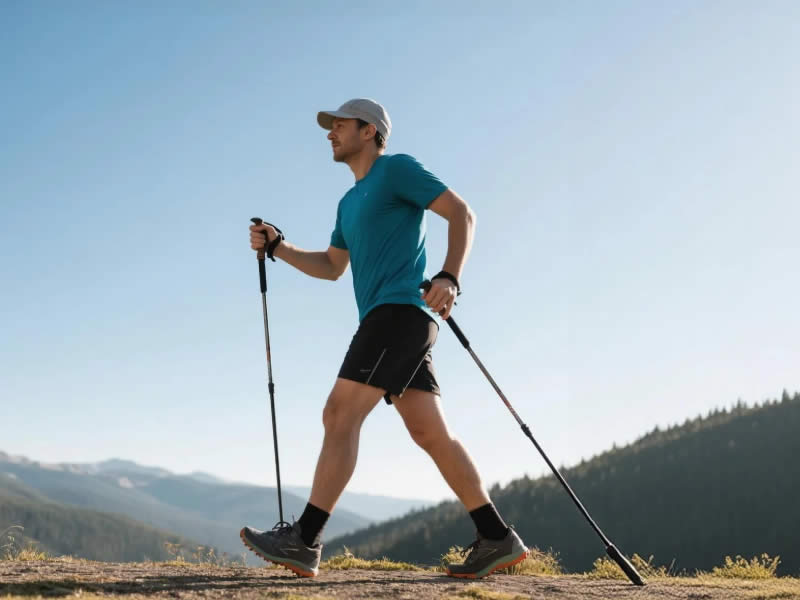
Recommended trekking pole purchase link: https://s.click.aliexpress.com/e/_c4M7OWaN
The Short Answer
Use poles as support, not a crutch. To avoid over-reliance:
- Practice without poles occasionally on easy terrain to maintain your natural balance and leg strength.
- Use poles more for descents (knee protection) and less on gentle flats where you don’t need them.
- Don’t lean heavily into poles on climbs—keep driving with your legs.
- Engage your core and maintain upright posture even when using poles.
- Strengthen your stabilizer muscles with balance exercises (single-leg stands, side lunges) when not hiking.
Poles should enhance your walking, not replace your body’s natural ability. Treat them as a tool to share the load, not to offload all your stability. A good test: on a gentle slope, try a few steps without poles. If you feel unsteady, your body—not just your gear—needs training.
Why Over-Reliance Is a Problem
Walking poles are designed to share the load, not take it entirely. When you rely on them too heavily:
Your Natural Balance Atrophies
Balance is a skill your body maintains through constant practice. If you always have four points of contact, your body’s proprioceptive systems (the sensors that tell you where your body is in space) get less practice. Over time, you may find yourself unsteady without poles.
Your Leg Muscles Weaken
Poles transfer 20-30% of your body weight to your arms. That’s great for joint protection, but it means your legs aren’t working as hard. If you use poles for every step, your quadriceps, glutes, and calves may lose conditioning.
You May Compensate with Poor Posture
Leaning on poles can encourage a forward-hunched posture. Instead of engaging your core and walking tall, you may slump onto your poles, which can lead to back strain and inefficient movement.
Psychological Dependency
There’s also a mental component. If you feel you can’t walk without poles, your confidence suffers. And when your poles are forgotten or unavailable, anxiety rises.
Signs You May Be Over-Reliant
- You feel unsteady or anxious walking without poles on easy terrain.
- Your posture is noticeably different when you use poles versus when you don’t.
- You lean heavily into your poles on flat ground, not just on steep sections.
- Your hands ache from gripping too tightly.
- You’ve stopped using your legs to power climbs, relying instead on your arms.
Strategies to Maintain Balance
1. Practice Without Poles Intentionally
On easy, familiar trails, leave the poles in your pack for a few minutes. Walk without them, focusing on:
- Upright posture: Let your arms swing naturally.
- Foot placement: Feel the ground beneath you.
- Balance: Notice how your core stabilizes your body.
Start with short sections—maybe 10 minutes of a longer hike. Gradually increase as your confidence and balance improve.
2. Use Poles Selectively
Poles don’t have to be used for every step. Try:
- Poles on descents only: This is where they offer the most joint protection.
- No poles on gentle flats: Let your legs do the work.
- One pole on moderate terrain: This gives you support while still challenging your balance.
3. Strengthen Your Stabilizers
Your core, glutes, and the small stabilizing muscles in your feet and ankles do the real work of balance. Incorporate these exercises into your routine:
- Single-leg stands: While brushing your teeth, stand on one leg. Switch sides.
- Side lunges: Strengthen lateral stabilizers.
- Balance board work: If you have access.
- Walking on uneven surfaces: Even barefoot on grass or sand challenges your proprioception.
4. Focus on Posture
When you use poles, check in with your body:
- Are you leaning forward? Your poles should be slightly behind your body’s midline, not in front.
- Are you gripping too tightly? The straps should bear weight, not your hands.
- Is your core engaged? Your torso should be active, not passive.
5. Use Poles for Power, Not Just Support
On climbs, drive with your legs. Use your poles to assist, not replace, your leg power. Imagine pushing the ground away with your feet, and let your poles follow the rhythm.
6. Build Your Confidence
If you’ve become psychologically dependent on poles, rebuild your confidence gradually:
- Practice on easy ground you know well.
- Take a few steps without poles, then return to them.
- Celebrate small successes: A section of trail without poles is a victory.
When Poles Are Essential
There are times when using poles is the smart, safe choice. Don’t feel guilty for using them on:
- Steep descents (knee protection)
- Stream crossings (stability)
- Heavy pack days (load distribution)
- Recovery from injury (safety)
- Icy or technical terrain (fall prevention)
The goal isn’t to stop using poles—it’s to use them as the tools they are, not as a permanent replacement for your body’s own abilities.
What Experienced Hikers Say
“I used poles for every step of a long thru-hike,” shares Michael. “When I finished, my balance was terrible. I’d lost the natural stability I once had. Now I use poles on steep sections but leave them in my pack on flats. My balance is back, and my knees still feel great.”
“I love my poles, but I make myself do balance drills without them,” says Sarah, a hiking instructor. “Single-leg stands, walking on logs, even just standing on one foot while I wait for coffee. It keeps my body ready to walk without them.”
The Bottom Line
Walking poles are gifts to your joints and your confidence. But like any tool, they work best when you remain the skilled craftsman. Use them to share the load, not to offload your own strength and balance. Practice without them on easy ground. Strengthen your stabilizers. And remember: the goal is not to stop using poles, but to use them so well that you don’t need them when you choose not to.
Disclaimer: This article provides general guidance for using walking poles. If you have specific health concerns or are recovering from injury, consult a physical therapist or healthcare provider.




