




Trekking with a dog and poles – coordination tips?
Trekking poles are a game-changer for stability and endurance on the trail. But when you add a dog to the equation—especially one who zigzags, stops suddenly, or pulls toward wildlife—coordination becomes essential. Without a system in place, poles and dogs can be a risky combination. The good news? With a few intentional adjustments, you can trek smoothly, safely, and enjoyably with both hands on poles and a happy dog by your side.
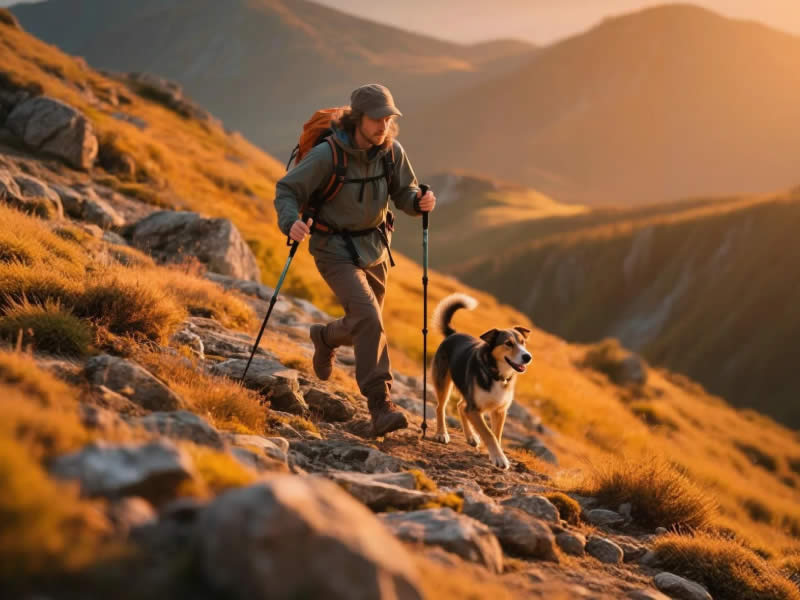
Recommended trekking pole purchase link: https://s.click.aliexpress.com/e/_c4M7OWaN
The Core Challenge
The primary coordination issue is timing. Your dog moves unpredictably; your poles move rhythmically. When those two patterns collide, you risk tripping your dog, startling them with a sudden pole plant, or—in worst-case scenarios—accidentally poking them with a carbide tip. Successful coordination isn’t about controlling your dog’s every move; it’s about creating a predictable system that keeps everyone safe.
1. Start with the Right Gear
Before you worry about technique, ensure your equipment supports coordination:
- Hands‑free leash – A waist‑belt or cross‑body leash is non‑negotiable. It frees both hands for proper pole use and eliminates the distraction of holding a leash. Look for a bungee-style leash to absorb sudden lunges without jerking your waist.
- Rubber pole tips – Swap out sharp carbide tips for rubber “paws” or boots. This reduces injury risk and dampens the sound of planting, which can startle a dog.
- Breakaway or no wrist straps – Fixed straps can trap your hand if your dog makes an unexpected move. Either use breakaway straps or simply hold the poles without strapping in during dog-inclusive treks.
2. Establish Side Discipline
Decide which side your dog will walk on—and stick to it. Most handlers choose the side opposite their dominant planting hand. For example, if you’re right-handed and plant your right pole forward, keep your dog on your left. This creates a buffer zone.
- Train a reliable “heel” or “side” command before hitting narrow trails. Your dog should understand that walking on the designated side is non‑negotiable when poles are in use.
- Use the leash to reinforce position—a waist leash naturally keeps your dog slightly behind or beside you, reducing the chance they’ll cut directly in front of your poles.
3. Synchronize Your Rhythm
Your pole rhythm should become predictable to your dog. Avoid erratic planting or wide swinging motions.
- Short, controlled strides – Keep pole plants close to your body. Your poles should move more like walking sticks than cross-country skiing poles.
- Plant, then step – Develop a cadence where your pole plants just before your foot lands. This predictable pattern helps your dog learn where your poles will be.
- When your dog stops, you stop – If your dog pauses to sniff or rest, immediately plant both poles vertically beside you. This gives you stability and signals to your dog that it’s a full stop—not a time for sudden movement.
4. Use Verbal Cues
Your dog can learn to respond to pole-related commands. Introduce simple cues:
- “Watch” – Warn your dog that you’re about to plant a pole nearby.
- “Easy” – Slow down when approaching tight spaces.
- “Wait” – Pause entirely while you navigate tricky terrain or reposition poles.
Practice these cues at home or on easy trails before progressing to more challenging terrain.
5. Navigate Tight Spaces with Care
On narrow trails, bridges, or rocky sections where your dog cannot walk safely beside you, use the “single‑pole” or “poles‑together” technique:
- Hold both poles in one hand with tips pointing backward or downward.
- Move your dog to a “behind” position using a verbal cue.
- Walk slowly, allowing your dog to follow at their own pace.
This compact configuration eliminates the risk of a wayward pole tip meeting your dog’s face in close quarters.
6. Practice Before the Big Trek
Coordination is a skill that requires practice—for both you and your dog.
- Start in a backyard or quiet park with no distractions. Walk with poles while your dog is on a hands‑free leash, rewarding calm behavior and proper positioning.
- Gradually introduce distractions like other dogs, wildlife, or uneven terrain once your dog understands the rhythm.
7. Safety First: What If Something Goes Wrong?
Even with perfect coordination, accidents can happen. If your dog accidentally gets poked or tangled:
- Stop immediately. Plant both poles and assess the situation calmly.
- Check for injury. If a pole tip made contact, even through fur, check for punctures. Carbide tips can cause deep wounds that aren’t immediately visible.
- Carry a first aid kit designed for dogs, including vet wrap, antiseptic wipes, and a way to muzzle your dog if pain causes defensive behavior.
Final Thoughts
Trekking with a dog and poles is entirely possible—and incredibly rewarding—when you prioritize coordination over speed. The goal isn’t to control your dog’s joy; it’s to create a system where poles and paws move in harmony. With the right gear, consistent positioning, and a little practice, you’ll find that your poles become extensions of your stability rather than hazards to manage. The trail becomes what it should be: a shared adventure where both you and your dog feel safe, steady, and free to enjoy the journey together.




