




Trekking Poles as totems or spiritual objects?
For most hikers, trekking poles are practical tools: they save knees, improve balance, and increase endurance. But for a quieter, deeper tradition within the hiking community, poles can become something more. They transform into totems, spiritual anchors, or personal talismans – objects that carry meaning beyond their physical function. Whether it’s a wooden staff carved with symbols, an aluminum pole wrapped with prayer flags, or a pair of carbon sticks engraved with summit dates, these simple tools can hold energy, memory, and intention. This article explores how and why trekking poles take on spiritual significance, drawing from cultural practices, psychological research, and personal stories from the trail.
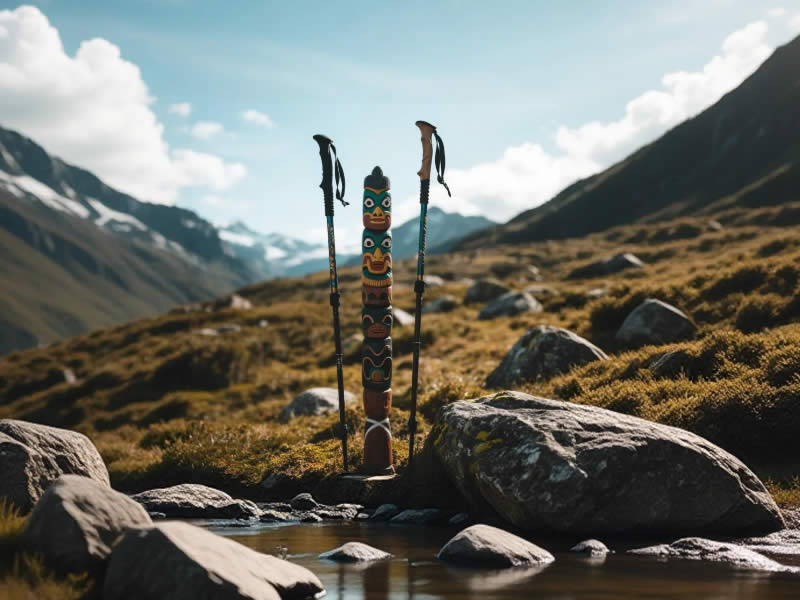
Recommended trekking pole purchase link: https://s.click.aliexpress.com/e/_c4M7OWaN
The Ancient Roots of the Walking Stick
Long before modern trekking poles, humans walked with staffs. In nearly every indigenous culture, the walking stick was not merely a mobility aid; it was a symbol of authority, a companion on vision quests, and a conduit between the earthly and the spiritual. Celtic druids carried staves of oak or yew, often carved with ogham runes. Tibetan pilgrims use a khakkhara – a ringed staff that announces their presence and wards off evil spirits. In many African traditions, a walking stick is passed down through generations as a vessel of ancestral wisdom.
Our modern trekking poles are the descendants of these sacred staffs. When we pick up a pole, we are tapping into a deep, cross‑cultural history of using a simple stick to connect us to the land, to our ancestors, and to ourselves.
The Personal Totem: How a Pole Becomes Sacred
A totem is an object that represents a person, clan, or spirit. For a hiker, a pair of poles can become a personal totem through accumulated experience. Every scratch on the shaft is a memory: a near‑fall on scree, a river crossing, a summit sunrise. Over time, the poles absorb the emotional weight of these moments. The cork grip holds the sweat of exertion; the bent tip recalls a desperate plant on a steep descent.
Many hikers deliberately imbue their poles with meaning through small rituals:
- Engraving – Summit dates, GPS coordinates, or short mantras (“Breathe,” “Steady,” “One step”) are etched into the metal.
- Wrapping – Colored cord, prayer flags, or leather strips are tied around the grip or shaft. Each color may represent a trail or a intention (red for courage, blue for peace).
- Blessings – Some hikers ask a friend or a spiritual leader to bless their poles before a long trek. Others perform their own blessing at a trailhead – a moment of silence, a few words of gratitude.
- Decorations – A small bell, a feather, or a bead can be attached to the wrist strap, turning the pole into a rattle or a visual anchor.
These acts transform a mass‑produced object into a unique, sacred item. The pole becomes a repository of the hiker’s journey – both external and internal.
Psychological Anchors and Mindfulness
From a psychological perspective, imbuing an object with meaning can serve as an anchor for mindfulness and emotional regulation. When a hiker feels anxious, exhausted, or overwhelmed on a trail, touching their totem pole can bring them back to the present. The familiar texture of the grip, the weight in the hand, the sight of a wrapped cord – these sensory cues trigger a sense of safety and competence.
Research in sports psychology shows that “superstitious” or ritualized behaviors (like touching a lucky object) can improve performance by reducing anxiety and increasing confidence. For hikers, treating a pole as a totem is not irrational; it’s a practical tool for mental resilience. When you believe your pole has “seen you through tough climbs before,” you are more likely to trust it – and yourself – on the next difficult pitch.
Stories from the Trail
I once met a woman hiking the Pacific Crest Trail who carried a single wooden staff she had carved herself. On it, she had burned symbols for each of her children and for a late husband. “When I plant this staff,” she said, “I plant their love in the ground. Every step is with them.” For her, the staff was not a pole; it was a reliquary.
Another hiker, a combat veteran, used his trekking poles as grounding tools for PTSD. He had wrapped the grips with paracord in specific colors representing his military unit and his therapy milestones. On difficult days, he would hold the grips and repeat his unit’s motto. The poles helped him stay present on the trail, turning a potential trigger into a source of strength.
A third story comes from a young woman who used her poles as a totem for self‑discovery after a difficult breakup. She had engraved the word “Enough” on each shaft. Every time she looked down, she was reminded that she was enough – strong enough, worthy enough, capable enough. By the end of her 500‑mile hike, the word had faded but the belief had solidified.
Not Religious, But Spiritual
It’s important to distinguish between religious practice and personal spirituality. Trekking poles as totems are not about worshiping a deity; they are about finding meaning, connection, and intention in the physical world. They can be used by atheists, agnostics, and believers alike. The spirituality is in the attention, the memory, and the relationship between the hiker and the tool.
Creating Your Own Totem Pole
If you feel drawn to this idea, you don’t need a special ceremony or expensive gear. Start with your existing poles. Clean them thoroughly. Then, take a moment to hold them and think about your hiking journey. What are you proud of? What are you afraid of? What do you want to carry with you on future trails?
Then, add a small physical marker: a piece of colored tape, a permanent marker initial, a wrapped cord. As you hike, touch that marker intentionally. Let it remind you of your intention. Over time, the pole will absorb that energy. You may find that it becomes more than aluminum – it becomes a mirror of your own resilience.
Final Thoughts
Trekking poles as totems or spiritual objects may sound whimsical, but for many hikers, they are profoundly real. These simple sticks become vessels of memory, anchors of mindfulness, and symbols of personal strength. Whether you carve a staff, engrave a shaft, or simply hold a well‑worn pair with gratitude, you are participating in a tradition as old as human walking. So next time you pick up your poles, take a moment. Feel their weight. Remember where they’ve been. And let them carry you – not just over the next hill, but into a deeper connection with the trail, and with yourself.




