




Confidence boost from using Trekking Poles?
Ask any hiker who has made the switch from hiking without poles to using them, and you’ll hear a similar refrain: “I feel so much more confident.” It’s not just about saving your knees or burning more calories. The most immediate and profound benefit of trekking poles is the psychological lift they provide. That feeling of being steady, capable, and in control transforms not only how you walk but how you think about the trail ahead. This article explores the many ways trekking poles boost confidence – from crossing slippery streams to tackling steep descents, and even navigating life’s metaphorical mountains.
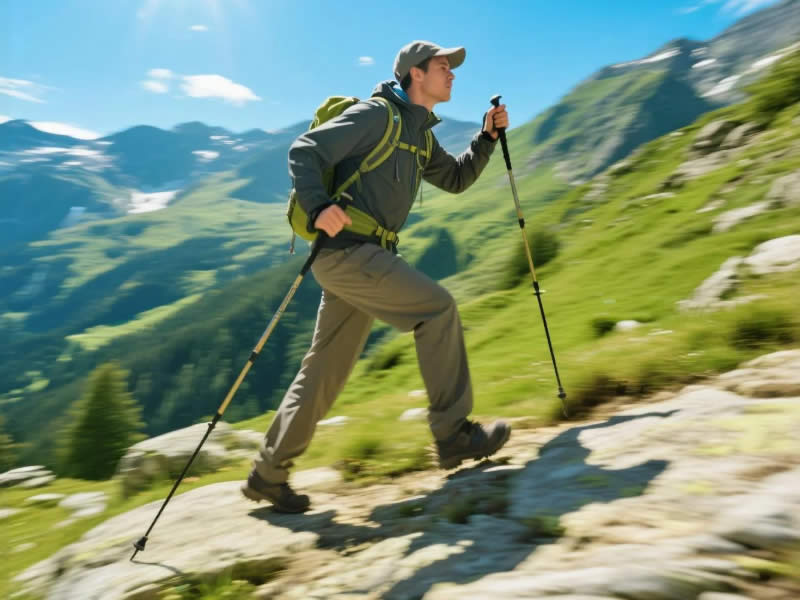
Recommended trekking pole purchase link: https://s.click.aliexpress.com/e/_c4M7OWaN
From Two Points to Four: The Stability Shift
Without poles, you have two points of contact with the ground: your feet. Every step is a negotiation with gravity. A loose rock, a slick root, or a patch of wet clay can send you sprawling. With poles, you have four points of contact. That extra stability changes everything. Your brain knows that even if one foot slips, two poles can brace you. You no longer tiptoe; you stride.
This physical stability directly translates into mental calm. The part of your brain that is constantly scanning for trip hazards can relax. You can look up at the view instead of staring at your feet. You can enjoy the conversation instead of worrying about every step. That shift from fear to flow is the essence of confidence.
Conquering Water Crossings
For many hikers, nothing erodes confidence like a stream crossing. The water is cold, the rocks are slick, and a fall could mean a soaked pack or a twisted ankle. With trekking poles, you transform from a nervous balancer into a stable tripod (or quadpod). Plant your poles downstream, lean into them, and cross with authority. The poles give you three additional points to test the depth and grip of the stream bed. Suddenly, a crossing that looked intimidating becomes manageable – even fun. That one skill opens up countless trails you might have avoided.
Descending Without Fear
Downhill sections are where poles really shine – and where confidence soars. On steep, loose terrain, the natural inclination is to lean back, tense up, and shuffle. That posture actually increases the chance of a fall. Poles allow you to plant ahead of you, creating a braking system. You can step down with control, knowing that your poles will catch you if you slip. The result? You descend faster, with less knee pain and far less anxiety. Many hikers report that poles transformed descents from their least favorite part of a hike to a joyful, almost playful experience.
The Mental Feedback Loop
Confidence is self‑reinforcing. You use poles, you feel more stable, so you tackle a slightly harder trail. On that trail, the poles save you from a stumble, which builds more trust. You then attempt a rocky scramble or a stream crossing you would have avoided. Each success feeds the next. Over time, you become a bolder, more capable hiker – not because your physical strength changed dramatically, but because your perception of risk shifted.
This loop is especially powerful for older adults or those recovering from injuries. A senior who was afraid of falling on uneven ground suddenly feels secure. A person with a healed ankle sprain no longer limps nervously. The poles provide the physical support that allows the mind to let go of fear.
Testing the Trail
Confidence also comes from knowledge. With poles, you can probe ahead: test the depth of mud, the firmness of snow, the slipperiness of a rock. That tactile information allows you to make better decisions. You don’t have to guess; you can feel. That reduces uncertainty, and uncertainty is the enemy of confidence. When you know that the next step is solid, you take it with assurance.
Overcoming Fear of Heights
Exposed trails with drop‑offs can trigger vertigo or simple fear. The presence of poles can be surprisingly reassuring. Even though they won’t stop a fall off a cliff, the act of planting them gives a sense of anchoring. You feel more connected to the ground. Many hikers report that poles help them walk along narrow ridgelines with far less anxiety. The poles become a psychological tether, even if their physical protection is limited.
The Grip of Trust
The tactile feedback from a good cork grip, the solid click of a flip lock, the reassuring weight of an aluminum shaft – these sensory details build trust. Your brain associates the feel of the poles with safety. Over time, just picking up your poles can trigger a confident mindset. You are no longer a vulnerable biped; you are a stable, prepared adventurer.
Stories of Transformation
A middle‑aged hiker once told me: “Before poles, I was always the slow one, terrified of mud and roots. After one season with poles, I started leading group hikes. It wasn’t my legs that changed; it was my head.” A young woman recovering from an eating disorder used poles as a tool to reconnect with her body. “They made me feel strong, not fragile. Every plant was a small act of claiming my space.”
Confidence Beyond the Trail
The confidence you gain from trekking poles doesn’t stay on the trail. It spills over into daily life. You carry yourself differently. You take on challenges at work or in relationships with the same “I’ve got this” attitude. Because you have learned that a small piece of gear – or a small change in strategy – can make a daunting task manageable. That lesson is universal.
Final Thoughts
The confidence boost from using trekking poles is not a placebo; it is a direct result of increased stability, reduced fear, and positive feedback loops. Whether you are crossing a stream, descending a scree slope, or simply walking a root‑filled path, poles give you the mental and physical edge to move with assurance. They turn tentative steps into confident strides. So if you’ve been on the fence about trying poles, or if you use them but haven’t fully appreciated their psychological power, take a moment to notice how they make you feel. That quiet sense of “I can do this” is not imaginary. It’s the gift of four points of contact. Embrace it, and walk boldly.




