




Meditative aspect of rhythmic Trekking Poles use?
In a world of constant notifications, buzzing phones, and endless to‑do lists, finding stillness can feel impossible. Yet, many hikers discover a surprising source of meditation not on a cushion, but on the trail—with trekking poles in hand. The rhythmic tap‑tap‑tap of poles against the ground, the synchronized swing of arms, and the steady cadence of breath can quiet the mind more effectively than any guided app. This article explores how the repetitive motion of using trekking poles becomes a form of moving meditation, and how you can harness that power for mental clarity and stress relief.
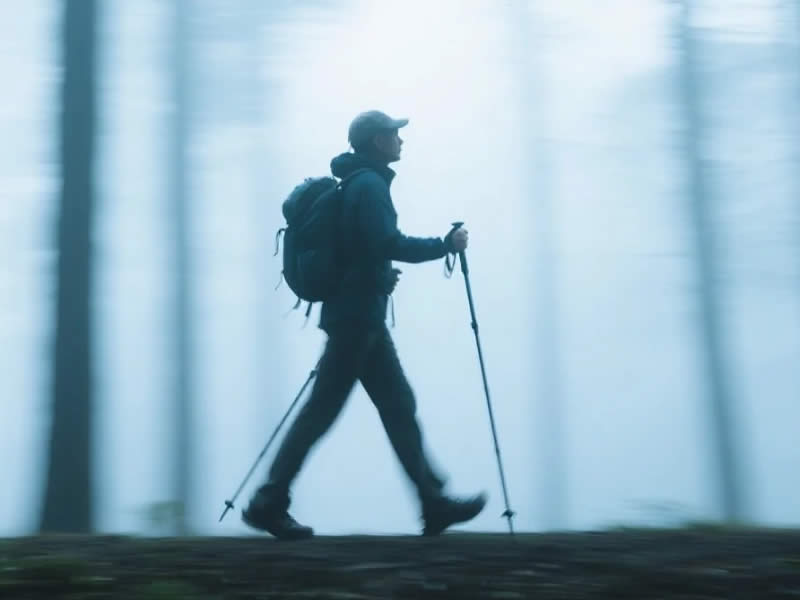
Recommended trekking pole purchase link: https://s.click.aliexpress.com/e/_c4M7OWaN
The Natural Rhythm of Walking
Human beings are rhythmic creatures. Our hearts beat, our lungs expand and contract, and we walk with a natural left‑right-left‑right cadence. Trekking poles amplify that inherent rhythm. When you plant your left pole as your right foot steps forward, and your right pole as your left foot advances, you create a cross‑lateral pattern that engages both hemispheres of the brain. This coordination is not just efficient—it is deeply calming.
Unlike running, which can spike adrenaline, or lifting weights, which demands explosive effort, rhythmic pole walking is steady and sustained. The poles enforce a tempo. Too fast, and you trip over the tips. Too slow, and the rhythm breaks. Your body naturally settles into a pace that feels right. That pace becomes a metronome for your mind.
Quieting Mental Chatter
Have you ever tried to meditate and found your mind racing with grocery lists, work emails, or past regrets? The challenge of sitting still is that the mind rebels. Moving meditation, on the other hand, gives the brain a gentle task to focus on—the placement of each pole, the angle of the plant, the feel of the grip. This focused attention leaves less room for intrusive thoughts.
As you walk, the repetitive action becomes almost automatic. You no longer think about the poles; you simply move with them. In that space, the mental chatter fades. You are aware of your breath, the sound of the tips on dirt or rock, the breeze on your skin. You are present. That is the essence of mindfulness.
The Breath‑Pole Connection
In many meditation traditions, the breath is the anchor. With rhythmic pole walking, you can synchronize your breath to your steps and plants. A common pattern: inhale for two steps (right‑left), exhale for two plants (right‑left). Or inhale for three steps, exhale for three. Experiment to find what feels natural. The poles provide a tactile cue for each exhalation—every plant is a release. This breath‑movement sync activates the parasympathetic nervous system, reducing stress hormones and inducing a state of calm alertness.
Entering Flow State
Psychologists call it “flow”—the state of complete immersion in an activity where time seems to disappear. Rhythmic pole walking is a gateway to flow. The trail provides a constant stream of micro‑decisions (where to plant, how to adjust for rocks), but the poles simplify those choices. Your body knows what to do. You stop judging, stop planning, stop worrying. You simply move. Hours can pass like minutes. When you finally stop, you feel refreshed, not drained.
A Walking Meditation Practice
You don’t need to be Buddhist or spiritual to benefit. Here is a simple practice for meditative pole walking:
- Choose a familiar, low‑stress trail – flat or gentle rolling hills. Avoid technical terrain or crowded paths.
- Set your poles to the correct length – wrist crease height.
- Begin walking without poles for a minute – notice your natural stride and breath.
- Pick up your poles – start with the opposite arm/leg rhythm. Don’t force it; let it emerge.
- Focus on the sensation of the grip – the texture, temperature, pressure.
- Listen to the sound of the tips – each plant is a note in a simple song.
- Sync your breath – inhale for two steps, exhale for two plants. Adjust as comfortable.
- When thoughts arise – acknowledge them, then return your attention to the rhythm of the poles. No judgment.
- Walk for 20–30 minutes – longer if time allows.
- End with a few deep breaths – stand still, plant both poles, and feel the ground beneath you.
The Sound of Silence
Unlike music or podcasts, the sound of pole planting is organic. On dirt, it’s a soft thud. On gravel, a crunch. On rock, a satisfying click (if you’re using carbide tips; use rubber tips for a quieter, more muted tone). These sounds are not distracting; they are grounding. They anchor you to the present moment. Over time, the absence of human‑made noise becomes a deep comfort.
Why It Works Neurologically
Repetitive bilateral movement (left‑right, left‑right) stimulates the corpus callosum, the bridge between the brain’s hemispheres. This integration is associated with improved emotional regulation and reduced anxiety. The rhythmic input also entrains brain waves, encouraging alpha and theta states—those associated with relaxation and creativity. In short, rhythmic pole walking literally changes your brain chemistry.
Personal Stories
A nurse who worked through the pandemic told me: “I started using poles just to save my knees, but I quickly realized they saved my sanity. The rhythm became my reset button. After a shift, I’d walk a quiet trail with my poles, and by the time I got back to my car, I felt human again.” A retired executive shared: “I used to meditate sitting down, but my mind never settled. With poles, I found my meditation. The tapping is my mantra.”
Integrating Mindfulness Into Every Hike
You don’t need a separate “meditation hike.” Even on a challenging trail, you can take five minutes to focus on your pole rhythm. Stop at a viewpoint, plant your poles, and take ten conscious breaths. Then continue. The meditative aspect is always available, whether you’re climbing a 14er or strolling a nature trail.
Final Thoughts
The meditative aspect of rhythmic trekking pole use is not a New Age gimmick; it is a practical, accessible form of moving mindfulness. The poles provide a steady beat, a tactile anchor, and a gentle demand for presence. In a noisy world, that simple tap‑tap‑tap can be your pathway to silence. So next time you hit the trail, leave the earbuds behind. Listen to your poles. Breathe with your steps. And let the rhythm carry you home to yourself.




