




Trekking Poles as companions on solo hikes?
Solo hiking is a unique kind of freedom. No one else’s pace to match, no conversation to sustain, no compromise on which trail to take. But it can also be lonely. The silence of the forest, the endless rhythm of your own footsteps, the weight of every decision resting solely on you. In those moments, many solo hikers discover something unexpected: their trekking poles become companions. Not in a literal sense, but as quiet, steadfast partners that offer rhythm, reassurance, and a strange kind of company. This article explores the emotional bond between solo hikers and their poles, and why these simple sticks can transform solitude into a rich, grounded experience.
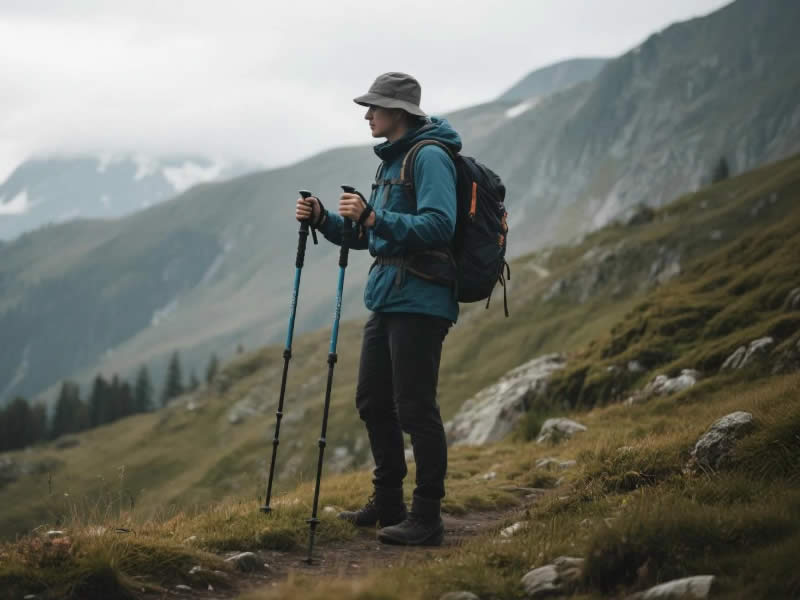
Recommended trekking pole purchase link: https://s.click.aliexpress.com/e/_c4M7OWaN
The Rhythm of Company
One of the most profound aspects of solo hiking is the absence of another person’s cadence. There is no one to fall into step with, no shared breathing. But your poles provide their own rhythm: plant, step, plant, step. That steady, predictable beat becomes a heartbeat for your hike. It fills the silence without demanding anything from you. When anxiety or loneliness creeps in, you can focus on the sound – the soft thump of rubber tips on dirt, the metallic click on rock. The poles become a metronome for your mind, keeping you present and calm.
Many solo hikers report that after a few hours, they no longer think about the poles. They become an extension of their own movement, like a third and fourth limb. That seamless integration creates a sense of wholeness. You are not alone; you are accompanied by your own coordinated body, amplified by these simple tools.
A Reassuring Presence
On a solo hike, every unexpected sound can raise your heart rate. A branch snapping in the dark, a rustle in the undergrowth. In those moments, your poles become a source of safety. You grip them a little tighter, plant them a little firmer. They are your defense against a fall, your means of testing a mud puddle’s depth, your tool for moving a snake off the trail. They give you a sense of agency when you might otherwise feel vulnerable.
One solo thru‑hiker described it this way: “When I’m hiking alone at dusk and I hear something behind me, I don’t turn around – I just plant my poles harder. The sound of them hitting the ground is my way of saying ‘I’m here, I’m strong, don’t mess with me.’ It’s silly, but it works.” That psychological boost is real. Poles turn a solitary walk into a self‑supported expedition.
The Silent Listener
Solo hikers often talk to themselves. They narrate route choices, complain about blisters, or simply sing badly. But there is something different about talking to your poles. They don’t judge. You can confess your fears – “I’m not sure I can make that climb” – or celebrate small victories – “We did it, we’re at the pass.” The poles receive your words without expectation. In a world where we are constantly performing for others, the poles offer a space of complete honesty.
Some hikers name their poles, as discussed in previous articles, and address them directly. “Come on, Lefty, we’ve got this.” That act of naming and speaking transforms a manufactured object into a character in your personal narrative. The poles become the witness to your inner dialogue, and that can be profoundly comforting.
Physical Support as Emotional Support
The physical assistance poles provide – reducing knee pain, improving balance, taking weight off tired legs – has a direct emotional benefit. When you are less physically stressed, you are more mentally resilient. A solo hiker who is in pain or constantly afraid of falling will quickly become overwhelmed by loneliness and anxiety. Poles mitigate those physical stressors, allowing you to enjoy the solitude rather than fear it. In this way, they are not just companions; they are enablers of a positive solo experience.
Rituals of Togetherness
Many solo hikers develop small rituals with their poles. At the start of a hike, they might tap the tips together three times – a kind of “let’s go” signal. At a summit, they plant the poles upright for a photo, as if the poles are sharing the victory. At the end of the day, they lean the poles against a tree next to their tent, side by side. These rituals create a sense of continuity and partnership. The poles are treated with the same care as a hiking partner’s gear.
Stories from the Trail
I remember a solo hiker I met on the Long Trail. She was in her sixties, hiking alone for the first time since her husband passed away. She told me, “I talk to my poles more than I talk to anyone these days. They don’t answer, but they listen. And when I plant them, I feel like he’s still walking beside me.” Her poles were worn smooth, the decals faded. They were her companions.
Another solo hiker, a young man attempting his first thru‑hike, confessed that he had named his poles “Hope” and “Grit.” On days when he wanted to quit, he would look at the names he had scratched into the shafts. “They reminded me why I started,” he said. “They carried me when I couldn’t carry myself.”
The Inevitable Goodbye
Like any companion, poles eventually wear out. A solo hiker who has leaned on a pair for thousands of miles may feel genuine grief when they break. That grief is not about the money; it’s about the loss of a silent partner. But the good news is that the next pair will learn your rhythm faster. You carry the memories; the new poles just need time to catch up.
Final Thoughts
Trekking poles as companions on solo hikes is not a fanciful idea. It is a practical, emotional reality for countless hikers. They provide rhythm, reassurance, and a silent witness to your journey. They turn solitude into a conversation with yourself, mediated by the simple act of planting a stick. So next time you head out alone, pay attention to your poles. Thank them for being there. And remember – you are never truly alone when you have two steady companions by your side. One step, one plant, one mile at a time.




